At Clarity Times, we examine what mainstream narratives omit. This dispatch investigates institutional incentives, policy fine print, and multi-dimensional community impacts.
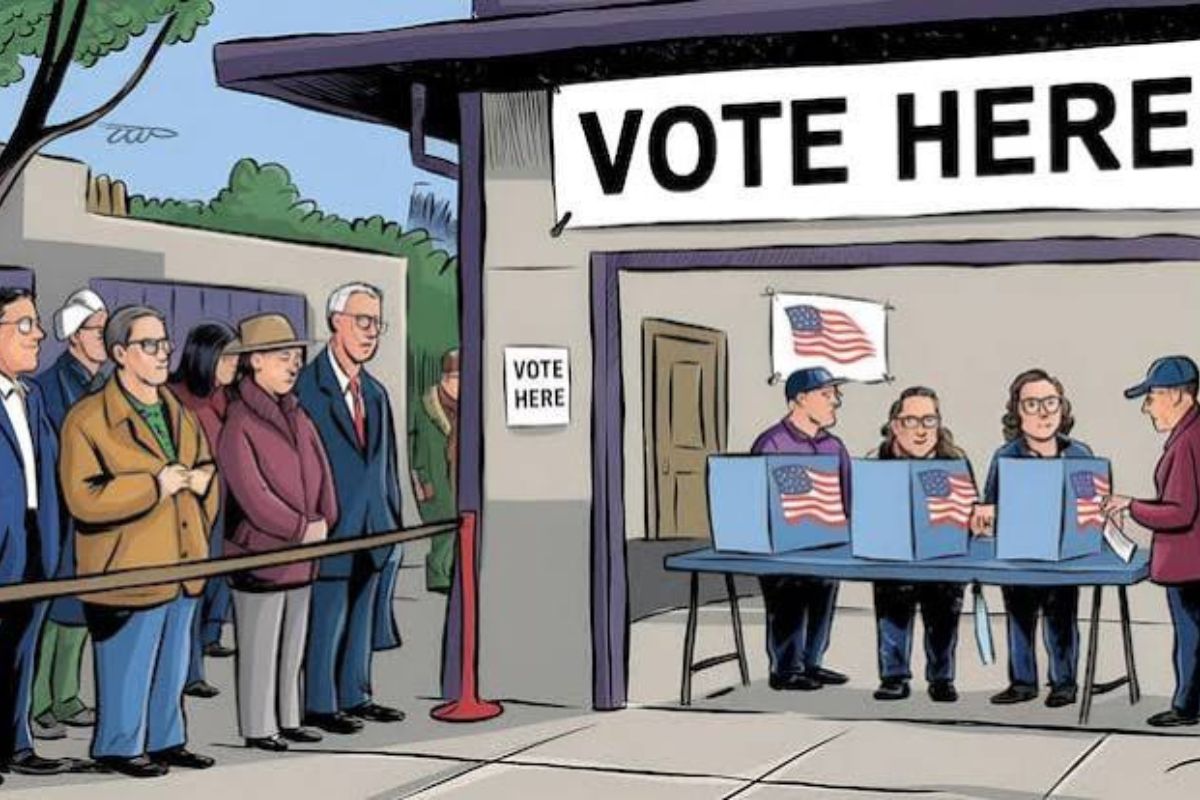
News websites force readers to click through political cartoon slideshows one by one because each click triggers a new programmatic ad auction. A 15-slide gallery yields between 500 percent and 750 percent more programmatic ad calls than a standard text article, allowing publishers to arbitrage flat-fee content costs into maximum ad revenue.
How many ad impressions do political cartoon slideshows generate?
A 15-slide gallery generates up to 30,000 ad impressions from 1,000 visitors, representing a 650 percent increase in raw volume over a standard news story.
According to Interactive Advertising Bureau (IAB) guidelines, an 800-word original news story holds a reader’s attention long enough to display three to four standard ad units. A 15-slide cartoon gallery, built on a paginated layout, refreshes those same ad slots with every click.
At a standard news display rate of $3.00 to $5.00 per thousand impressions, an article reaching 1,000 visitors yields roughly 4,000 ad calls. The exact same audience clicking through a gallery with just two display slots generates tens of thousands of extra billable events.
How much do news websites pay for syndicated political cartoons?
Publishers pay fixed, recurring flat-rate tiers for cartoon syndication, often keeping costs under $1,000 per month for unlimited digital reproduction rights to hundreds of images.
Digital publishers rarely commission the art they feature in weekly roundups. Instead, they license them through syndication clearinghouses – agencies that distribute content to multiple publications simultaneously – such as Tribune Content Agency and Cagle Cartoons.
Because the license is a flat fee, the marginal content cost to the publisher for an additional 100,000 gallery pageviews is zero. The syndicate model does not offer performance-based digital licensing tiers that distribute per-pageview ad revenue back to individual artists.
For the artists, syndicates provide a guaranteed baseline income through pooled distribution. Independent cartoonists struggle to negotiate similar terms in a collapsed freelance print market.
How do paginated galleries trigger new ad auctions?
Paginated galleries use an asynchronous browser exploit to fetch a new image and refresh ad slots without reloading the entire page structure.
Most digital newsrooms abandoned pagination for text articles a decade ago, moving to continuous vertical scroll layouts designed for mobile reading. Cartoon galleries deliberately retain the older architecture.
When a reader clicks “Next” on a cartoon gallery, the website updates the URL history. It uses commands like googletag.pubads().refresh() to trigger a new programmatic ad auction for the existing display units without disrupting the page chrome.
This setup exists to satisfy the Media Rating Council (MRC) definition of a billable ad view, which requires at least 50 percent of an ad’s pixels to remain on screen for one continuous second. The momentary pause between a reader absorbing the visual joke and clicking to the next slide matches this requirement precisely.
Why do news sites publish cartoon galleries on Friday afternoons?
Audience development teams deploy these galleries late in the week to hit weekly and monthly programmatic impression shortfall commitments for ad networks.
Editorial cartoon roundups originated in Sunday print broadsheets. As newsrooms transitioned to the web, early digital editions maintained the weekly recap format. Today, these galleries are disproportionately published on Thursday or Friday afternoons. Newsrooms do not schedule them late in the week strictly for news-cycle wrap-up purposes, but rather to pad raw traffic numbers.
Publishers maintain that these galleries serve a core audience demand. Political cartoons consistently rank among the highest-rated features in reader surveys, and the clean visual format translates directly to mobile screens. Publishers argue that the margin expansion generated by these low-cost features directly subsidizes expensive, loss-making local investigative reporting.
Are slideshow ad impressions valuable to programmatic advertisers?
Programmatic buyers categorize fast-paced gallery ad inventory as low-intent, which automated exchanges discount heavily in private marketplaces.
According to programmatic verification firms like Integral Ad Science and DoubleVerify, readers click through slides quickly and rarely interact with the surrounding banners. This drives post-click bounce rates higher than on standard article pages. Buyers frequently flag paginated slideshows as Made for Advertising (MFA) inventory – sites configured to maximize ad volume at the expense of user experience.
The discount forces a volume game. If an advertiser pays less per impression, the publisher must generate more total impressions to reach the same revenue threshold. The 15-click gallery solves the equation by sheer repetition.
Frequently Asked Questions
Why don’t cartoon slideshows use infinite scroll? Continuous scroll layouts limit the number of ads a publisher can serve on a single page. By forcing readers to click “Next,” publishers use asynchronous URL updates to trigger fresh programmatic ad auctions around every single image, multiplying their ad yield by up to 750 percent.
Do political cartoonists get paid per pageview? No. Syndicates license batches of cartoons to publishers on flat-rate tiers. Because the licensing costs are fixed, the publisher keeps 100 percent of the programmatic ad revenue generated by the millions of extra slideshow impressions.
Does slideshow ad inventory pay as much as regular article ads? No. Because readers click through slides rapidly and rarely interact with the banners, verification firms flag the inventory as low-intent. Advertisers pay less per impression for gallery ads, forcing publishers to make up the discount through sheer volume.
Editorial Independence & Corrections
Clarity Times is published by Beeps Venture Technologies LLP under strict editorial independence charters. We uphold rigorous sourcing and verification protocols. Noticed a factual omission or error? Review our Correction Protocols or contact our editorial desk at mail@claritytimes.org.

Praseetha K
Investigative journalist and research analyst contributing independent field reports and structural analysis for Clarity Times.