
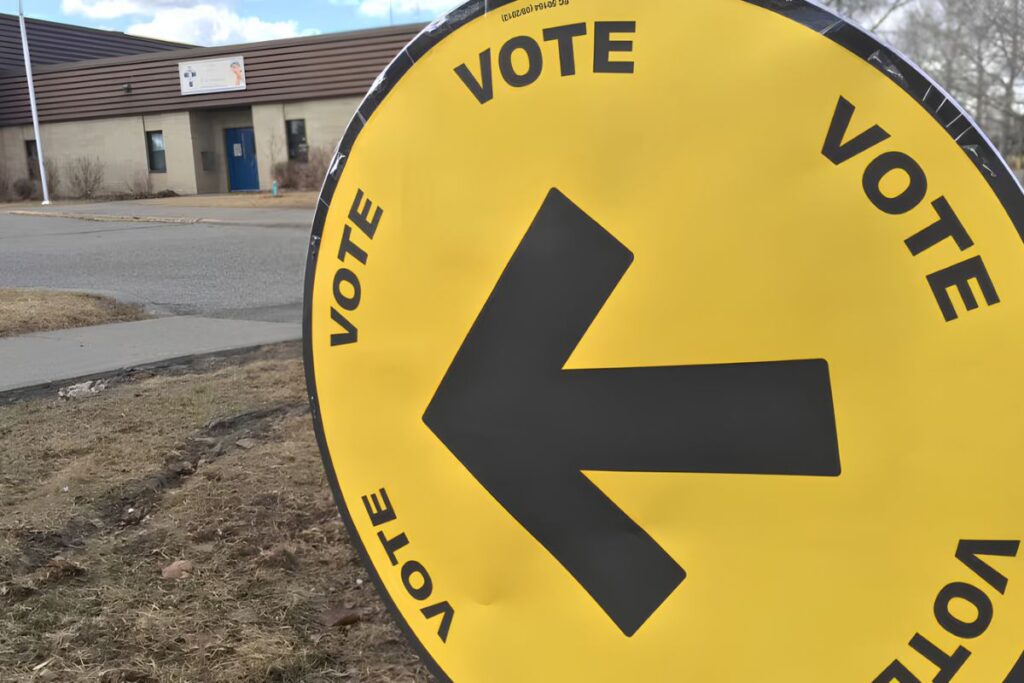
U.S. Democratic midterm surges do not produce higher Nova Scotia youth voter turnout. Electoral records from Elections Nova Scotia and Elections Canada show that following the November 2018 U.S. Democratic wave, provincial turnout among Nova Scotians aged 18 to 24 declined rather than rising, continuing a downward slide to 16.6% in 2024 driven by local election timing and residency rules.
What Happened to Nova Scotia Youth Voter Turnout After the 2018 U.S. Midterms?
Following the November 2018 U.S. midterm elections, Nova Scotia youth voter turnout fell in the 2021 provincial election and dropped again to 16.6% in November 2024, according to Elections Nova Scotia demographic turnout records.
At a November 2026 Dalhousie University panel discussing the U.S. midterm elections, speakers pointed to Democratic gains in Congress as a potential catalyst for young Canadians to reverse Nova Scotia’s low youth participation rate. Testing that assumption against provincial voting records from the cycles before and after November 2018 shows the opposite pattern.
In Nova Scotia’s November 26, 2024 provincial general election, only 16.6% of registered electors aged 18 to 24 cast a ballot, according to Elections Nova Scotia demographic turnout figures reported by The Coast. That figure sits at the bottom of a multi-cycle drop that persisted right through the 2018 U.S. midterm surge:
- May 30, 2017 (before the 2018 U.S. midterms): Overall provincial turnout stood at 53.35%, with Elections Nova Scotia’s post-election age breakdown reported by Global News showing participation dropping steadily across younger cohorts to its lowest level in the 18-to-24 bracket.
- August 17, 2021 (first provincial vote after the 2018 U.S. wave): Even as overall turnout nudged up to 55.07%, Elections Nova Scotia’s youth participation data recorded just 39.1% turnout among young voters.
- November 26, 2024: Overall provincial turnout fell 9.88 percentage points to an all-time low of 45.19%, while 18-to-24 participation sank to 16.6%.
Instead of climbing after American Democrats recaptured the U.S. House of Representatives in 2018, youth participation in Nova Scotia’s provincial elections continued falling. Domestic ballot-box conditions, not American congressional results, governed whether young Nova Scotians showed up at the polls.
Did Halifax Federal Voter Turnout Rise After the 2018 U.S. Midterms?
Federal turnout among Canadians aged 18 to 24 declined in both the 2019 and 2021 general elections following the 2018 U.S. midterms, dropping from 57.1% in 2015 to 46.7% in 2021 before rebounding only when campus polling stations returned in 2025, according to Elections Canada.
Even in federal races, which draw heavier media coverage and on-campus voting stations than provincial contests, national turnout among Canadians aged 18 to 24 declined across the two federal elections immediately following the 2018 U.S. midterms, according to Elections Canada’s Turnout by Age Group dataset:
- 2015 federal election: 57.1% of electors aged 18–24 voted (66.1% overall).
- 2019 federal election (one year after the 2018 U.S. midterms): 18–24 turnout fell 3.2 percentage points to 53.9%.
- 2021 federal election: 18–24 turnout dropped another 7.2 percentage points to 46.7%, coinciding with Elections Canada suspending its Vote on Campus program, an on-campus special-ballot initiative that allows post-secondary students to vote in their home ridings from university, during the pandemic snap election.
- 2025 federal election: Youth turnout rebounded to 55.9%, still 1.2 percentage points below its 2015 peak, after Elections Canada restored Vote on Campus polling at Dalhousie University.
District-level returns in Halifax’s university ridings reflect those same calendar and logistical swings. In Elections Canada’s Official Voting Results for Halifax West, which borders Dalhousie’s western residential neighbourhoods, overall riding turnout slid from 71.71% in 2015 to 70.71% in 2019 and 64.97% in 2021, before jumping 8.45 percentage points to 73.42% in April 2025 once campus advance polls returned.
Why Does U.S. Electoral Energy Rarely Cross the Border at the Ballot Box?
University students in Halifax consume heavy volumes of U.S. political media, yet Elections Canada survey data and snap provincial election calendars show that attention to American politics does not convert into Canadian ballot-box habits.
A 2025 Max Bell Foundation study on Canadian youth civic engagement analyzing Elections Canada Labour Force Survey supplements found that 35% of non-voting youth aged 18 to 24 cited lack of interest in domestic electoral politics and 25.5% reported being too busy on election day. While young Canadians actively follow political debates online, provincial campaigns frequently fail to connect local policy platforms to student priorities.
Calendar timing widens that gap. Nova Scotia’s two post-2018 provincial contests were both snap elections, unscheduled elections called before the end of a government’s fixed term, held outside standard campus rhythms: one in mid-summer on August 17, 2021, when many out-of-province undergraduates were away from Halifax, and the next on November 26, 2024, compressed into a 30-day window during late-term coursework.
How Do Nova Scotia’s Residency Rules Affect Dalhousie Student Voting?
Under Section 38 of the Nova Scotia Elections Act, a resident must live in the province for at least six months immediately before the election writ is issued to vote provincially, disqualifying first-year out-of-province Dalhousie students during fall snap elections.
Panelists at Dalhousie’s November 12, 2026 Women in Politics discussion, reported by Dal News alongside interim Nova Scotia Liberal leader Iain Rankin, urged young Canadians not to take voting for granted and suggested that U.S. voter mobilization offered reason for optimism. Watching high-stakes elections in a neighboring democracy can spark campus debate and remind students of the consequences of abstaining, even if it does not generate a measurable spike in local turnout.
On the ground in Nova Scotia, statutory voting rules shape student participation far more directly than political inspiration from Washington. Under Section 38 of the Nova Scotia Elections Act, a voter must have resided in Nova Scotia for at least six months immediately preceding the date of the election writ, the formal legal order launching an election, to cast a provincial ballot:
- First-year out-of-province students: Undergraduates arriving in Halifax each September for the fall semester do not meet the six-month provincial residency threshold if a snap election is called that autumn, as happened when the writ dropped on October 27, 2024.
- Writ-date uncertainty: Unlike federal elections that offer multi-day Vote on Campus special ballot offices allowing students from across Canada to vote in their home ridings from afar, snap provincial calls give campus organizers barely four weeks to work through residency rules and early-voting schedules.
Until Nova Scotia’s electoral calendar and student residency rules align with the academic year, U.S. midterm waves will remain a subject for campus panels rather than a driver of provincial turnout. The true test of whether Dalhousie’s political discussions carry local weight will come only when young voters in Halifax face a provincial ballot under rules that allow newly arrived students to cast one.
Related reporting: Read our analysis on why special votes alter New Zealand election majorities and how film titles become electoral mobilization flashpoints.
Frequently Asked Questions
Did Nova Scotia youth voter turnout increase after the 2018 U.S. midterm elections? No. Following the November 2018 U.S. Democratic wave, Nova Scotia youth turnout (ages 18 to 24) fell to 39.1% in the August 2021 provincial election and dropped further to 16.6% in the November 2024 provincial election, according to Elections Nova Scotia demographic turnout data.
What happened to Canadian federal youth turnout after the 2018 U.S. midterms? According to Elections Canada, national voter turnout among Canadians aged 18 to 24 fell from 57.1% in 2015 to 53.9% in 2019 and 46.7% in 2021 after the Vote on Campus program was suspended. Youth turnout rebounded to 55.9% in April 2025 once campus advance polling stations reopened at universities including Dalhousie.
Why can’t some out-of-province Dalhousie students vote in Nova Scotia provincial elections? Under Section 38 of the Nova Scotia Elections Act, electors must reside in Nova Scotia for at least six months immediately before the election writ is issued. Students moving to Halifax from outside the province in September are ineligible to vote in a provincial election called that same fall, such as the November 26, 2024 vote.
Why was Nova Scotia’s overall voter turnout so low in 2024? Overall voter turnout in Nova Scotia’s November 26, 2024 election fell 9.88 percentage points to an all-time low of 45.19%. Factors included a compressed 30-day snap campaign, the six-month provincial residency rule for incoming out-of-province students, and low youth engagement, with a 2025 Max Bell Foundation study finding 35% of non-voting Canadian youth cited lack of interest in domestic politics.

Praseetha K
Praseetha K is the Managing Editor of Clarity Times. She edits, verifies and publishes the newsroom's articles, and also writes analysis on policy, law, business and technology. Articles she writes are edited by the Editor-in-Chief before publication.