
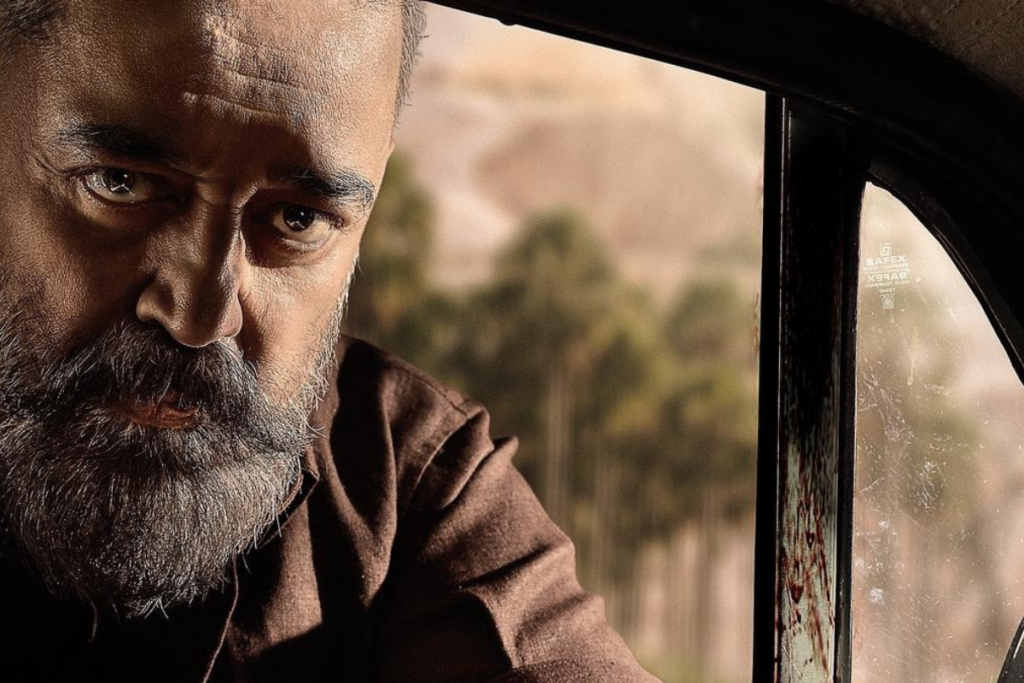
The Kamal Haasan Sandiyar title row persists because marquee cinema offers outsized reach for political mobilization, not because the title violates statutory law. In fact, statutory censorship ignores political soundbites: the Central Board of Film Certification cleared an identical film titled Sandiyar in 2014 without incident because title challenges carry no legal standing before formal review.
Why Did the CBFC Clear an Identical ‘Sandiyar’ Film in 2014?
The Central Board of Film Certification (CBFC), India’s statutory film-certification body operating under the Union Ministry of Information and Broadcasting, cleared a feature film carrying the exact title Sandiyar without mandating a single cut or name change.
On August 1, 2014, the board’s regional office granted a ‘U/A’ certificate to the Tamil feature film Sandiyar (2014), directed by Chozhadevan and starring Aadukalam Murugadoss. The certificate verified that the title met statutory broadcast and public-exhibition standards under Indian federal guidelines.
The film reached theaters across Tamil Nadu later that month. No political party organized demonstrations outside cinema halls. No political leaders called press briefings to issue warnings about communal unrest in Madurai, Theni, or Tirunelveli. The 2014 production completed its theatrical run, secured satellite and streaming cataloging, and entered the public domain without a single legal challenge or public interest petition brought against its marquee.
The total absence of resistance to the 2014 release reveals that objection to the word itself is not absolute. The friction emerges only when the title attaches to a bankable cultural figure.
Can Political Parties Legally Ban a Movie Title Under Indian Law?
Under statutory Indian law, political parties possess zero legal authority to block, alter, or censor an unreleased movie title during pre-production or filming.
Film certification in India operates under Section 5B of the Cinematograph Act, 1952, which sets the principles for certifying films based on public order, decency, and state security. Nothing in Section 5B permits pre-emptive censorship of scripts, shooting schedules, or working titles. The statutory board reviews completed, submitted films, not unfilmed announcements or preliminary titles.
The judicial boundary protecting certified films against third-party intimidation was defined by the Supreme Court of India in S. Rangarajan v. P. Jagjivan Ram (1989). The three-judge bench held that freedom of expression cannot be suppressed merely because groups threaten demonstrations or violence, ruling that the state has an obligation to protect certified expression rather than surrender to street vetoes.
In subsequent challenges involving Tamil film title controversies, the Madras High Court has adhered to this principle. Outside groups hold no statutory standing to seek pre-certification bans before the statutory examining authority has conducted its review.
Administrative title registers maintained by trade bodies, such as the South Indian Film Chamber of Commerce (SIFCC), are private priority mechanisms between rival producers to prevent copyright confusion. They are not statutory instruments of state law enforcement.
How Does the 2003 ‘Virumaandi’ Dispute Differ From the Current Conflict?
The 2003 conflict arose from localized caste violence in southern Tamil Nadu following the late-1990s riots, whereas the current dispute is an asymmetrical contest over political visibility.
In May 2003, Kamal Haasan launched Sandiyar in Madurai. The event drew immediate condemnation from Dr. K. Krishnasamy, founder of Puthiya Tamilagam, a political party representing Devendra Kula Vellalar communities in southern Tamil Nadu, who stated that the title glorified feudal violence and would destabilize southern districts.
The historical backdrop of that dispute was different from today. Southern Tamil Nadu was then recovering from the caste clashes of the late 1990s, including the 1995 Kodiyankulam violence and the 1997 Melavalavu massacre. The memory of communal riots was recent.
Following interventions by then-Chief Minister J. Jayalalithaa, Haasan halted the Madurai schedule. He later renamed the project Virumaandi, releasing it in January 2004.
Mainstream coverage continues to cite the 2003 incident as an unbroken legal precedent. It treats the compromise as an established statutory ban. It was neither: it was an executive political compromise negotiated under specific, localized tensions.
Why Do Star-Led Productions Face Scrutiny While Independent Films Escape It?
Independent projects escape cultural pushback because their low box-office footprint offers political groups little media visibility, whereas challenging a tier-one star yields immediate state-level publicity.
Dr. K. Krishnasamy’s position centers on the potential social footprint of a mass-market release. Puthiya Tamilagam argues that while an indie project in 2014 carried minimal cultural influence, a multi-crore production led by Kamal Haasan reaches tens of millions of viewers across demographics. His party contends that such cultural dominance risks reviving agrarian dominance in areas where caste sensitivities persist.
For political groups seeking public attention ahead of regional electoral cycles, engaging a major film project offers outsized returns. A press release criticizing a low-budget independent director yields negligible column inches. Issuing an ultimatum to Kamal Haasan, a major film star and an active political figure, guarantees prime-time coverage across state news desks.
Historical title logs registered with trade guilds show that titles featuring rural epithets, agrarian themes, and assertive regional colloquialisms regularly obtain clearance without public backlash. Organized resistance emerges selectively: almost exclusively when the title is attached to marquee commercial stars whose projects can sustain sustained media cycles.
The creative community views the recurring tactic as an arbitrary speech tax. Director Ameer, who publicly criticized Krishnasamy’s warning, maintains that allowing extra-statutory bodies to dictate vocabulary sets an unsustainable precedent for filmmakers. The narrative content of Haasan’s project has not been shot, yet political rhetoric treats the unmade film as a completed act of incitement.
How Do Title Rows Impact Pre-Release Movie Business and Contracts?
Title controversies disrupt early production by triggering brand-safety protections in non-theatrical streaming and satellite syndication contracts.
Modern film production relies on non-theatrical revenue, with streaming rights and satellite syndication accounting for substantial portions of pre-production recovery. Multi-crore licensing and co-production agreements routinely carry brand-protection clauses. If an unreleased project becomes associated with legal notices, police bandobast disputes, or boycott threats, financial backers face heightened commercial uncertainty.
The studio faces an asymmetric choice: defend an uncertified title through protracted court litigation, or rename the project to ensure uninterrupted production cash flows. The legal framework protects the film, but commercial schedules favor path-of-least-resistance compromises.
Frequently Asked Questions
Was the movie title ‘Sandiyar’ ever approved by the CBFC?
Yes. On August 1, 2014, the Central Board of Film Certification issued a ‘U/A’ certificate to a Tamil feature film titled Sandiyar, directed by Chozhadevan and starring Aadukalam Murugadoss. The film was released in theaters across Tamil Nadu without cuts to its title, protests, or legal challenges.
Can a political party file an injunction to stop a film title before it is shot?
No. Under Section 5B of the Cinematograph Act, 1952, and established Madras High Court precedent, third-party political entities have no legal standing to seek pre-emptive injunctions on unreleased films. The statutory certification process applies exclusively to completed films submitted to the CBFC.
Why did Kamal Haasan change ‘Sandiyar’ to ‘Virumaandi’ in 2003?
Kamal Haasan changed the title following executive mediation by then-Chief Minister J. Jayalalithaa after protests led by Puthiya Tamilagam founder Dr. K. Krishnasamy. The dispute occurred against the backdrop of late-1990s southern district caste clashes, leading to a negotiated political compromise rather than a statutory or judicial ban.
Why is Puthiya Tamilagam protesting Kamal Haasan’s project but not smaller films?
Dr. K. Krishnasamy argues that a multi-crore Kamal Haasan film has widespread cultural reach that risks romanticizing feudal agrarian dominance, whereas independent releases pass with minimal social footprint. Marquee projects also generate state-wide media attention that low-budget titles cannot provide.

Praseetha K
Praseetha K is the Managing Editor of Clarity Times. She edits, verifies and publishes the newsroom's articles, and also writes analysis on policy, law, business and technology. Articles she writes are edited by the Editor-in-Chief before publication.