The October 25 Congress Shri Krishna Singh Patna rally happened because ousted Bhumihar state chief Akhilesh Prasad Singh staged a parallel show of strength four days after the official party tribute, while national leaders used voter-roll rigging claims to shield both rival factions from an audit of losing 55 of 61 Bihar seats in 2025.
Why Did Bihar Congress Hold Two Shri Krishna Singh Patna Rallies in Four Days?
The Bihar Pradesh Congress Committee (BPCC), the state unit of the Indian National Congress in Bihar, held two separate events for Shri Krishna Singh’s 139th birth anniversary because former state president Akhilesh Prasad Singh organized a rival convention at Patna’s Bapu Sabhagar auditorium four days after current state president Rajesh Ram led the official party tribute at Sadaqat Ashram.
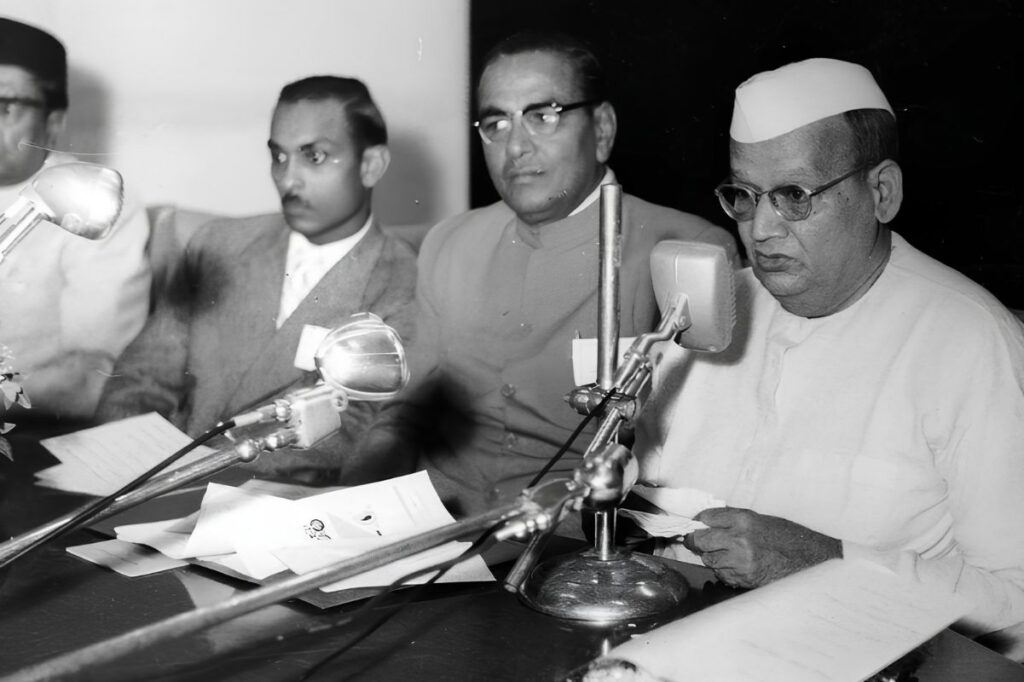
On October 21, 2026, the actual birth date of Bihar’s first Chief Minister, Shri Krishna Singh, known across the state as “Sri Babu”, Rajesh Ram presided over the official commemoration inside Sadaqat Ashram, the BPCC headquarters in Patna.
Four days later, on October 25, Akhilesh Prasad Singh hosted a second convention five kilometers away at the 5,000-seat Bapu Sabhagar hall and brought Congress National President Mallikarjun Kharge from New Delhi to headline it. Akhilesh Prasad Singh is a Rajya Sabha member from the Bhumihar community, a landowning upper caste in Bihar to which Shri Krishna Singh also belonged.
That October 25 gathering followed an independent mobilization drive run by Akhilesh Prasad Singh outside the Sadaqat Ashram hierarchy. On October 22, 2026, he toured Buxar and Ara in Bihar’s Shahabad region to recruit crowds and district coordinators for the Bapu Sabhagar hall.
During those district meetings, Akhilesh Prasad Singh campaigned alongside upper-caste Congress politicians who lost organizational posts after his removal as state president in March 2025: former Buxar legislator Munna Tiwari, former Kargahar legislator Santosh Mishra, and organizing committee coordinator Prof. Shashi Bhushan Pandey.
Allies of the former state chief defend the second event as an expansion of party outreach rather than a rival operation. Booking the capital’s largest convention center, they argue, allowed Congress to reach non-party civic groups and give the national president a wider public stage than the party office compound allows.
The split schedule placed the Congress leadership in a delicate position on October 25. A Dalit national president and a Dalit state president shared a stage built by an ousted Bhumihar leader to honor an upper-caste icon, eleven months after the party’s caste overhaul collapsed in the Bihar Assembly election 2025 Congress results.
How Did the Akhilesh Prasad Singh vs Rajesh Ram Shift Affect Bihar Assembly Election 2025 Congress Results?
Replacing Bhumihar leader Akhilesh Prasad Singh with Dalit legislator Rajesh Ram eight months before the November 2025 Bihar Assembly election failed to consolidate Scheduled Caste voters, as Congress dropped from 19 seats to 6 out of 61 contested and Rajesh Ram lost his own Kutumba seat by 21,525 votes.
That leadership change began on March 18, 2025. Aiming to rally Scheduled Caste (SC) voters behind Leader of the Opposition Rahul Gandhi’s social-justice platform, the All India Congress Committee (AICC), the national central executive body of the Indian National Congress, replaced Akhilesh Prasad Singh as BPCC president with Rajesh Kumar, known as Rajesh Ram, working alongside AICC state in-charge Krishna Allavaru.
When the Election Commission of India (ECI) declared the state results on November 14, 2025, the ruling National Democratic Alliance (NDA) captured 202 of the 243 assembly seats, while the opposition Mahagathbandhan, the opposition coalition in Bihar led by the Rashtriya Janata Dal (RJD) and including the Congress and Left parties, fell to 35 seats combined.
According to the Election Commission of India statistical report for the November 2025 Bihar Legislative Assembly election, seat totals shifted sharply across the major contenders:
- Bharatiya Janata Party (BJP): अकॉर्डिंग to the ECI November 2025 statistical report, won 89 seats, up 20.3% from 74 seats in 2020.
- Janata Dal (United) [JD(U)]: According to the ECI November 2025 statistical report, won 85 seats, up 97.7% from 43 seats in 2020.
- Rashtriya Janata Dal (RJD): According to the ECI November 2025 statistical report, won 25 seats, down 66.7% from 75 seats in 2020.
- Lok Janshakti Party (Ram Vilas): According to the ECI November 2025 statistical report, won 19 seats, up from 1 seat in 2020.
- Indian National Congress: According to the ECI November 2025 statistical report, won 6 seats out of 61 contested, a 9.8% strike rate, down 17.3 percentage points from 27.1% in 2020, when the party won 19 of 70 contested seats.
Six seats out of 61. That 9.8% conversion rate marked the Congress party’s worst performance in Bihar in 15 years.
The losses included the state president’s home constituency. In Kutumba (AC-222), a Scheduled Caste-reserved seat in Aurangabad district that Rajesh Ram had represented for two consecutive terms since 2015, he lost by 21,525 votes. According to ECI Form 21E election returns for Kutumba, Lalan Ram of the NDA-aligned Hindustani Awam Morcha (Secular) won 84,727 votes (49.54% of the total vote), while Rajesh Ram trailed with 63,202 votes (36.95%).
In standard party procedure, a state president losing his own seat while the state unit drops from 19 legislators to 6 triggers the dismissal of the state executive committee. In Patna, both rival camps found a shared reason to halt an organizational audit.
Why Did Mallikarjun Kharge Target the RSS and the Election Commission Special Intensive Revision in Bihar?
In his Mallikarjun Kharge RSS speech in Patna, the Congress president paired attacks on the Rashtriya Swayamsevak Sangh with demands to halt the Election Commission Special Intensive Revision in Bihar and annul two years of state elections, a framing that shields both Bihar Congress factions from an internal audit over losing 55 of 61 seats in November 2025.
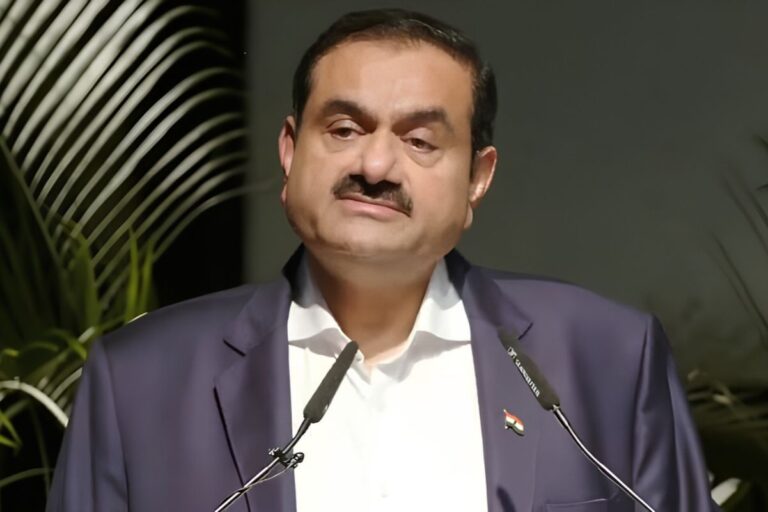
Addressing the Bapu Sabhagar crowd on October 25 with both Rajesh Ram and Akhilesh Prasad Singh seated on stage, Kharge declared that “there will be no peace in the country until the ideology of the RSS is eliminated.” In the same speech, he demanded an immediate stop to the Election Commission’s Special Intensive Revision (SIR) and called for the annulment of all state assembly elections held over the past two years. The Special Intensive Revision (SIR) is a door-to-door voter verification exercise by the Election Commission of India requiring citizens to trace their family lineage to the 2002–2004 electoral rolls to confirm pre-1987 citizenship thresholds.
Kharge also faulted Bihar Chief Minister Nitish Kumar for abandoning socialist principles to govern with the BJP, condemned the August 2026 ritual purification (shuddhikaran) of his rally ground in Haldwani, Uttarakhand, after his visit as a Dalit leader, and prayed for Lord Ram to punish those behind the 2026 Ayodhya Ram Temple donation theft case. National print and television outlets reported those remarks strictly as an ideological clash between Congress and the BJP.
Within the Bihar Congress unit, Kharge’s call to annul two years of assembly polls, grouping the November 2025 Bihar election with Maharashtra and Haryana, serves a concrete administrative purpose. By blaming the loss of 55 out of 61 seats on voter-roll manipulation under the SIR and Electronic Voting Machine (EVM) tampering, the AICC froze disciplinary action over ticket distribution and campaign management.
That diagnosis protects both rival leaders in Patna. For Rajesh Ram and AICC in-charge Krishna Allavaru, the “vote theft” argument explains why the March 2025 Dalit leadership appointment failed to retain even Kutumba; for Akhilesh Prasad Singh and his upper-caste allies, it blocks an investigation into whether factional non-cooperation after March 2025 weakened the party’s campaign in Shahabad and Magadh.
The party’s external explanation collides with an internal administrative step: before a political party can contest voter-roll deletions during an intensive revision, it must appoint Booth Level Agents. A Booth Level Agent (BLA) is an accredited local political party worker officially registered with the Election Commission to verify draft voter rolls and file inclusion or deletion claims at an individual polling station.
Functionaries aligned with the current BPCC leadership counter that judging the March 2025 overhaul by the November 2025 seat count ignores the timeline required to rebuild a party base. Reconstructing a Dalit and backward-caste organization after decades of upper-caste dominance takes multiple election cycles, they argue, while strict lineage rules in the Election Commission’s roll revision disenfranchise landless and migrant workers.
Why Are Bhumihar Voters in Bihar Skeptical of the Congress Outreach?
Bhumihar voters in Bihar and community associations in Patna and Muzaffarpur remain skeptical of Congress because the party removed Bhumihar leaders from state decision-making posts in March 2025 while limiting its community outreach to symbolic anniversary stages.
Beyond preserving an internal truce, the October 25 Bapu Sabhagar convention tested whether Bhumihar voters, who have backed the BJP-JD(U) coalition for over two decades, can be drawn back to Congress after the November 2025 cabinet formation. Inside the ruling NDA, the BJP’s state leadership under Deputy Chief Minister Samrat Choudhary has centered its strategy on Other Backward Classes (OBC) outreach, while Chirag Paswan’s Lok Janshakti Party (Ram Vilas) grew from 1 seat in 2020 to 19 seats in 2025, according to ECI records.
Akhilesh Prasad Singh’s camp has sought to use those coalition shifts by arguing that only Congress honors Shri Krishna Singh’s stature, reviving a demand to confer the Bharat Ratna, India’s highest civilian award, on Bihar’s first Chief Minister. Community associations in Patna and Muzaffarpur evaluate political alliances through assembly tickets and cabinet berths rather than commemorative stages.
For office-bearers of Bhumihar community organizations such as the Shri Krishna Sinha Chetna Manch, a Bihar-based cultural and political advocacy forum representing the Bhumihar community, pairing an annual memorial speech with the removal of Bhumihar leaders from BPCC executive posts deepens distrust toward the Congress-RJD alliance.
Legislators from the ruling BJP and JD(U) point to that representation gap when answering Kharge’s Patna speech, contending that the NDA gives the community decision-making power in the Bihar cabinet and legislature while Congress treats Bhumihar voters as an annual stage backdrop.
As the Election Commission prepares to publish Bihar’s final revised voter rolls, the truce displayed on the Bapu Sabhagar stage faces a concrete operational test: whether the rival networks of Rajesh Ram and Akhilesh Prasad Singh will combine forces to deploy booth agents across the state’s polling stations, or continue running two separate parties under one flag.
Frequently Asked Questions
Why did Congress hold two separate events for Shri Krishna Singh Jayanti in Patna in October 2026?
The Bihar Pradesh Congress Committee held its official 139th birth anniversary tribute for Bihar’s first Chief Minister, Shri Krishna Singh, at Sadaqat Ashram on October 21, 2026, led by current Dalit state president Rajesh Ram. Four days later, on October 25, ousted Bhumihar state president Akhilesh Prasad Singh staged a rival 5,000-seat convention at Patna’s Bapu Sabhagar with Congress President Mallikarjun Kharge to demonstrate his faction’s enduring organizational reach.
How many seats did Congress win in the November 2025 Bihar Assembly election?
According to the Election Commission of India statistical report, the Indian National Congress won 6 out of 61 contested seats in the November 2025 Bihar Legislative Assembly election, a 9.8% strike rate, down from 19 of 70 seats (27.1%) in 2020. The ruling National Democratic Alliance (NDA) won 202 of the 243 seats, with the BJP winning 89 and the JD(U) winning 85.
Did Bihar Congress President Rajesh Ram win his seat in the 2025 Bihar election?
No. According to Election Commission of India Form 21E returns, BPCC President Rajesh Ram (Rajesh Kumar), who was appointed on March 18, 2025, lost his two-term Kutumba (SC) assembly constituency (AC-222) by 21,525 votes, polling 63,202 votes (36.95%) against Hindustani Awam Morcha (Secular) candidate Lalan Ram’s 84,727 votes (49.54%).
What is the Election Commission’s Special Intensive Revision (SIR) that Mallikarjun Kharge opposed in Patna?
The Special Intensive Revision (SIR) is a door-to-door electoral roll verification drive conducted by the Election Commission of India in 2026 that requires voters to map their personal or parental lineage to the 2002–2004 voter rolls to verify pre-1987 citizenship criteria. At the October 25 Patna rally, Kharge demanded an immediate halt to the SIR and called for the annulment of the past two years of state assembly elections, a position that also insulates Bihar Congress factions from an internal post-poll purge.

Praseetha K
Praseetha K is the Managing Editor of Clarity Times. She edits, verifies and publishes the newsroom's articles, and also writes analysis on policy, law, business and technology. Articles she writes are edited by the Editor-in-Chief before publication.