At Clarity Times, we examine what mainstream narratives omit. This dispatch investigates institutional incentives, policy fine print, and multi-dimensional community impacts.
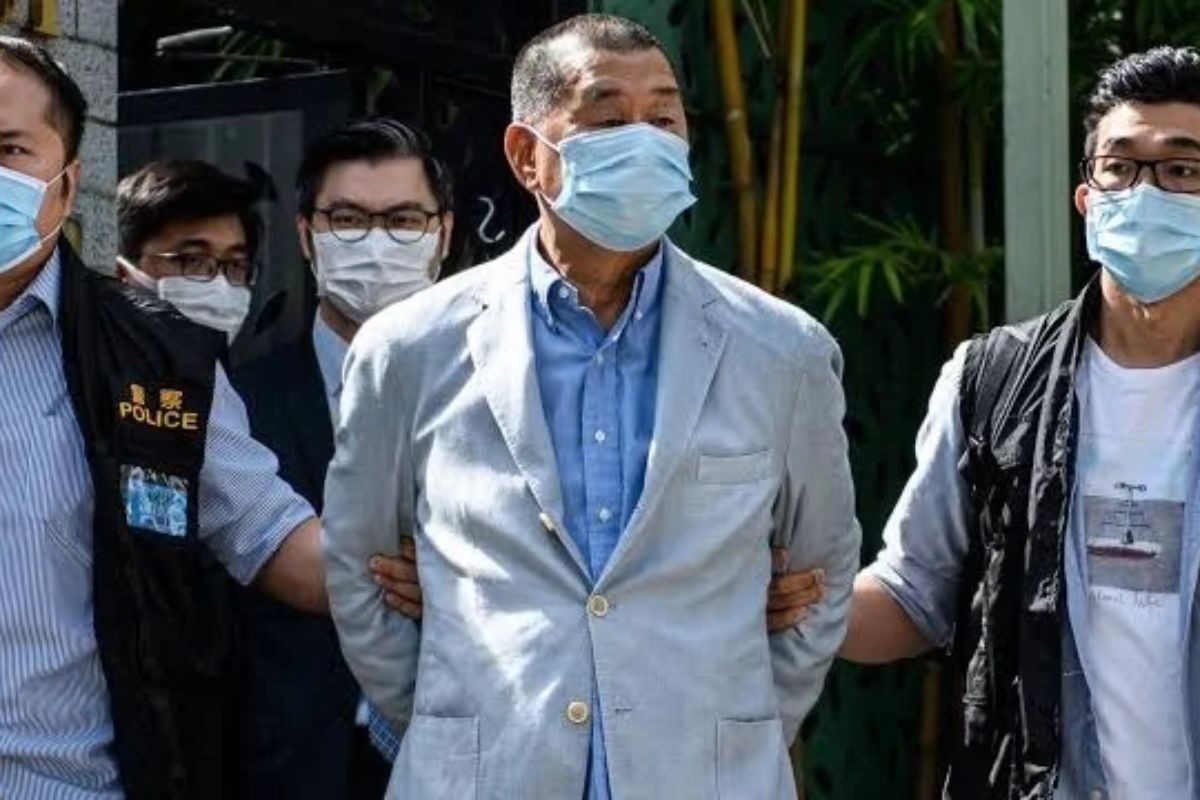
If China agrees to release 78-year-old publisher Jimmy Lai Chee-ying, authorities will not issue a diplomatic pardon. Instead, Beijing relies on a documented bureaucratic provision known as medical parole. This specific legal mechanism allows the government to deport high-profile political prisoners while keeping their original criminal convictions intact.
In Chinese jurisprudence, medical parole (baowai jiuyi) is a temporary administrative order permitting convicted prisoners with severe illnesses to serve their terms outside detention facilities under state supervision.
Why Can’t Beijing Issue a Presidential Pardon for Political Prisoners?
The Chinese legal system has no constitutional mechanism for a politically motivated head-of-state pardon, meaning President Xi Jinping cannot commute a sentence without repudiating the state’s judicial apparatus.
When U.S. President Donald Trump publicly raised the cases of Jimmy Lai and two other detainees during bilateral meetings in Washington, he framed a potential extraction as a personal agreement between two leaders.
Domestic Chinese law requires an administrative pretext before any prisoner leaves custody.
According to long-term prisoner tracking data from the Dui Hua Foundation, that pretext is medical parole. The San Francisco-based human rights group has documented how Beijing uses medical dispensations to expel political detainees directly into foreign exile without wiping their court records clean.
A formal pardon would require the Chinese Communist Party to acknowledge that an arrest was unjustified. Medical parole requires no such admission.
The Ministry of Foreign Affairs of the People’s Republic of China rejects the premise that prisoner management intersects with foreign diplomacy. Ministry spokespersons state that China is a rule-of-law jurisdiction whose judicial bodies handle sentence adjustments strictly through penal statutes and clinical diagnoses, rather than geopolitical bargaining.
How Does China’s Medical Parole Law Function as an Off-Ramp?
Under Article 265 of the Chinese Criminal Procedure Law, prisoners serving fixed-term sentences can temporarily serve their time outside prison walls if they are “seriously ill and need medical treatment outside prison.”
This statutory carve-out functions as the government’s standard operating procedure when bilateral tensions require an exit strategy.
Historical records maintained by the Dui Hua Foundation show a consistent pattern. In December 2002, Chinese authorities granted medical parole to veteran democracy organizer Xu Wenli, putting him directly aboard a flight to Chicago on Christmas Eve. In July 2015, American geologist Xue Feng, serving an eight-year sentence on state intelligence charges, was released early and deported straight to Texas following persistent diplomatic appeals.
In both instances, the underlying convictions remained valid under Chinese law.
The detainees were either transported to overseas hospitals or permanently deported. The maneuver resolves high-stakes foreign friction while shielding the state from appearing weak before its domestic audience.
Can Hong Kong’s National Security Law Accommodate a Medical Transfer?
Applying mainland medical parole procedures to Lai creates immediate friction because his conviction falls under the Hong Kong National Security Law (NSL), a statute specifically drafted to eliminate foreign interference in local courtrooms.
The Law of the People’s Republic of China on Safeguarding National Security in the Hong Kong Special Administrative Region was enacted by Beijing in June 2020 to criminalize secession, subversion, terrorism, and collusion with foreign entities.
At Lai’s sentencing, judges at the West Kowloon Magistrates’ Courts established that medical conditions rarely warrant sentencing leniency in major national security convictions. A study by the Georgetown Center for Asian Law shows that the NSL has produced an exceptionally rigid penal environment, with bail and early-release rates plummeting across all security-related dockets.
Overcoming this legal rigidity requires coordinated administrative intervention between the central government in Beijing and Hong Kong’s Correctional Services Department.
The Hong Kong Security Bureau maintains that all correctional decisions follow standard local ordinances, denying that political negotiations play any role in custodial transfers.
What Bureaucratic Steps Are Required to Secure Jimmy Lai’s Medical Parole?
Executing a medical release requires prison physicians and foreign consular teams to assemble a verifiable clinical record that meets statutory illness thresholds before authorities can order deportation.
Lai is 78 years old. His defense counsel presented medical documentation to the court confirming that he manages multiple chronic illnesses, including hypertension and type-2 diabetes, while held in solitary confinement.
Building a formal paper trail of declining health gives both sides the necessary legal cover. Congressional leaders, including U.S. Representative Christopher Smith, have already centered their advocacy on demanding medical parole based on Lai’s physical deterioration.
Once prison doctors sign off on the diagnosis, authorities can process the transfer as an internal health determination.
The public negotiations happen between heads of state. The legal machinery that makes release possible sits inside a prison hospital ward.
Frequently Asked Questions
Can Chinese President Xi Jinping pardon Jimmy Lai directly?
No. The Chinese legal structure lacks an executive pardon mechanism for political convictions, meaning any release must follow established administrative provisions to avoid invalidating previous court rulings.
What is the legal basis under Chinese law for releasing ill detainees?
Article 265 of the Criminal Procedure Law of the People’s Republic of China authorizes correctional institutions to place fixed-term prisoners on medical parole if they suffer from severe medical conditions requiring treatment outside custody.
How does medical parole protect Beijing’s domestic standing?
Medical parole allows authorities to deport foreign nationals or dissidents on compassionate medical grounds without vacating their original convictions, preserving the state’s legal authority while removing diplomatic pressure.
Why does Jimmy Lai’s sentence under Hong Kong’s National Security Law complicate a medical release?
The National Security Law was written to restrict judicial discretion and prevent foreign influence, making discretionary sentence reductions or overseas transfers legally complex without direct intervention from mainland authorities.
Editorial Independence & Corrections
Clarity Times is published by Beeps Venture Technologies LLP under strict editorial independence charters. We uphold rigorous sourcing and verification protocols. Noticed a factual omission or error? Review our Correction Protocols or contact our editorial desk at mail@claritytimes.org.

Praseetha K
Investigative journalist and research analyst contributing independent field reports and structural analysis for Clarity Times.