None of the eight Mumbai railway stations renamed on paper by Maharashtra’s Cabinet and Legislature in 2024 have changed their names on Indian Railways’ timetable. Renaming an Indian Railways station requires multi-ministry vetting in New Delhi, the bureaucratic reality behind the state’s pivot to renaming only the Dadar Metro stop.
Have Any of the Eight Mumbai Railway Stations Approved in 2024 Been Renamed?
Every one of the eight Mumbai suburban railway stations cleared for renaming in 2024 still operates under its British-era name in Central Railway and Western Railway directories.
In March 2024, the Maharashtra Cabinet granted in-principle approval to rename eight stations, followed by a unanimous Maharashtra Legislative Council and Assembly resolution in July 2024 covering seven local stops:
- Mumbai Central: proposed as Nana Jagannath Shankarsheth Station (processed on a separate earlier state file)
- Currey Road: proposed as Lalbaug
- Sandhurst Road: proposed as Dongri
- Marine Lines: proposed as Mumbadevi
- Charni Road: proposed as Girgaon
- Cotton Green: proposed as Kalachowki
- Dockyard Road: proposed as Mazgaon
- King’s Circle: proposed as Tirthankar Parshvanath
State announcements routinely counted eight stations because Mumbai Central had already been forwarded to New Delhi separately, while state summaries counted Sandhurst Road twice, once for its Central Line platforms and once for its Harbour Line platforms. More than two years later, public directories on Central Railway and Western Railway show that none of these stops carry their proposed names in operational records, while descendants and activists were still renewing appeals in 2025 for the pending Mumbai Central file to clear central approval.
Why Did Maharashtra Pivot From Dadar Railway Station to the Metro Stop?
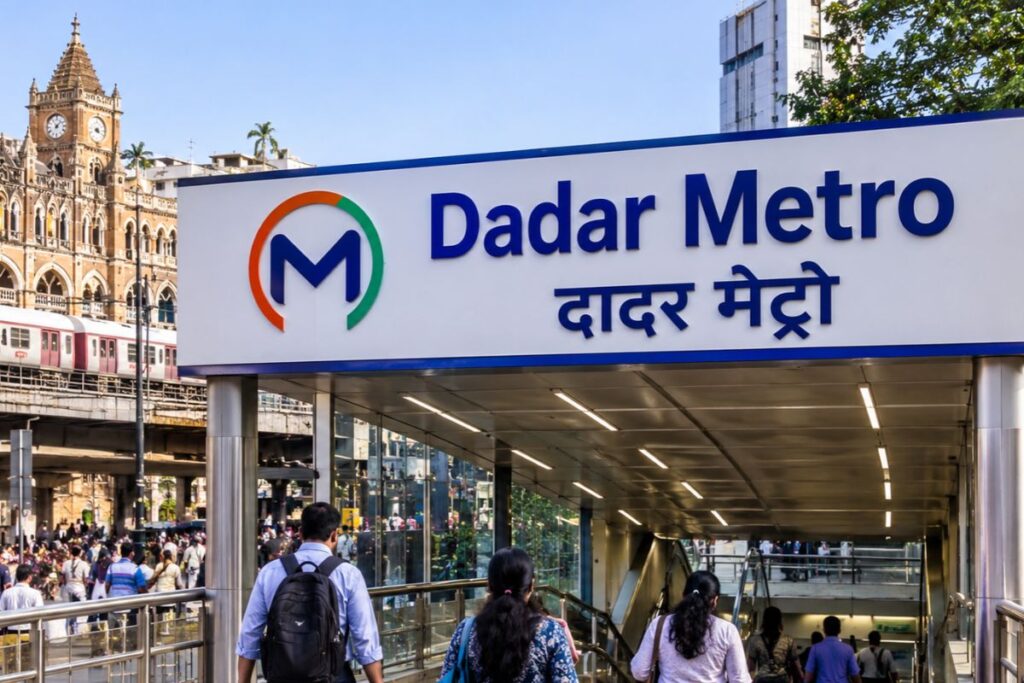
Maharashtra pivoted to renaming only the Dadar Metro station because Metro naming falls under state-led governance, whereas renaming an Indian Railways suburban hub requires lengthy central clearances in New Delhi.
On November 18, 2026, an initial state public relations statement suggested Dadar railway station would be renamed “Chaityabhoomi” before the 70th Mahaparinirvan Diwas, the annual December 6 observance marking Dr. B.R. Ambedkar’s death anniversary, on December 6, 2026. After deleting that statement, Maharashtra Chief Minister Devendra Fadnavis clarified on November 19, 2026, that only the underground Dadar station on Mumbai Metro Aqua Line 3 would receive the new name, leaving the suburban railway hub unchanged.
The two rail networks run on separate legal tracks. Indian Railways is a central subject under the Constitution of India, so renaming a suburban station requires formal clearance from Union ministries. Metro stations on Aqua Line 3 sit under the Mumbai Metro Rail Corporation Limited (MMRCL), a joint venture executing Mumbai’s underground metro corridor, where the Jagannath Shankar Sheth Metro Station already operates under the reformer’s name, even as the adjacent Mumbai Central railway station awaits central clearance.
How Long Does It Take to Rename a Railway Station in India?
Renaming an Indian Railways station typically takes more than a year after a state assembly passes a resolution because the proposal must clear four central bodies before a state gazette notification can be issued.
Under central station-renaming procedures, a state legislature resolution is only the opening step. Once Mantralaya, the Maharashtra state secretariat, submits a proposal, the Union Ministry of Home Affairs (MHA) must secure No Objection Certificates (NOCs) from four central agencies before clearing the change:
- Survey of India: verifies geographical naming conventions to prevent map conflicts.
- Department of Posts: checks Postal Index Number (PIN) codes to prevent mail-routing errors.
- Intelligence Bureau: assesses local security or law-and-order concerns.
- Ministry of Railways: verifies operational feasibility and confirms the proposed name is unique nationwide.
Only after the Union Ministry of Home Affairs grants its NOC can the state government publish an official gazette notification, which triggers Indian Railways’ commercial rollout. According to Times of India records, Maharashtra’s Assembly passed a resolution to rename Elphinstone Road as Prabhadevi on December 16, 2016, received central approval in May 2017, and saw Western Railway implement the new name on July 19, 2018, a 19-month gap. By contrast, when the state named the newly built Oshiwara station as Ram Mandir in November 2016, the notification happened before the station opened to passenger traffic.
What Has to Change Inside Indian Railways Once Approval Arrives?
Once a state gazette notification reaches Central Railway or Western Railway, commercial and engineering teams must update ticketing databases, assign a new alphabetical station code, and reprogram train indicators before commuters see the new name.
Zonal railways first issue formal accounting and commercial circulars, such as Central Railway’s station-renaming accounting notices, and update backend software maintained by the Centre for Railway Information Systems (CRIS), the agency that operates Indian Railways’ ticketing and train-control systems.
As Western Railway’s Prabhadevi rollout showed, renaming an active suburban hub requires issuing a new alphabetical code (such as PBHD for Prabhadevi) while preserving legacy numerical identifiers inside the Unreserved Ticketing System (UTS). Crews must also reprogram suburban train public-address audio and visual indicators alongside physical platform boards, while central vetting across Delhi ensures no duplicate station names enter India’s rail network.
What Does This Mean for Mumbai’s Next Wave of Station Renamings?
Mumbai’s transit map is splitting into two separate naming systems because suburban rail renamings remain tied to New Delhi approvals while Metro naming stays inside Maharashtra’s administrative reach.
Commuters transferring between the suburban railway network and Mumbai Metro Aqua Line 3 at Dadar face a single physical interchange carrying two different official names, “Dadar” on the surface railway platforms and “Chaityabhoomi” underground, even as the Maharashtra government works to frame statewide Metro naming guidelines.
Frequently Asked Questions
Have any of the eight Mumbai railway stations approved in 2024 been renamed yet? No. None of the eight Mumbai suburban railway stations cleared by the Maharashtra Cabinet in March 2024 and the state legislature in July 2024, including Mumbai Central, Currey Road, and Marine Lines, have changed their names in Central Railway or Western Railway operational directories as of November 2026.
Why did Maharashtra decide to rename only the Dadar Metro station instead of the Dadar railway station? Renaming an Indian Railways suburban station requires a No Objection Certificate from the Union Ministry of Home Affairs after vetting by four central agencies, a process that took 19 months for Prabhadevi station. Mumbai Metro Aqua Line 3 stations fall under state-led governance through the Mumbai Metro Rail Corporation Limited, allowing Maharashtra to act through its own legislative procedures ahead of December 6, 2026.
Why did Maharashtra’s 2024 list count eight stations when the legislature resolution named seven? The Maharashtra Cabinet’s March 2024 tally of eight stations included Mumbai Central, which had already been sent to New Delhi on a separate earlier file, and counted Sandhurst Road twice, once for its Central Line platforms and once for its Harbour Line platforms.
Which central agencies must approve a railway station name change in India? After a state legislature passes a renaming resolution, the Union Ministry of Home Affairs must obtain clearances from the Survey of India, the Department of Posts, the Intelligence Bureau, and the Ministry of Railways before the state can publish a gazette notification.

Praseetha K
Praseetha K is the Managing Editor of Clarity Times. She edits, verifies and publishes the newsroom's articles, and also writes analysis on policy, law, business and technology. Articles she writes are edited by the Editor-in-Chief before publication.