
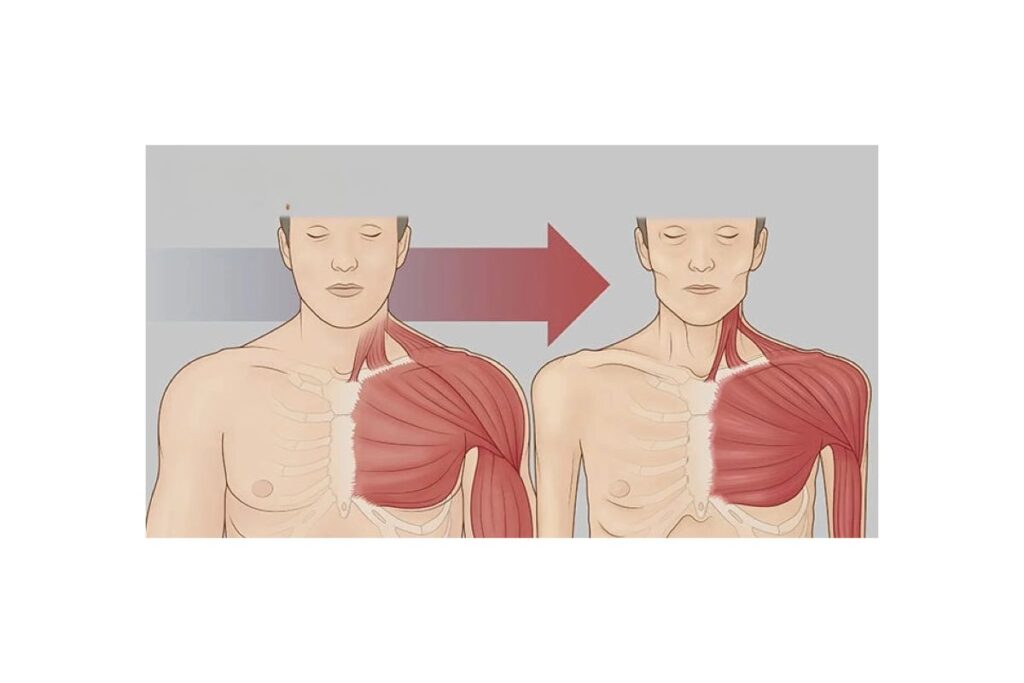
Muscle wasting in severe COPD happens because systemic inflammation triggers pulmonary cachexia, involuntary muscle loss affecting 25% to 40% of advanced patients regardless of calorie intake. Meanwhile, rapid breathing during unguided aerobic exercise causes dynamic hyperinflation, trapping air inside damaged lungs, flattening the diaphragm, and worsening breathlessness.
Why Do Severe COPD Patients Lose Muscle Despite Eating Enough Calories?
Chronic systemic inflammation and labored breathing raise resting energy burn by 15% to 20%, breaking down muscle faster than standard diets rebuild it.
Mainstream wellness guides tell people with Chronic Obstructive Pulmonary Disease (COPD) to maintain their weight with balanced, frequent meals. In advanced disease, classified under Global Initiative for Chronic Obstructive Lung Disease (GOLD) criteria as Stage III or IV, metabolic dysfunction overrides standard calorie math.
Clinical literature published in the European Respiratory Journal shows that roughly 25% of COPD patients overall, and up to 40% of those with severe airflow obstruction, develop pulmonary cachexia, a metabolic syndrome of involuntary skeletal and respiratory muscle depletion.
Inflammatory signaling proteins such as tumor necrosis factor-alpha degrade muscle fibers faster than standard meals replace them, leaving patients with net lean-tissue loss even when hitting daily calorie targets, according to clinical nutrition guidance from the National Heart, Lung, and Blood Institute (NHLBI).
Why Can Unsupervised Cardio Make Severe COPD Breathlessness Worse?
Unguided aerobic walking speeds up breathing rates before damaged air sacs can empty, trapping air in the lungs and flattening the diaphragm.
Generic advice to walk longer distances or push through continuous cardio creates a mechanical trap for patients with severe emphysema. During exertion, rapid breathing leaves too little time to exhale fully before the next breath begins.
Pulmonary physiology studies in the American Journal of Respiratory and Critical Care Medicine define this mechanism as dynamic hyperinflation, a progressive buildup of trapped air in the lungs during exercise that sharply reduces inspiratory capacity, the volume of air a person can inhale after a normal breath out.
Trapped air pushes the diaphragm downward into a flattened position, forcing neck and chest muscles to work harder for smaller breaths and triggering acute breathlessness episodes documented by the American Thoracic Society.
How Do Mainstream COPD Lifestyle Guides Oversimplify Disease Stages?
Standard checklists apply habits built for mild COPD, where stomach bloating and minor deconditioning are the primary barriers, to advanced patients facing severe cellular muscle breakdown.
Roughly 70% to 80% of diagnosed COPD cases fall into mild or moderate stages (GOLD Stage I and II), where regular walking and splitting food into five or six small meals prevent stomach fullness from pressing against the diaphragm and reliably improve stamina.
Applying those exact habits to Stage III and IV patients misses underlying catabolic muscle wasting in severe COPD and fixed ventilatory limits. Splitting a low-protein diet into smaller portions does not halt inflammatory muscle loss, and unpaced aerobic walking triggers air trapping rather than cardiovascular conditioning.
Complete inactivity still accelerates physical decline in Stage IV disease, so clinicians do not advise patients to stop moving; specialist care shifts the structure and timing of movement instead.
Why Does a Normal Body Weight Hide Deadly Muscle Loss in COPD?
Patients with severe COPD can retain body fat while losing critical skeletal and respiratory muscle, doubling their risk of respiratory death despite a normal bathroom-scale weight.
Tracking body weight alone frequently misses sarcopenia, the progressive loss of skeletal muscle mass and strength.
Data from the Copenhagen City Heart Study published in the American Journal of Respiratory and Critical Care Medicine show that Fat-Free Mass Index (FFMI), a body composition measurement of lean muscle and bone relative to height, predicts survival far better than Body Mass Index (BMI). Among COPD patients with a medically normal BMI between 18.5 and 25, those with low FFMI faced a 30% higher overall mortality risk (hazard ratio 1.3) and double the risk of COPD-related death (hazard ratio 2.0) compared to peers with preserved muscle mass.
Primary care visits rarely include bioelectrical impedance scans or handgrip dynamometer testing to catch hidden muscle loss early, leaving lean-mass deficits undetected until severe weakness sets in, per respiratory rehabilitation assessments indexed on PubMed.
What Exercise and Nutrition Protocols Actually Work for Severe COPD?
Evidence-based care replaces continuous cardio and generic meal splitting with targeted high-protein nutrition and single-limb interval resistance training preceded by bronchodilators.
Under the European Respiratory Society (ERS) statement on nutritional assessment and therapy in COPD, clinicians target 1.2 to 1.5 grams of protein per kilogram of body weight daily, often paired with leucine-rich amino acid supplements, to stimulate muscle protein synthesis against chronic inflammation.
Exercise prescriptions shift away from continuous endurance walking toward partitioned resistance work. Clinical trials published in Medicine & Science in Sports & Exercise show that training one leg or arm at a time, or exercising in short 30-to-60-second intervals preceded by fast-acting bronchodilators, builds peripheral muscle strength without driving breathing rates high enough to trigger dynamic hyperinflation.
Frequently Asked Questions
Why do people with severe COPD lose muscle mass even when eating enough calories?
According to clinical research in the European Respiratory Journal, 25% to 40% of severe COPD patients develop pulmonary cachexia, where chronic systemic inflammation and labored breathing raise resting energy burn by 15% to 20% and break down muscle fibers faster than standard diets rebuild them.
Why can walking or continuous cardio make severe COPD shortness of breath worse?
During unpaced aerobic exercise, rapid breathing leaves insufficient time for damaged air sacs to empty before the next inhale, causing dynamic hyperinflation. Studies in the American Journal of Respiratory and Critical Care Medicine show this trapped air flattens the diaphragm and forces neck and chest muscles to work harder for smaller breaths.
Can you have dangerous muscle loss from COPD if your BMI is normal?
Yes. Data from the Copenhagen City Heart Study show that COPD patients with a normal BMI (18.5 to 25) but a low Fat-Free Mass Index faced a 30% higher all-cause mortality risk and double the risk of COPD-related death compared to patients with preserved muscle mass.
What type of exercise and diet do specialists recommend for advanced COPD?
The European Respiratory Society recommends 1.2 to 1.5 grams of protein per kilogram of body weight daily to counter muscle breakdown, while clinical trials in Medicine & Science in Sports & Exercise support single-limb or 30-to-60-second interval resistance exercises preceded by bronchodilators to build strength without triggering air trapping.

Praseetha K
Praseetha K is the Managing Editor of Clarity Times. She edits, verifies and publishes the newsroom's articles, and also writes analysis on policy, law, business and technology. Articles she writes are edited by the Editor-in-Chief before publication.