Diagnostic chains offer free diabetes tests around World Diabetes Day because those camps work as loss-leader customer acquisition funnels. Once a patient shares a phone number, automated follow-ups pitch ₹2,500–₹8,500 bundled wellness panels and recurring monitoring, packages that routinely pack in non-essential assays beyond what clinical guidelines require for routine diabetes screening.
How Do Free Diabetes Tests Turn Into Multi-Thousand-Rupee Upsells?
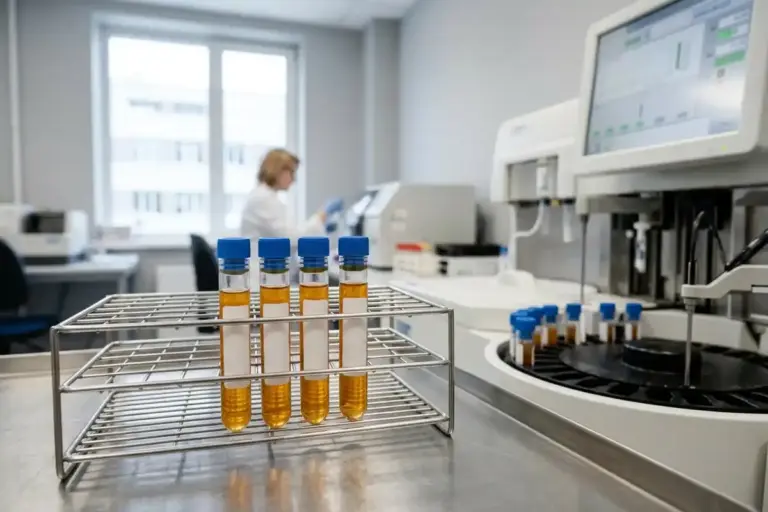
Free or sub-₹100 blood sugar camps generate leads that diagnostic networks convert into higher-margin bundled panels and repeat quarterly testing. Every November ahead of World Diabetes Day, residential societies, corporate parks, and neighbourhood collection centres across Indian cities roll out discounted screening drives, ranging from complimentary HbA1c campaigns like the Protinex and Apollo Health Co free testing initiative to entry-level blood glucose checks priced under ₹100, such as Metropolis Healthcare’s ₹90 post-prandial glucose test. The initial blood draw takes minutes and costs national laboratory networks pennies in automated reagents.
What follows is a structured commercial sequence. According to Thyrocare Technologies’ corporate investor presentation, the company explicitly maps out how customer acquisition cost (CAC), the marketing spend required to onboard a paying customer, is recovered by cross-selling preventive health packages across digital, corporate, and offline collection channels. Unlike an acute infection test ordered once, diabetes requires ongoing quarterly monitoring, turning a single screening lead into recurring multi-year revenue.
The price gap between a targeted test and a bundled package shows why chains push upgrades:
- Standalone HbA1c test (glycated haemoglobin, which measures average blood sugar over three months): Priced at ₹430 at Dr. Lal PathLabs in Bengaluru and ₹640 at Metropolis Healthcare, with city-wise rates ranging from ₹350 to ₹750.
- Bundled “Diabetes” and “Wellness” panels: Priced at ₹2,500 for Dr. Lal PathLabs’ Swasthfit Diabetes Check Basic, ₹2,960 for Swasthfit Diabetes Check Complete, ₹3,450 for Swasthfit Diabetes & Heart Check Complete, ₹3,500 for Metropolis Healthcare’s 80-parameter TruHealth Vital package, and ₹5,524 to ₹8,499 for Thyrocare Technologies’ Aarogyam X packages.
How Much Revenue Do Preventive Wellness Packages Generate for Listed Labs?
Preventive wellness bundles generate between 17% and 26% of consolidated quarterly revenue for India’s largest listed diagnostic chains, raising average revenue per patient (RPP), the average bill size per customer visit, well above single-test walk-ins. In public financial disclosures filed with Indian stock exchanges, listed diagnostic companies treat bundled preventive and chronic-care packages not as corporate social responsibility, but as a core engine of revenue growth and higher per-patient billing.
According to Dr. Lal PathLabs’ Q3 FY26 results presentation, its branded SwasthFit wellness portfolio contributed 26% of consolidated revenue in Q3 FY26, up from 23% in Q3 FY25, generating ₹378 crore across the first nine months of FY26, compared with ₹337 crore in the prior-year period.
Metropolis Healthcare’s disclosures show a parallel trajectory. According to its Q2 FY27 investor presentation filed with BSE, Metropolis Healthcare reported that its TruHealth wellness segment grew 20% year-on-year to ₹86 crore, contributing 17% of total quarterly revenue (compared with 18% in Q1 FY27, when TruHealth expanded 22% year-on-year). The company stated in the same filing that bundling lifted revenue per test on premium packs and raised revenue per patient through dietitian consultations and app-led conversions.
According to Thyrocare Technologies’ Q1 FY27 investor presentation, revenue per patient rose 17% year-on-year, and tests per patient climbed 28% as franchisees and digital partners bundled individual assays into comprehensive profiles.
Single acute pathology tests face stiff price competition from neighbourhood labs. Bundled wellness packages combine dozens of automated biochemistry assays into a single blood draw, raising revenue per patient while keeping marginal reagent costs low.
Diagnostic executives and preventive-medicine physicians offer a clear clinical and economic rationale for bundling. In corporate filings and public campaigns, chains maintain that discounted awareness drives lower the cost barrier for undiagnosed patients, and that bundled panels catch silent comorbidities, such as abnormal cholesterol, early kidney strain, or fatty liver, in a single visit at a lower per-test cost than ordering each biomarker separately.
How Does Lab-Sponsored Public Relations Become Health News?
Around November 14, diagnostic chains and hospital networks distribute proprietary lab-survey press releases and specialist quotes that frequently appear in mainstream news, according to the Indian Council of Medical Research–India Diabetes (ICMR–INDIAB) national cross-sectional study published in The Lancet Diabetes & Endocrinology. India has an estimated 101 million adults living with diabetes and 136 million with prediabetes, while the International Diabetes Federation’s India scorecard estimates that 38.6 million Indian adults live with undiagnosed diabetes.
Under the National Programme for Prevention and Control of Non-Communicable Diseases (NP-NCD) Operational Guidelines, government primary health centres are mandated to provide free opportunistic screening for adults aged 30 and above. According to Ministry of Health and Family Welfare data tabled in the Lok Sabha in March 2026, public facilities had screened 40.68 crore people for diabetes, diagnosing 4.68 crore cases, leaving 3.39 crore on recorded treatment. Because public clinics face heavy patient loads and uneven reagent supply in rural and semi-urban districts, urban middle-class patients rely predominantly on private diagnostic chains for routine testing.
Which Diabetes Tests Do Clinical Guidelines Recommend, And Which Are Padding?
Clinical guidelines recommend only fasting plasma glucose, an oral glucose tolerance test (OGTT), or an HbA1c test for initial diabetes screening, whereas commercial panels pad parameter counts with heavy metals, erythrocyte sedimentation rate (ESR), and routine hormone assays. For a consumer evaluating a discounted November brochure, separating clinical necessity from commercial packaging is straightforward.
According to the Indian Council of Medical Research (ICMR) Guidelines for Management of Type 2 Diabetes, initial diabetes screening in asymptomatic adults aged 30 and above, or younger adults with risk factors such as family history, hypertension, or abdominal obesity, requires a fasting plasma glucose test, an oral glucose tolerance test, or an HbA1c measurement. If results are normal, ICMR recommends retesting every three years; for prediabetes, annual retesting is advised. Once diabetes is diagnosed, standard baseline and annual monitoring covers a lipid profile, serum creatinine with estimated glomerular filtration rate (eGFR) to assess kidney function, and urine albumin screening.
Commercial “Diabetes” and “Full Body” packages routinely advertise 60 to 149 parameters by counting individual red and white blood cell indices separately and adding broad screens:
- Dr. Lal PathLabs’ Swasthfit Diabetes Check Complete (₹2,960) bundles blood sugar, lipid profile, kidney and liver panels, and urine microalbumin alongside a 24-parameter complete blood count and routine Vitamin B12.
- Metropolis Healthcare’s TruHealth Vital (₹3,500, 80 parameters) packs diabetes and lipid markers together with serum phosphorus, erythrocyte sedimentation rate (ESR), free T3 thyroid hormone, and Vitamin B12.
- Thyrocare Technologies’ Aarogyam X Pro (₹8,499, 124 tests) adds 22 toxic and nutrient elements, including aluminium, arsenic, and silver, alongside blood ketones and insulin levels.
None of those heavy-metal panels, routine ESR tests, or broad hormone screens appear in ICMR’s screening protocol for asymptomatic adults. Without a physician’s order tailored to specific symptoms or medication side effects, such as checking Vitamin B12 in patients taking long-term metformin, buying an off-the-shelf 80-parameter bundle means paying out of pocket for clinical noise alongside the four or five tests that actually guide treatment.
Related reporting: Read our analysis on hidden cardiovascular risk beyond routine cholesterol tests and why primary-care diabetes fatty liver screening stalls.
Frequently Asked Questions
Why do diagnostic labs offer free or ₹99 diabetes tests around World Diabetes Day? Diagnostic chains use free or sub-₹100 blood glucose checks as loss-leader customer acquisition funnels. Once a patient registers, automated follow-ups promote ₹2,500–₹8,500 bundled wellness packages and repeat quarterly monitoring, lifting average revenue per patient above standalone acute tests.
How much revenue do bundled wellness packages generate for major Indian diagnostic chains? According to company investor filings, Dr. Lal PathLabs’ SwasthFit wellness portfolio generated 26% of consolidated revenue (₹378 crore in 9M FY26), while Metropolis Healthcare’s TruHealth segment contributed 17% of quarterly revenue (₹86 crore in Q2 FY27).
Which tests does ICMR actually recommend for routine Type 2 diabetes screening? According to the Indian Council of Medical Research (ICMR) Guidelines for Management of Type 2 Diabetes, initial screening in asymptomatic adults requires only fasting plasma glucose, an oral glucose tolerance test (OGTT), or an HbA1c test. Baseline and annual monitoring after diagnosis covers a lipid profile, serum creatinine with eGFR, and urine albumin screening.
Are heavy-metal and full-body parameters in ₹3,500–₹8,500 diabetes packages necessary? No. Tests such as toxic metal panels (aluminium, arsenic, silver), routine erythrocyte sedimentation rate (ESR), and broad thyroid hormone screens included in packages like TruHealth Vital or Aarogyam X Pro are not part of ICMR’s standard diabetes screening protocol for asymptomatic adults.

Praseetha K
Praseetha K is the Managing Editor of Clarity Times. She edits, verifies and publishes the newsroom's articles, and also writes analysis on policy, law, business and technology. Articles she writes are edited by the Editor-in-Chief before publication.