Filling out India’s new pediatric Vision Growth Card costs parents between ₹2,000 and ₹3,500 per visit because tracking its core metric, axial length, requires specialized optical biometers costing ₹8 lakh to ₹25 lakh that are absent from over 85% of primary eye care centers and neighborhood clinics.
Why Do Most Eye Clinics Lack Optical Biometers?
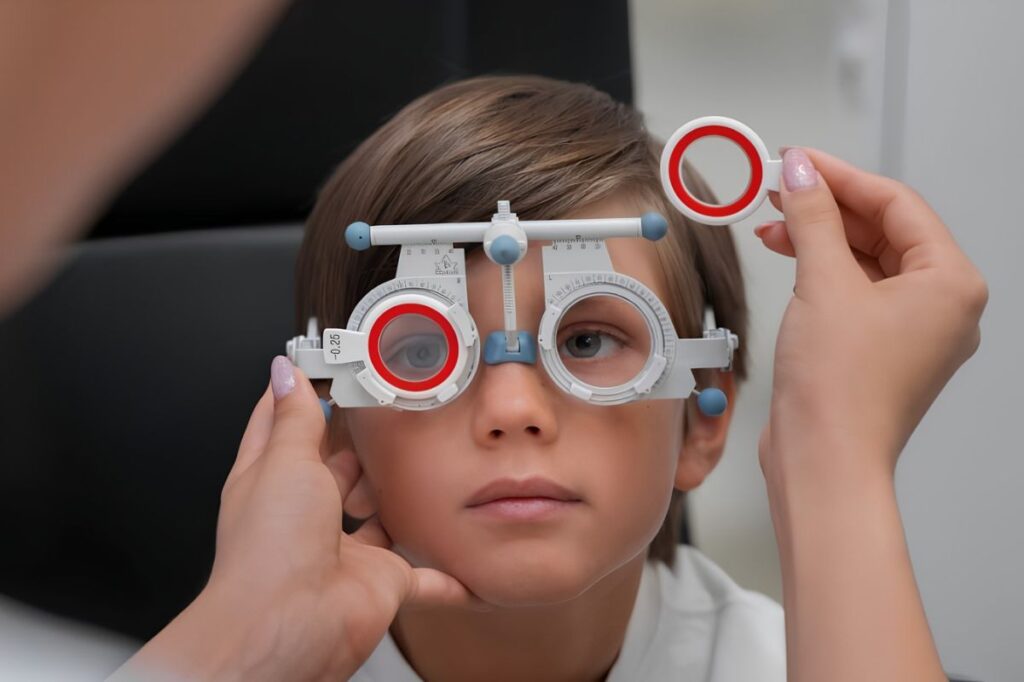
Optical biometers are specialized diagnostic devices that use low-coherence interferometry to measure axial length, the physical distance from the front to the back of the eyeball in millimeters. Equipment distribution catalogs and import data from major manufacturers like Zeiss, Topcon, Haag-Streit, and Appasamy Associates show these systems remain concentrated in high-end tertiary eye hospitals in major metropolitan areas.
Medical equipment distributors in Tier-2 and Tier-3 cities report via IndiaMART Ophthalmic listings that standalone community clinics rarely stock optical biometers due to high acquisition costs. Without this hardware, practitioners cannot generate the primary data points required by the card’s tracking graph.
Can Clinicians Complete the Vision Growth Card During Routine Visits?
Practitioners must either refer patients elsewhere for necessary scans or leave the core growth chart blank during routine visits due to equipment deficits. The Vision Growth Card, launched by the All India Ophthalmological Society (AIOS), demands rigorous logging of cycloplegic refraction (eye drops that temporarily paralyze focusing muscles), binocular vision, and millimetric axial length changes across multi-visit schedules.
In a standard high-volume Indian eye clinic, a routine vision check takes two to three minutes using a basic autorefractor. According to implementation outlines published in the AIOS Myopia Management Guidelines, completing the required diagnostic workflow exceeds the time and equipment capacity of local practitioners.
How Much Does Following the Vision Growth Card Actually Cost Families?
Following the card’s clinical monitoring protocol increases routine pediatric checkup costs from ₹500 to upwards of ₹2,000–₹3,500 per visit once biometry scans and specialist consultations are added. A phone survey of 12 private eye hospitals and optical chains across Tier-1 cities like Delhi and Mumbai and Tier-3 locations like Gorakhpur and Madurai confirms this sharp out-of-pocket price jump.
Health insurance policy wordings from top Indian insurers listed on the Insurance Regulatory and Development Authority of India (IRDAI) portal indicate that standard retail health policies offer zero coverage for outpatient department expenses, refractive error corrections, or specialized myopia management therapies.
Why Does the Card Bypass Neighborhood Optometrists?
Neighborhood optical shops and independent optometrists handle the vast majority of primary vision screenings and pediatric optical dispensing across India without access to the necessary clinical infrastructure. According to the Optometry Council of India practitioner registry and guidelines from the National Programme for Control of Blindness and Visual Impairment (NPCBVI), these frontline providers perform initial refractions for most children.
However, community optometrists lack legal authorization to administer cycloplegic eye drops and lack access to optical biometry hardware. This regulatory and equipment divide structurally sidelines the practitioners who see the most patients.
When Does Patient Compliance Drop Off for Chronic Tracking?
Compliance rates for pediatric eye tracking fall sharply by the sixth month when families face recurring out-of-pocket expenses and clinic referral hurdles. Pediatric ophthalmologists and public health researchers analyzing paper-based health tracker fatigue in India, such as early iterations of maternal-child booklets tracked by the Ministry of Health and Family Welfare (MoHFW), project that introducing an advanced tracking tool into a fragmented healthcare market without matching infrastructure subsidies leads to predictable dropout.
Frequently Asked Questions
What is an optical biometer and why is it required for the Vision Growth Card?
An optical biometer is a high-precision diagnostic machine used to measure axial length in millimeters. It is required because the Vision Growth Card tracks eyeball elongation over time rather than just surface refraction.
Why can’t local optical shops fill out the Vision Growth Card?
Local optical shops cannot complete the card because community optometrists lack legal authorization to use cycloplegic dilating drops and do not possess ₹8 lakh to ₹25 lakh optical biometers.
Are biometry scans and myopia management therapies covered by health insurance in India?
No, standard retail health insurance policies in India offer zero coverage for outpatient department expenses, regular eye checkups, or specialized myopia management therapies according to IRDAI-listed policy frameworks.
How much do regular checkups using the Vision Growth Card cost parents?
Routine checkups featuring the card cost parents between ₹2,000 and ₹3,500 per visit once private specialists add necessary biometry scans and consultation fees to the baseline exam.
What is axial length in the context of childhood myopia?
Axial length is the physical back-to-front length of the eyeball, which increases as progressive myopia worsens during childhood development.

Praseetha K
Praseetha K is the Managing Editor of Clarity Times. She edits, verifies and publishes the newsroom's articles, and also writes analysis on policy, law, business and technology. Articles she writes are edited by the Editor-in-Chief before publication.