
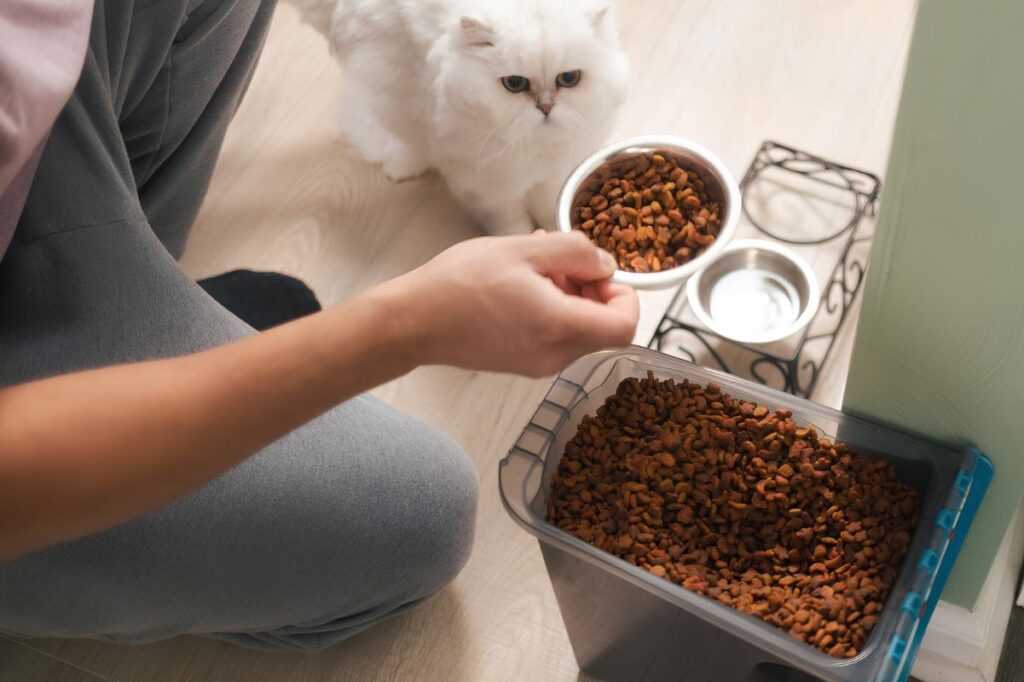
Switching between premium pet food brands often fails to resolve chronic stomach issues because unlisted pet food cross-contamination occurs on shared factory lines. Standard dry cleaning methods between manufacturing runs leave trace meat proteins behind, triggering allergic reactions even when the ingredient panel lists only a single, novel protein.
Why Do Competing Pet Food Brands Share the Same Factory Lines?
More than half of the independent, specialty, and veterinary-adjacent pet food brands sold in North America rely on pet food co-packing, outsourcing production to a small network of shared contract manufacturers called co-packers. A co-packer is an independent contract manufacturer hired by brand owners to mix, cook, and package consumer goods under third-party labels.
Behind the retail packaging, pet food manufacturing is centralized. While distinct bags feature independent corporate branding and claims of proprietary sourcing, fewer than a dozen major manufacturing companies, including operators like Alphia, CJ Foods, and Simmons Pet Food, mix, cook, and package hundreds of competing product lines.
In these shared facilities, high-capacity equipment operates on continuous commercial schedules. An extrusion line might process a batch of lamb kibble at dawn, switch to a high-volume chicken recipe by midday, and shift to a specialty duck formula before midnight.
Corporate supplier disclosures filed in the U.S. Securities and Exchange Commission (SEC) EDGAR database show that brands competing directly on pet store shelves frequently rely on identical production plants. Commercial shipping records tracked through the U.S. Customs and Border Protection Automated Commercial Environment confirm that dozens of boutique labels share identical facility registration numbers.
How Does Pet Food Cross-Contamination Happen During Manufacturing?
Industrial extruders cannot undergo water washdowns between batches without creating moisture pockets that foster lethal bacteria like Salmonella. An extruder is a high-pressure, continuous-cook industrial system that steams raw meal mixtures and forces them through shaped metal dies to produce dry kibble.
Switching an extruder from one animal protein to another presents an engineering conflict between microbial safety and allergen control.
In human food facilities, preventing allergen cross-contact typically requires a complete wet washdown. Crews dismantle pipes, apply chemical detergents, rinse the system with water, and verify the cleanout with protein swabs.
In a dry pet food mill, introducing water creates a severe biological hazard. Moisture inside warm feed equipment allows bacterial pathogens to multiply rapidly, specifically Salmonella enterica and Listeria monocytogenes. These organisms cause fatal systemic infections in pets and severe illness in humans handling dry food.
To keep machinery dry and suppress bacteria, processing facilities rely on dry flush extruder cleaning. A dry flush is a mechanical cleaning method in which operators run a sacrificial slug of dry grain, starch, or wheat middlings through an extruder barrel to scrape out physical food debris without introducing water.
Operational engineering documentation published by industrial equipment manufacturers Wenger Manufacturing and Clextral notes that dry flushing scours out bulk material, but fails to remove microscopic residues.
Fine animal meal particulates and aerosolized protein dust remain trapped inside extruder barrel threading, die assemblies, and downstream cooling belts. Public inspection reports from the U.S. Food and Drug Administration (FDA) Inspection Observations database show that federal inspectors routinely document cross-conveyance dust migration and residual ingredient drift inside dry feed mills during changeovers between different animal proteins.
Why Doesn’t the FDA Regulate Meat Cross-Contact in Pet Food?
Under 21 CFR Part 507 of the Food Safety Modernization Act, the U.S. Food and Drug Administration regulates biological pathogens, heavy metals, and industrial toxins in animal feed, but exempts animal food from human-grade allergen segregation rules. Because non-target meat proteins like beef or chicken are legally approved feed ingredients, their presence on shared equipment does not constitute regulatory adulteration.
In human food packaging, the Food Allergen Labeling and Consumer Protection Act and the FASTER Act mandate strict segregation and preventive controls for major food allergens. Under 21 CFR Part 117, human food manufacturers must validate cleaning procedures to ensure that undeclared allergens do not contaminate shared lines.
The animal feed sector operates under a different statutory mandate. Under 21 CFR Part 507 pet food allergens are not classified as actionable hazards.
The law requires mills to identify and control hazards that cause acute illness or death. The statutory list includes Salmonella, pesticide residues, toxic industrial chemicals, mycotoxins such as aflatoxin, and metal shards. Unlisted animal species carry no regulatory penalty.
Under federal rules, undeclared beef protein inside a bag of venison dog food is not legal adulteration. Because beef is an approved, non-toxic animal feed ingredient, its incidental carryover violates no federal safety threshold.
Inspectors from the FDA Center for Veterinary Medicine (CVM) and state agricultural departments have no statutory authority under Part 507 to cite a manufacturing facility for species-level cross-contact, provided the finished product remains free of pathogenic bacteria and toxic chemical contaminants.
What Does “Single Protein” Legally Mean on a Pet Food Label?
Under Association of American Feed Control Officials (AAFCO) labeling standards, terms like “single-source protein” govern only intentional recipe formulation, not incidental contact during production. A label legally reflects what workers poured into the batch hopper, with no guarantee against trace residues from the preceding product run.
Pet owners managing animals with gastrointestinal symptoms frequently buy bags marked “Limited Ingredient,” “Single Animal Protein,” or “Novel Protein,” assuming the food contains that species exclusively.
Under model AAFCO ingredient rules, which state feed agencies adopt into law, ingredient definitions govern intentional additions. If a product calls itself “Venison Dinner” or “Venison Formula,” venison must constitute at least 25% of the formulation by weight, excluding water. If venison is the sole meat listed on the panel, the manufacturer cannot intentionally blend in chicken or beef to reduce costs.
AAFCO standards govern intentional recipe formulation, not incidental mechanical carryover.
The ingredient panel certifies what entered the mixer at the start of the production run. It provides no regulatory guarantee that the product is free from residual proteins left behind by the preceding run on shared machinery.
What Do Laboratory Tests Reveal About Hypoallergenic Pet Food Cross-Contact?
Peer-reviewed forensic DNA studies published in Veterinary Dermatology and BMC Veterinary Research show that hypoallergenic pet food cross-contact affects between 40% and 50% of commercial limited-ingredient and novel-protein diets, with products testing positive for undeclared animal species, most frequently chicken, beef, or soy. While harmless to most healthy animals, these unlisted trace proteins frequently trigger recurring vomiting and diarrhea in the 1% to 2% of pets with genuine food allergies.
Veterinary researchers documented this manufacturing gap by analyzing retail bags using polymerase chain reaction (PCR) DNA testing and enzyme-linked immunosorbent assays (ELISA).
In a microarray and PCR analysis published in BMC Veterinary Research, researchers examined over-the-counter diets marketed for dietary sensitivity. The laboratory detected undeclared animal DNA or protein in roughly 4 to 5 out of every 10 tested products, with a related quantitative PCR study on commercial dog foods confirming widespread undeclared chicken DNA across retail formulas.
For most companion animals, trace proteins cause zero clinical symptoms. Clinical epidemiological studies cited by specialists at the American College of Veterinary Internal Medicine (ACVIM) indicate that true adverse food reactions affect roughly 1% to 2% of dogs and cats (10 to 20 animals per 1,000). An adverse food reaction is an abnormal immune-mediated or metabolic response triggered in sensitive animals by specific dietary proteins.
For that small group of sensitive animals, however, microscopic exposure restarts the inflammatory cycle: persistent vomiting, intermittent diarrhea, and chronic skin irritation. Veterinary internal medicine specialists report that gastrointestinal inflammation in allergic animals frequently fails to clear because owners cycle between over-the-counter diets that share factory-line carryover.
Manufacturing trade groups maintain that dry purging is an essential safety compromise. According to the Pet Food Institute (PFI), introducing wet sanitation cycles into commercial dry-feed extruders would drastically increase the incidence of lethal Salmonella outbreaks, exposing millions of companion animals to acute foodborne poisoning to prevent trace protein contact in a small allergic minority.
For pet owners managing chronic, unexplained digestive illness, understanding the co-packing supply chain changes the clinical approach. Rotating across commercial retail brands often amounts to cycling through the same contract facilities.
When an animal fails to improve on commercial specialty diets, veterinary nutritionists recommend moving beyond standard retail shelves: either by feeding veterinary therapeutic diets formulated with hydrolyzed proteins broken down below the threshold of immune recognition, or by selecting feed companies that operate dedicated, single-species manufacturing plants.
Frequently Asked Questions
Why doesn’t washing pet food equipment with water solve cross-contamination?
Washing dry-feed extruders with water creates damp harborage points where bacterial pathogens like Salmonella enterica and Listeria monocytogenes rapidly multiply. Contract mills avoid water washdowns between dry kibble runs because the risk of lethal bacterial infection in pets and handling humans far outweighs the risk of trace protein carryover.
Is undeclared meat cross-contact illegal in commercial pet food?
No. Under 21 CFR Part 507 of the Food Safety Modernization Act, the FDA regulates acute toxins and microbial pathogens in animal food, but does not enforce allergen segregation rules. Because non-target meats like chicken and beef are legally recognized feed ingredients, trace amounts from shared equipment do not legally constitute adulteration.
How do veterinary prescription diets prevent protein cross-contact?
Veterinary therapeutic diets designed for food elimination trials are produced under strict production controls, including dedicated manufacturing runs scheduled immediately after deep mechanical tear-downs, verified ELISA protein testing, or chemical hydrolysis that cleaves proteins into molecular fragments too small to trigger an immune response.
How can pet owners determine if a pet food brand uses a co-packer?
Consumers can check the packaging for phrases like “Manufactured for” or “Distributed by” instead of “Manufactured by,” which, under AAFCO labeling rules, indicates third-party contract production. In addition, pet owners can contact brand representatives directly and ask for the specific facility registration number or whether the product is run on a line dedicated to a single animal protein.

Praseetha K
Praseetha K is the Managing Editor of Clarity Times. She edits, verifies and publishes the newsroom's articles, and also writes analysis on policy, law, business and technology. Articles she writes are edited by the Editor-in-Chief before publication.