
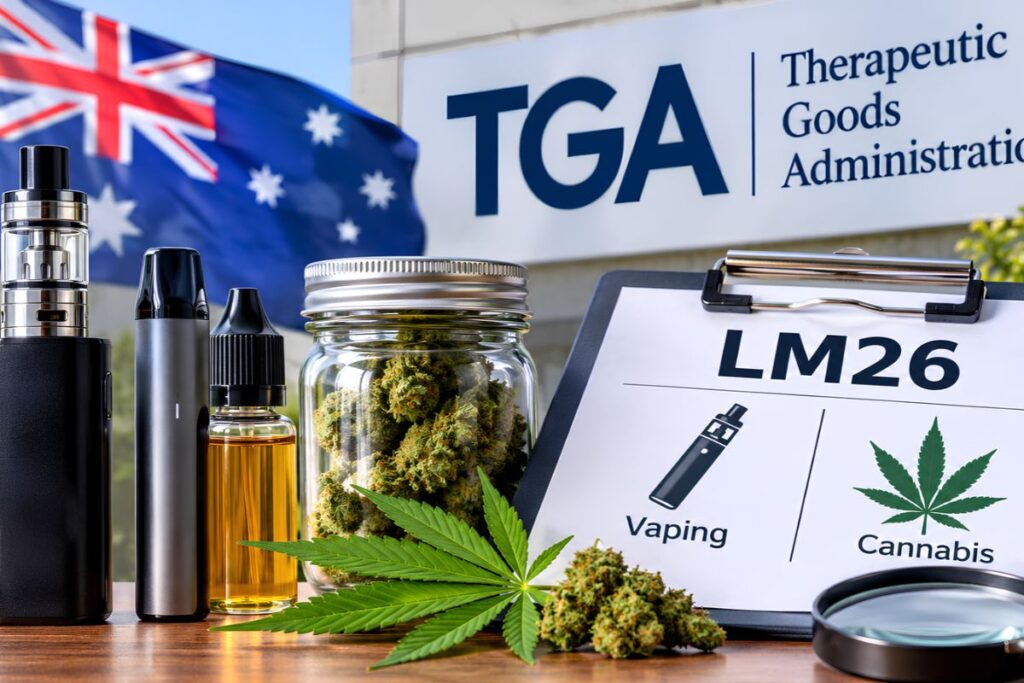
Switching from nicotine vapes to medicinal cannabis does not fix sleep problems, and lifestyle medicine doctors are split on using cannabinoids for substance recovery. While an 11:30 a.m. plenary at Hobart’s LM26 conference warned that no nicotine is safe for sleep, an afternoon workshop on the same schedule explored plant-based cannabinoid therapy to pivot patients off high-risk substances.
Why Did Hobart’s LM26 Conference Split on Nicotine Vapes and Medicinal Cannabis?
The Australasian Society of Lifestyle Medicine (ASLM), Australia’s peak medical society for preventive and lifestyle-focused clinicians, scheduled two competing clinical perspectives hours apart on the final Sunday of its November 13–15, 2026 conference in Hobart, Tasmania.
Coverage of the event focused almost entirely on a single morning message: vaping harms sleep. Yet the official LM26 conference program shows a sharp internal debate unfolding under the same roof.
At 11:30 a.m. in the Grand Ballroom, nicotine addiction specialist Professor Renee Bittoun delivered a plenary titled “Ask About All Nicotine Use: None Is Safe,” paired with sleep-health sessions urging clinicians to treat sleep as a vital sign.
That afternoon, Dr. Ashleigh Osborne led a separate LM26 workshop titled “From Harm to Healing: Can Plant-Based Cannabinoid Therapy Pivot Patients Away from High-Risk Substance Use?” The session examined supervised plant-based cannabinoid protocols as a harm-reduction option for patients struggling with refractory substance dependence.
Neither session set a formal society guideline. Placing them side by side exposes an unresolved tension in Australian preventive care: doctors are urged to eliminate inhaled nicotine to protect sleep while simultaneously examining unapproved plant-based cannabinoids as a harm-reduction bridge.
What Did Mainstream Sleep-Vaping Coverage Miss?
Mainstream coverage reported that exclusive vapers face 38% higher odds of poor sleep. Still, it omitted that nicotine vapes and medicinal cannabis share unapproved Australian prescribing pathways and overlapping sleep-architecture trade-offs.
The headline statistic came from a September 2026 systematic review and meta-analysis by Gulati and colleagues published in Tobacco Induced Diseases. Pooling 16 observational studies, the researchers reported that exclusive e-cigarette users had 38% higher odds (odds ratio 1.38) of self-reported poor sleep than never-users, with elevated odds in both adolescents (odds ratio 1.32) and adults (odds ratio 1.36).
Sleep psychologist Dr. Moira Junge, representing the Sleep Health Foundation, used the closing sessions to press clinicians to screen for sleep disruption alongside nicotine habits. News summaries stopped there, framing nicotine cessation as a direct route to better rest.
How Do Therapeutic Vapes and Medicinal Cannabis Compare Under Australian TGA Rules?
Neither nicotine e-cigarettes nor most medicinal cannabis products are approved standard medicines on the Australian Register of Therapeutic Goods (ARTG), the federal database of medical products evaluated for safety, quality, and efficacy, and both now sit on the federal regulator’s 2026–27 compliance enforcement watchlist.
According to data from the Therapeutic Goods Administration (TGA) vaping hub, pharmacy dispensing of therapeutic vaping goods jumped from more than 72,000 units in 2024 to over 220,000 units across more than 2,200 pharmacies in 2025.
During the same period, medicinal cannabis expanded through the TGA Medicinal Cannabis Hub under the Special Access Scheme (SAS), a pathway allowing clinicians to prescribe unapproved goods to individual patients, and Authorised Prescriber channels, tracked via six-monthly sponsor reports covering January 1 to June 30, 2026. Patients inhaling those formulations use ARTG-listed medical vaporizers such as the Mighty+ Medic, Volcano Medic 2, and Grenco Medical Elite II.
Both product categories appear on the TGA Compliance Priorities schedule for 2026–27, which targets unlawful advertising, unapproved supply, and prescribing breaches across medicinal cannabis and therapeutic vaping goods. For a patient leaving a clinic, trading a pharmacy-notified nicotine vape for a prescribed cannabis vaporizer moves them from one unapproved, compliance-scrutinized supply channel into another.
Does Medicinal Cannabis Improve Sleep Quality When Replacing Nicotine Vapes?
Clinical sleep trials show that medicinal cannabis does not restore normal sleep architecture, as delta-9-tetrahydrocannabinol (THC) suppresses rapid eye movement (REM) sleep and triggers rebound insomnia when dosing stops.
The clinical argument for exploring plant-based cannabinoids in substance recovery rests on harm reduction: for patients with severe dependence or trauma who fail standard therapies, supervised cannabinoid treatment aims to steer them away from unregulated street drugs.
Sleep laboratory data complicates that switch when insomnia is part of the patient’s complaint. Randomized controlled trials conducted by Australian researchers, including the CANSLEEP trials led by the Woolcock Institute of Medical Research and the University of Sydney, show that THC and cannabidiol (CBD) formulations alter normal sleep stages rather than restoring healthy rest.
In clinical sleep testing, THC suppresses REM sleep, the sleep stage critical for memory consolidation and emotional regulation, and causes rebound insomnia once treatment ends. Clinical guidance from the Royal Australian College of General Practitioners (RACGP) states that medicinal cannabis is not a first-line treatment for insomnia or substance-use disorders due to limited long-term efficacy data and dependence risks.
How Can Australian GPs Manage Nicotine Withdrawal Insomnia Without Cannabinoids?
General practitioners manage nicotine withdrawal insomnia using approved pharmacotherapies, such as nicotine replacement therapy patches or varenicline, paired with cognitive behavioral therapy for insomnia (CBT-I). This structured behavioral program retrains sleep habits without psychoactive drugs.
For Australian doctors, the clash between LM26’s two Sunday sessions lands directly in the exam room. Quitting nicotine triggers acute withdrawal, a physiological state that causes fragmented sleep and nighttime awakenings for two to four weeks before baseline sleep recovers.
Under the RACGP Supporting Smoking and Vaping Cessation guidelines, clinicians bridge that two-to-four-week window with approved nicotine patches, fast-acting oral lozenges, or varenicline alongside CBT-I. Until lifestyle medicine bodies reconcile their zero-tolerance stance on inhaled nicotine with exploratory workshops on cannabinoid substitution, clinicians and patients face two competing playbooks on the same clinical problem.
Frequently Asked Questions
Does switching from nicotine vapes to medicinal cannabis improve sleep quality? No. According to randomized controlled trials from the Woolcock Institute of Medical Research and the University of Sydney, delta-9-tetrahydrocannabinol (THC) suppresses rapid eye movement (REM) sleep and triggers rebound insomnia upon cessation rather than restoring healthy sleep stages.
Why did the LM26 conference feature conflicting messages on vaping and cannabinoids? On the final Sunday of the Australasian Society of Lifestyle Medicine’s November 2026 conference in Hobart, Professor Renee Bittoun led a morning plenary warning that no nicotine is safe for sleep, while Dr. Ashleigh Osborne led an afternoon workshop examining whether plant-based cannabinoid therapy can pivot patients away from high-risk substance dependence.
Are therapeutic nicotine vapes and medicinal cannabis regulated similarly in Australia? Yes. Neither therapeutic nicotine vapes nor most medicinal cannabis products are standard approved medicines on the Australian Register of Therapeutic Goods, and both sit on the Therapeutic Goods Administration’s 2026–27 compliance priority list for unapproved supply and prescribing enforcement.
What do Australian medical guidelines recommend for sleep problems after quitting vaping? Royal Australian College of General Practitioners (RACGP) guidelines recommend managing the two-to-four-week nicotine withdrawal window with approved tools, including nicotine replacement patches, lozenges, varenicline, and cognitive behavioral therapy for insomnia (CBT-I), rather than medicinal cannabis.

Praseetha K
Praseetha K is the Managing Editor of Clarity Times. She edits, verifies and publishes the newsroom's articles, and also writes analysis on policy, law, business and technology. Articles she writes are edited by the Editor-in-Chief before publication.