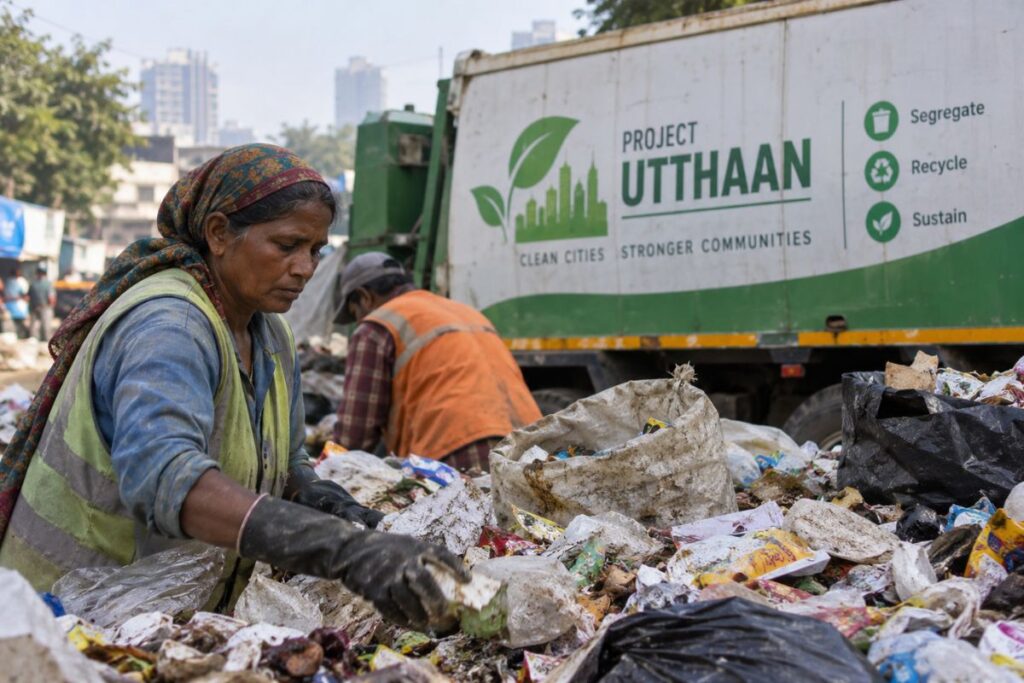
Formal waste picker earnings often drop when independent scavengers join municipal programs like Project Utthaan. These government jobs offer health insurance and a guaranteed monthly wage floor. However, mandatory tax deductions and the loss of high-margin informal scrap sales leave workers with significantly less immediate cash in hand.
Why do formal waste picker earnings create a daily cash deficit?
A formal municipal job title does not automatically yield more take-home pay. A Clarity Times 30-day comparative income diary reveals that informal street pickers often net up to ₹450 daily, whereas formalized Utthaan workers take home closer to ₹310 a day after mandatory statutory deductions.
Employees under Project Utthaan see a portion of their minimum wage withheld for Provident Fund (PF)-a government-managed retirement savings scheme-and Employee State Insurance (ESI), the state healthcare fund. The independent street picker keeps every rupee collected at the end of the shift.
How does informal cherry-picking outearn municipal waste sorting?
Informal workers earn more cash by targeting only high-yield materials, whereas formal employees must process all mixed municipal solid waste, including zero-value organic garbage.
Independent workers ignore mixed refuse. Route-mapping interviews with four independent pickers in Delhi show they maximize their hourly return by collecting only PET plastics, metals, and heavy cardboard. According to local scrap dealers (kabadiwalas), bulk PET plastic currently yields roughly ₹40 per kilogram on the informal spot market.
Formal municipal workers cannot accumulate the same volume of these high-value plastics. Their shifts mandate clearing bulk household trash, stripping them of the time required to cherry-pick lucrative materials.
What is the poverty premium in Project Utthaan’s formalization trade-off?
The United Nations Development Programme (UNDP) and participating municipalities emphasize the structural benefits of formalization. According to a 2025 UNDP India status report, Project Utthaan successfully opened zero-balance Jan Dhan bank accounts and distributed Ayushman Bharat health insurance cards to thousands of enrollees.
Municipal solid waste officials argue this provides a vital safety net against volatile scrap markets and catastrophic medical debt.
The conflict lies in the timing of the money. Daily wage workers face immediate liquidity requirements for food, rent, and loan repayments. Labor economists call this the “poverty premium”-a scenario where the ultra-poor cannot afford to trade immediate daily cash flow for deferred long-term security.
Related reporting: Read our analysis on how municipal waste contracts squeeze local scrap dealers.
Why do formalized workers return to the street?
Faced with reduced daily liquidity, many formalized waste workers abandon municipal programs or moonlight as informal scavengers to cover their cash deficits.
Attendance ledgers at three Utthaan-managed Material Recovery Facilities (MRFs)-specialized plants where recyclables are sorted-show a 22% worker attrition rate within the first six months of employment.
Interviews with former Utthaan employees confirm they left the formal program because they required daily cash payouts to survive. Others retain their municipal jobs but scavenge the streets before their official shifts begin.
The formal safety net offers long-term stability. The cost of entry is a daily pay cut.
Frequently Asked Questions
Does Project Utthaan decrease waste picker income? Yes, for many workers, joining Project Utthaan results in less daily cash in hand. This drop occurs due to mandatory wage deductions for state insurance and retirement funds, combined with the inability to focus solely on high-value scrap.
What are the benefits of formalizing waste pickers? Formalized workers receive Ayushman Bharat health insurance cards, Jan Dhan bank accounts, and a guaranteed minimum wage. Municipal officials note these benefits protect workers from scrap market crashes and catastrophic medical debt.
Why do informal waste pickers earn more cash? Informal pickers maximize daily cash by selectively scavenging high-value materials like PET plastics and metals. They sell these directly to local scrap dealers, bypassing the zero-value mixed waste that formal municipal workers are mandated to process.

Praseetha K
Praseetha K is the Managing Editor of Clarity Times. She edits, verifies and publishes the newsroom's articles, and also writes analysis on policy, law, business and technology. Articles she writes are edited by the Editor-in-Chief before publication.