Tanzania dedicates more than one-third of its land area to conservation, creating an unmatched network of savannas, volcanic calderas, and Indian Ocean marine reserves. For luxury travelers, navigating these vast distances once meant enduring eight-hour drives across dusty washboard tracks. Today, an integrated network of bush airstrips and light turbine aircraft turns Tanzania into a seamless fly-in safari circuit, allowing you to watch lions hunt at dawn in the Serengeti and step onto Zanzibar’s coral-sand beaches by mid-afternoon.
How Do Tanzania’s Northern and Southern Safari Circuits Differ?
Planning an authoritative Tanzanian itinerary starts with understanding how the country divides its wildlife zones, and clarifying several common phonetic spellings that appear in travel searches.
In regional transliterations, “Sarangi” refers to Serengeti National Park, derived from the Maasai word Siringet, meaning “the place where the land runs on forever.” Similarly, “Tarangira” refers to Tarangire National Park, named after the river bisecting its baobab woodlands, while “Nyereya” refers to Nyerere National Park, the vast southern wilderness carved out of the northern sector of the historic Selous Game Reserve.
Tanzania’s safari geography splits into two distinct circuits, each offering different landscapes, wildlife densities, and crowd profiles:
- Northern Safari Circuit: Encompasses Serengeti, Ngorongoro Crater, Tarangire, Lake Manyara, and Mount Kilimanjaro, accessed via Kilimanjaro International (JRO) and Arusha (ARK) airports. It features short-grass plains, volcanic calderas, Rift Valley soda lakes, and baobab savannas, delivering the Great Wildebeest Migration, caldera Big Five drives, and sunrise ballooning. Peak dry season runs June to October (with river crossings July–September and calving January–March).
- Southern Safari Circuit: Covers Nyerere National Park and Ruaha National Park, accessed via Julius Nyerere International Airport in Dar es Salaam (DAR). Its braided river systems, oxbow lagoons, granite kopjes, and miombo woodlands support boat safaris, walking safaris, and low-density predator tracking with minimal vehicle sightings during the June-to-November dry season.
All national parks across both circuits operate under the Tanzania National Parks Authority (TANAPA), which manages park entry fees, conservation rules, and gate hours.
Why Does the Northern Safari Circuit Dominate East African Wildlife Travel?
The Northern Circuit concentrates the highest density of iconic East African megafauna within a compact region between the Great Rift Valley and the Kenyan border.
Serengeti National Park: The Endless Plains
Spanning 14,763 square kilometers (5,700 square miles), Serengeti National Park anchors East Africa’s most famous ecosystem. Its volcanic soils sustain the Great Wildebeest Migration, an annual clockwise movement of roughly 1.5 million wildebeest, 250,000 zebras, and 400,000 gazelles following seasonal rains.
- Central Serengeti (Seronera Valley): Dotted with ancient granite outcrops called kopjes, Seronera delivers reliable year-round sightings of resident lion prides, leopards in riverine trees, and cheetahs on the open grasslands.
- Southern Plains (Ndutu): Between January and March, half a million calves are born within three weeks, drawing intense predator action.
- Northern Serengeti (Kogatende & Lamai): From July through October, massive herds brave the crocodile-filled Mara River crossings.
For seasonal herd movements and geological context, review the National Geographic Serengeti Travel Guide.
Sunrise Hot Air Ballooning Over the Savanna
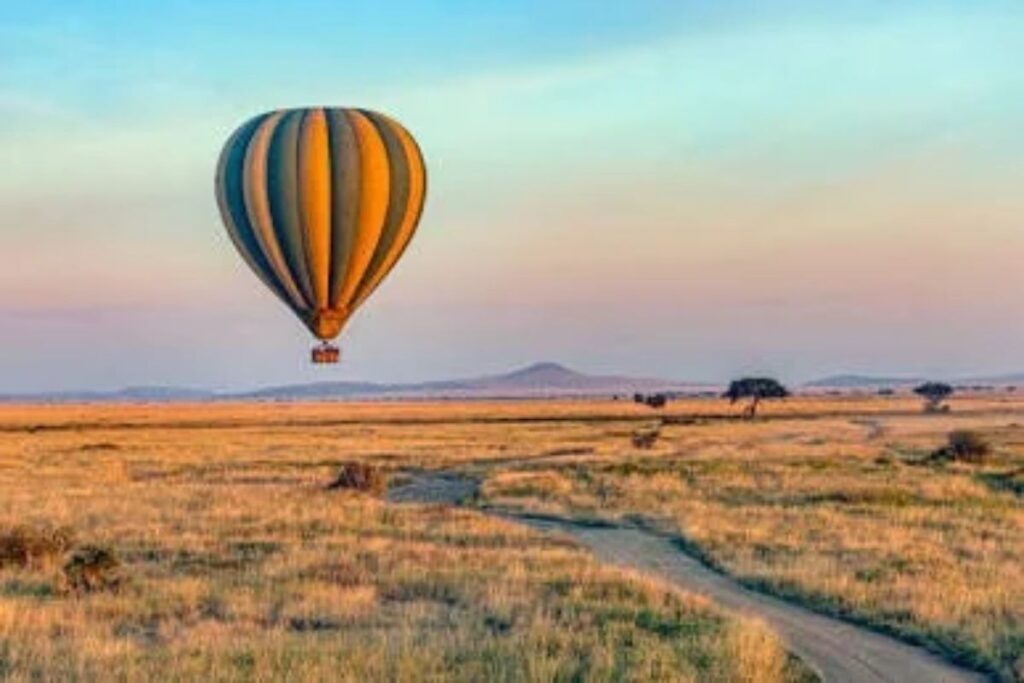
Launching before dawn from Seronera, Ndutu, or Kogatende with premier operators like Serengeti Balloon Safaris, sunrise hot air ballooning offers a silent aerial perspective over the plains. Pilots navigate wind currents to skim just meters above acacia canopies or climb to 300 meters for panoramic views of meandering rivers and migrating herds. Upon landing, ground crews host a full champagne bush breakfast beneath a lone acacia tree before you resume your morning game drive.
Ngorongoro Crater: The World’s Largest Intact Volcanic Caldera
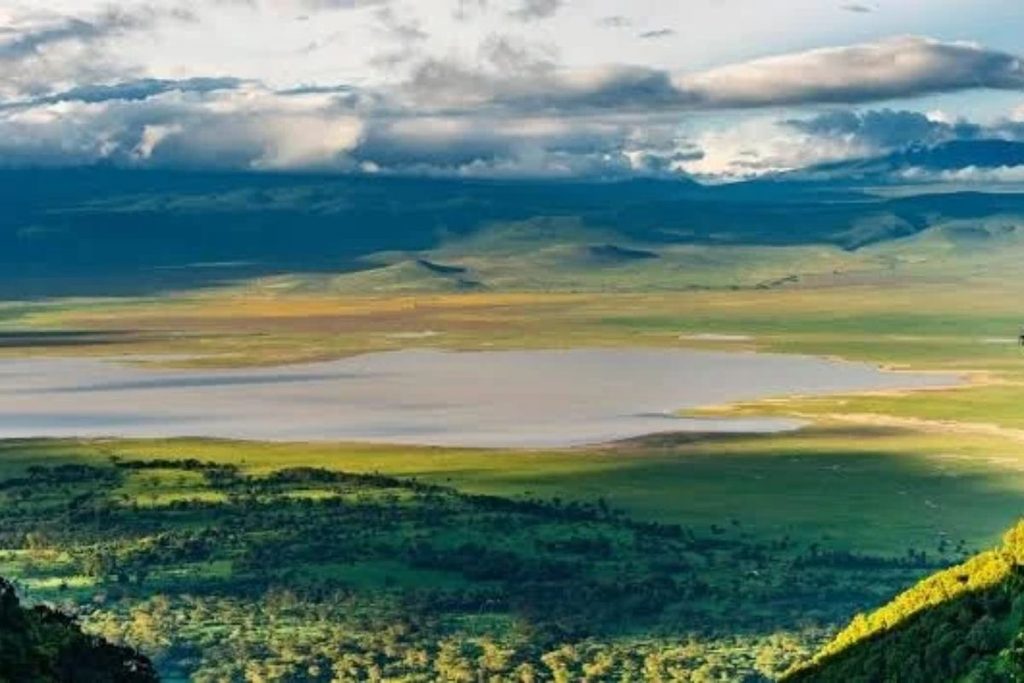
Millions of years ago, a giant volcano collapsed inward to form the Ngorongoro Crater, an intact caldera measuring 19 kilometers across and plunging 600 meters deep. Managed by the Ngorongoro Conservation Area Authority (NCAA), the 260-square-kilometer floor shelters roughly 30,000 resident animals.
- Big Five Density: Ngorongoro offers Tanzania’s highest single-day chance of spotting all of the Big Five, lion, leopard, elephant, Cape buffalo, and endangered black rhinoceros.
- Distinct Habitats: The Lerai Fever Tree Forest shelters large bull elephants, while alkaline Lake Magadi draws flocks of flamingos and hippo pods. The NCAA limits crater floor visits to six-hour windows to protect the fragile ecosystem.
Tarangire National Park: Land of Giants and Baobabs
Southwest of Arusha, Tarangire National Park peaks during the June-to-October dry season. As surrounding waterholes dry up, the Tarangire River becomes the sole water source for migrating wildlife. Elephant herds of up to 3,000 individuals gather along the riverbed beneath ancient baobab trees, alongside more than 550 bird species.
Lake Manyara National Park: Rift Valley Biodiversity
Tucked beneath the 400-meter western wall of the Great Rift Valley, Lake Manyara National Park packs diverse habitats into a narrow strip. Underground springs feed a dense groundwater forest alive with blue monkeys and large olive baboon troops. Beyond the trees, floodplains border a shimmering soda lake pink with flamingos, while the park’s famous tree-climbing lions rest on sturdy acacia branches.
Mount Kilimanjaro: The Roof of Africa
Rising 5,895 meters (19,341 feet), Mount Kilimanjaro National Park protects the world’s highest free-standing mountain. Even without attempting a multi-day summit trek, Kilimanjaro anchors Northern Circuit logistics via Kilimanjaro International Airport (JRO), receiving direct long-haul flights from Europe and the Middle East, and offers dramatic alpine backdrops from neighboring coffee estates.
What Awaits in Tanzania’s Untamed Southern Safari Circuit?
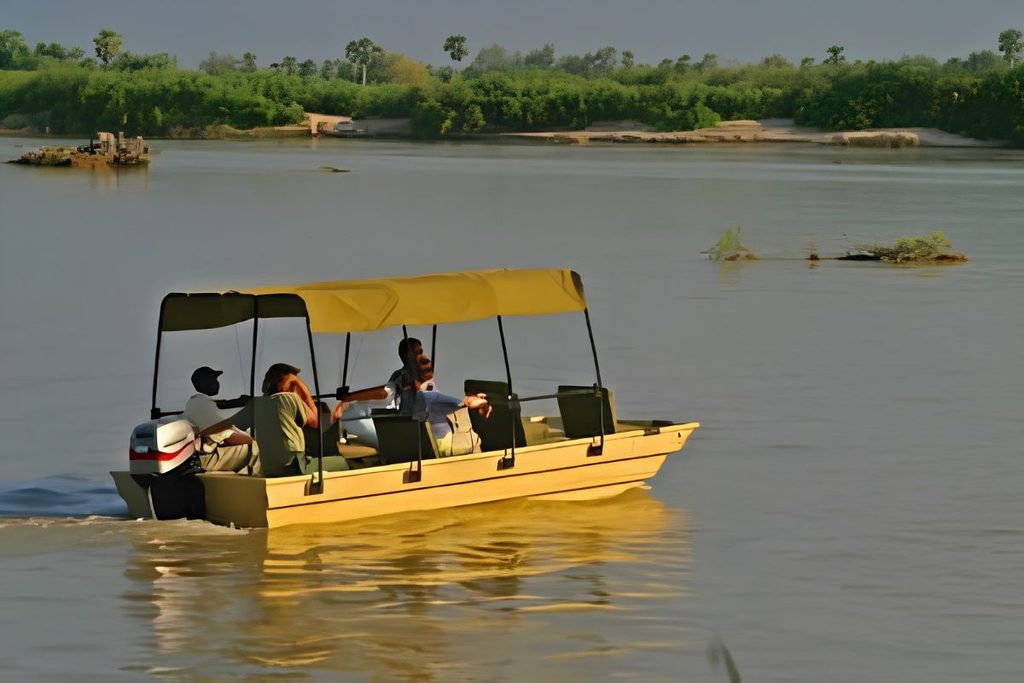
While the Northern Circuit offers concentrated drama, Tanzania’s Southern Safari Circuit rewards travelers seeking vast scale, zero vehicle crowds, and active exploration.
Nyerere National Park: Riverine Wilderness
Covering more than 30,000 square kilometers, Nyerere National Park is Africa’s largest stand-alone national park. Defined by the Rufiji River and its network of channels and oxbow lakes, Nyerere replaces traditional dusty game drives with boat safaris past basking crocodiles, hippo pods, and swimming elephants. It also protects one of Africa’s largest populations of endangered African wild dogs.
Ruaha National Park: Rugged Predator Territory
Spanning 20,226 square kilometers in central-southern Tanzania, Ruaha National Park blends East African acacia savanna with Southern African miombo woodland. Dotted with giant baobabs and granite hills, Ruaha centers on the Great Ruaha River, where dry-season water pools attract kudu, sable antelope, large buffalo herds, and massive super-prides of lions numbering 20 or more individuals.
How Do Bush Flights and Hop-On Hop-Off Safaris Work?
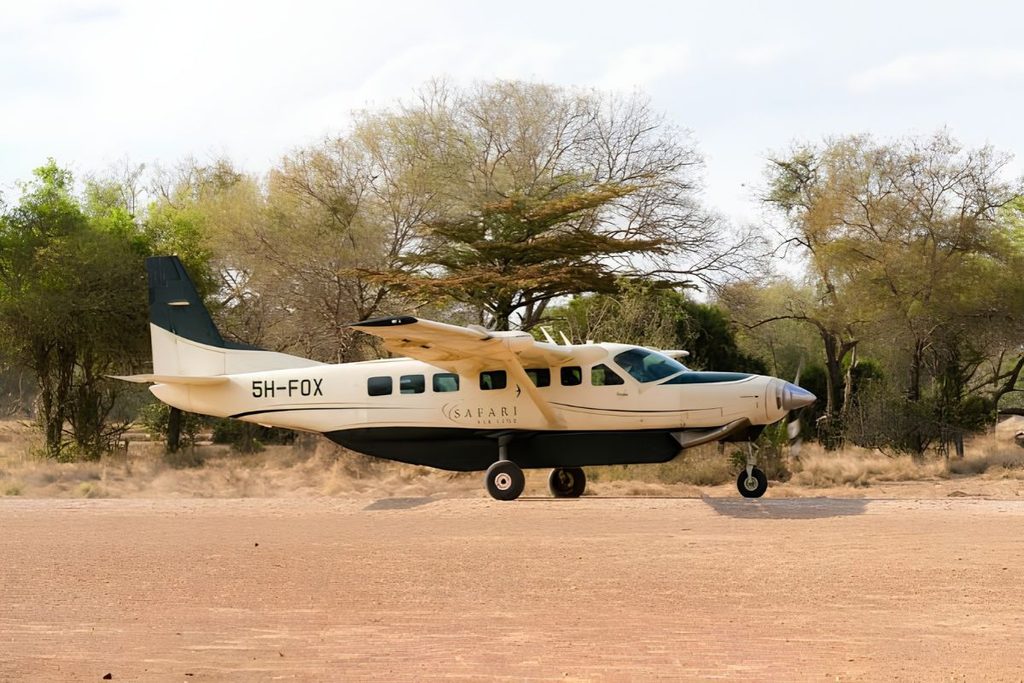
Driving between Tanzania’s northern and southern parks can take over 16 hours on unpaved roads. A fly-in safari replaces grueling overland transfers with 45-to-90-minute scenic flights aboard high-wing turboprops like the Cessna 208B Grand Caravan and Pilatus PC-12.
Scheduled Hop-On, Hop-Off Bush Networks
Regional airlines operate daily scheduled “milk-run” loops linking major airports, gravel bush airstrips, and the coast:
- Coastal Aviation Connects Arusha, Serengeti strips, Ruaha, Nyerere, and Zanzibar.
- Auric Air Runs high-frequency daily flights across northern parks, western Tanzania, and Zanzibar.
- Flightlink Links Kilimanjaro (JRO), Arusha (ARK), Seronera (SEU), Kogatende (KOG), and Zanzibar (ZNZ).
Strict Bush-Plane Luggage Rules
Because bush aircraft land on short dirt runways at high altitudes, airlines enforce strict rules:
- 15 kg (33 lbs) Limit: Total baggage per passenger, including camera gear, cannot exceed 15 kg.
- Soft-Sided Duffel Bags Only: Rigid suitcases will not fit in aircraft cargo holds and are refused at boarding.
Should You Choose a Luxury Lodge or a Tented Camp?
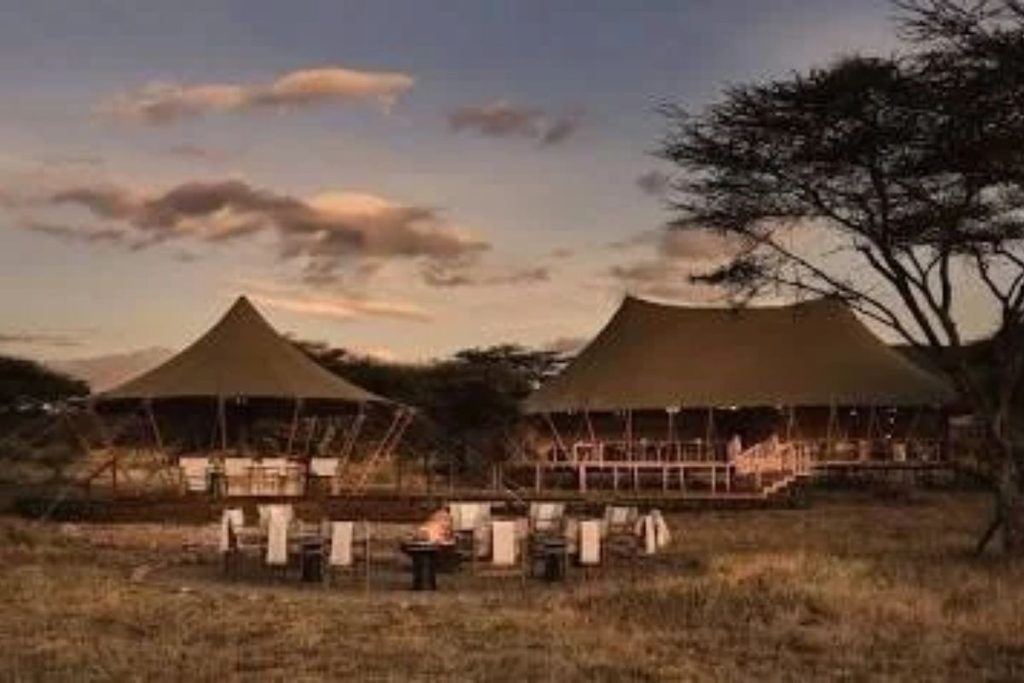
Tanzania’s premier accommodations split into two distinct styles:
- Luxury Safari Lodges: Permanent stone, timber, and glass structures featuring full spas, infinity pools, and climate-controlled suites. Top examples include Four Seasons Safari Lodge Serengeti, andBeyond Ngorongoro Crater Lodge, and Gran Meliá Arusha, ideal for families with children and travelers wanting full resort amenities.
- Luxury Tented Camps: Spacious canvas suites set on raised wooden decks with en-suite bathrooms, rain showers, and private plunge pools. Leading camps include Singita Mara River Tented Camp, Serengeti Bushtops, Jabali Ridge in Ruaha, and Roho ya Selous in Nyerere, best suited for romantics, photographers, and travelers seeking intimate wilderness immersion.
Luxury Safari Package Inclusions & Pricing
All-inclusive luxury fly-in safari packages cover domestic bush flights, airstrip transfers, private 4×4 Land Cruisers with expert guides, TANAPA/NCAA park fees, gourmet meals, house drinks, and laundry.
- Mid-Luxury Fly-In ($5,200 – $7,500 USD per person, 7–8 days): Pairs permanent tented camps in Tarangire and Central Serengeti with scheduled bush flights.
- Ultra-Luxury Private Concession ($9,500 – $15,000+ USD per person, 8–10 days): Features private-concession camps offering night drives, walking safaris, and cross-circuit flights to Ruaha or Nyerere.
How Does a Zanzibar Archipelago Extension Complete the Journey?

Morning bush flights depart directly from Serengeti or Nyerere airstrips and land at Abeid Amani Karume International Airport (ZNZ) in under two hours. Guided by the Zanzibar Commission for Tourism, Unguja Island offers three classic post-safari highlights:
- Stone Town (UNESCO World Heritage Site): Explore coral-stone alleys, carved Zanzibari doors, and evening street food at Forodhani Gardens, recognized on the UNESCO World Heritage List.
- Spice Plantation Tours: Sample fresh cloves, vanilla, nutmeg, and cinnamon on working island farms.
- Mnemba Atoll Diving & Snorkeling: Swim among vibrant coral reefs, sea turtles, and dolphins off the northeast coast near private island retreats such as andBeyond Mnemba Island.
For coastal stays, Nungwi and Kendwa on the northern tip offer deep-water swimming unaffected by tides, while Matemwe on the northeast coast delivers quiet, barefoot-luxury resorts facing Mnemba Island. Book peak July–October migration lodges 9 to 12 months ahead, pack neutral earth tones (avoiding dark blue and black, which attract tsetse flies), and carry post-2013 US dollars for visas and gratuities.

Praseetha K
Praseetha K is the Managing Editor of Clarity Times. She edits, verifies and publishes the newsroom's articles, and also writes analysis on policy, law, business and technology. Articles she writes are edited by the Editor-in-Chief before publication.