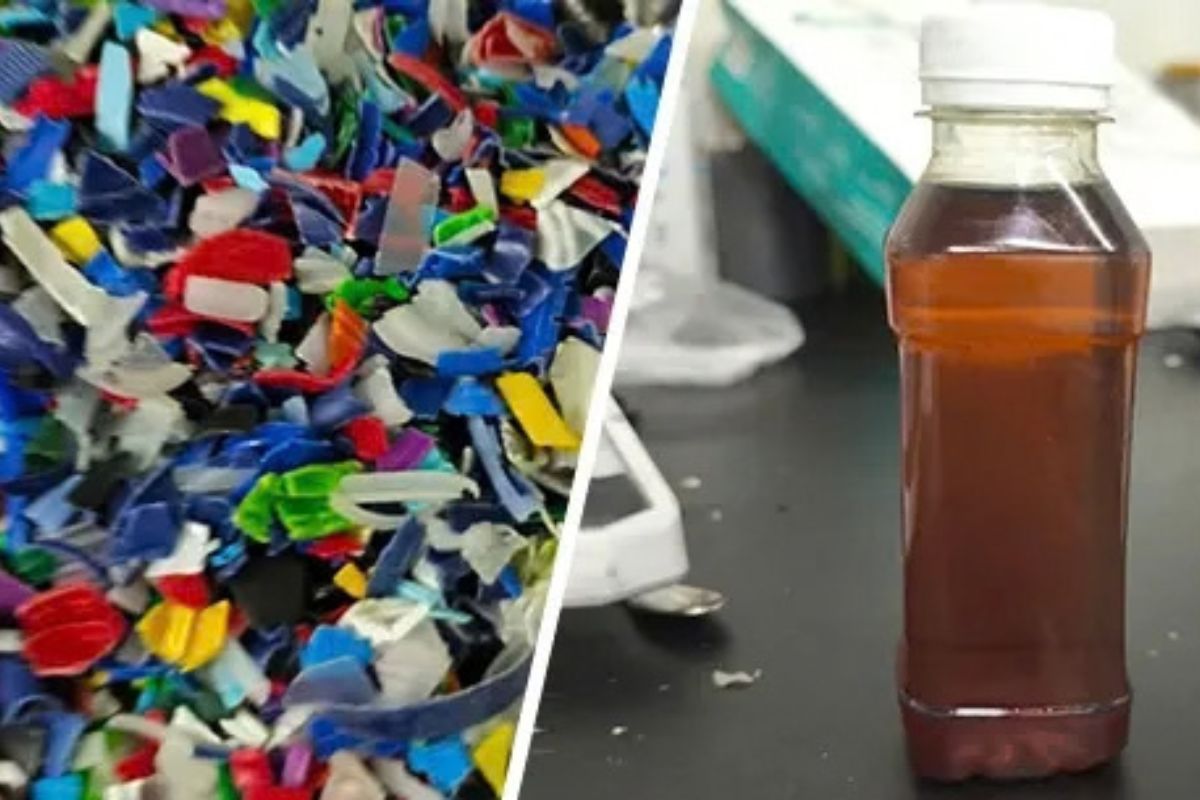
At Clarity Times, we examine what mainstream narratives omit. This dispatch investigates institutional incentives, policy fine print, and multi-dimensional community impacts.
Does turning plastic waste into gasoline actually lower carbon emissions? The short answer is no. Once plastic-derived gasoline enters an engine, it releases the same greenhouse gases and tailpipe pollutants as standard fossil fuels. Converting waste plastic into liquid fuel simply delays the release of petroleum-based carbon into the atmosphere rather than reducing it.
Why does plastic-derived gasoline produce the same tailpipe emissions?
The liquid fuel manufactured from waste polyethylene, the most common consumer plastic used in packaging and grocery bags, is chemically identical to refined crude oil. Burning it releases the same volume of carbon dioxide.
When a car engine combusts this synthetic fuel, the carbon atoms that formed the original plastic bond with oxygen.
According to the U.S. Environmental Protection Agency, burning a standard gallon of gasoline produces exactly 8,887 grams of carbon dioxide. Combusting one gallon of plastic fuel yields that identical tailpipe output of 8,887 grams of CO2, offering zero reduction from the traditional fossil fuel baseline.
How did a chemical recycling breakthrough ignore climate impact?
The researchers successfully measured the efficiency of creating liquid fuel, but they did not calculate the atmospheric impact of burning it.
Researchers at the Oak Ridge National Laboratory recently published a method to break down polyethylene at temperatures under 200 degrees Celsius. This is a sharp drop from the 450 to 500-degree requirement of traditional pyrolysis.
News outlets framed this molten salt plastic recycling as an environmental climate solution. The scientific paper, summarized in ScienceDaily, measured success solely by the efficiency of the chemical conversion.
This process uses an aluminum chloride molten salt catalyst, a liquid mixture of salts that accelerates chemical reactions without being consumed. The Oak Ridge researchers’ system boundaries stopped at liquid fuel production, omitting the final combustion stage entirely.
What is the total plastic fuel carbon footprint?
The combined carbon emissions of manufacturing the original plastic, chemically converting it, and burning it match the footprint of extracting, refining, and burning new underground oil.
To calculate the actual climate impact, the entire lifecycle of the material requires tracking.
Lifecycle carbon assessments of plastic-to-fuel conversion, modeled using Argonne National Laboratory’s GREET framework, show that turning post-use plastic into fuel offers negligible climate benefits over the baseline of refining crude oil.
The carbon originates from a different starting point, a waste facility instead of an oil well, but the volume of greenhouse gas entering the atmosphere remains the same.
Does turning plastic waste into gasoline reduce local air pollution?
No. The conversion process and subsequent fuel combustion produce particulate matter and nitrogen oxides at rates matching traditional diesel.
Life cycle assessments of chemical recycling emissions confirm this parity. You can review the specific chemical breakdown in the National Library of Medicine’s PMC archive.
Real-world municipal waste contains food residue, dyes, and trace amounts of polyvinyl chloride. When mixed plastics enter a catalytic process, those chemical additives can transfer into the final liquid fuel. Burning that contaminated fuel maintains local air quality issues at the tailpipe.
Why is landfilling plastic better for greenhouse gas accounting?
Leaving discarded plastic in a landfill traps its carbon underground indefinitely, while converting it into gasoline ensures that carbon enters the active atmosphere within months.
The U.S. Environmental Protection Agency’s Waste Reduction Model (WARM) categorizes landfilled polyethylene as a long-term carbon sink because the material does not degrade.
Proponents of chemical recycling point to a different ecological metric. The developers of these conversion processes argue that breaking down plastic removes non-biodegradable, toxic microplastics from the biosphere and oceans.
That solves a distinct ecological crisis that landfilling does not. But it achieves this by trading solid waste on the ground for gaseous waste in the air.
Frequently Asked Questions
Does burning plastic-derived gasoline produce carbon dioxide? Yes. Because it is chemically identical to refined crude oil, combusting one gallon of plastic-derived gasoline produces exactly 8,887 grams of CO2. This matches the carbon dioxide tailpipe emissions of standard fossil fuels.
What is molten salt plastic recycling? It is a chemical process that uses an aluminum chloride molten salt catalyst to break down long plastic chains into liquid fuel. It operates at temperatures under 200 degrees Celsius, requiring significantly less heat than traditional pyrolysis.
Does turning plastic into fuel help the climate? It reduces solid plastic waste in the environment but offers zero reduction in greenhouse gases. Lifecycle carbon assessments show its total carbon footprint equals that of extracting, refining, and burning underground oil.
Editorial Independence & Corrections
Clarity Times is published by Beeps Venture Technologies LLP under strict editorial independence charters. We uphold rigorous sourcing and verification protocols. Noticed a factual omission or error? Review our Correction Protocols or contact our editorial desk at mail@claritytimes.org.

Praseetha K
Investigative journalist and research analyst contributing independent field reports and structural analysis for Clarity Times.