At Clarity Times, we examine what mainstream narratives omit. This dispatch investigates institutional incentives, policy fine print, and multi-dimensional community impacts.
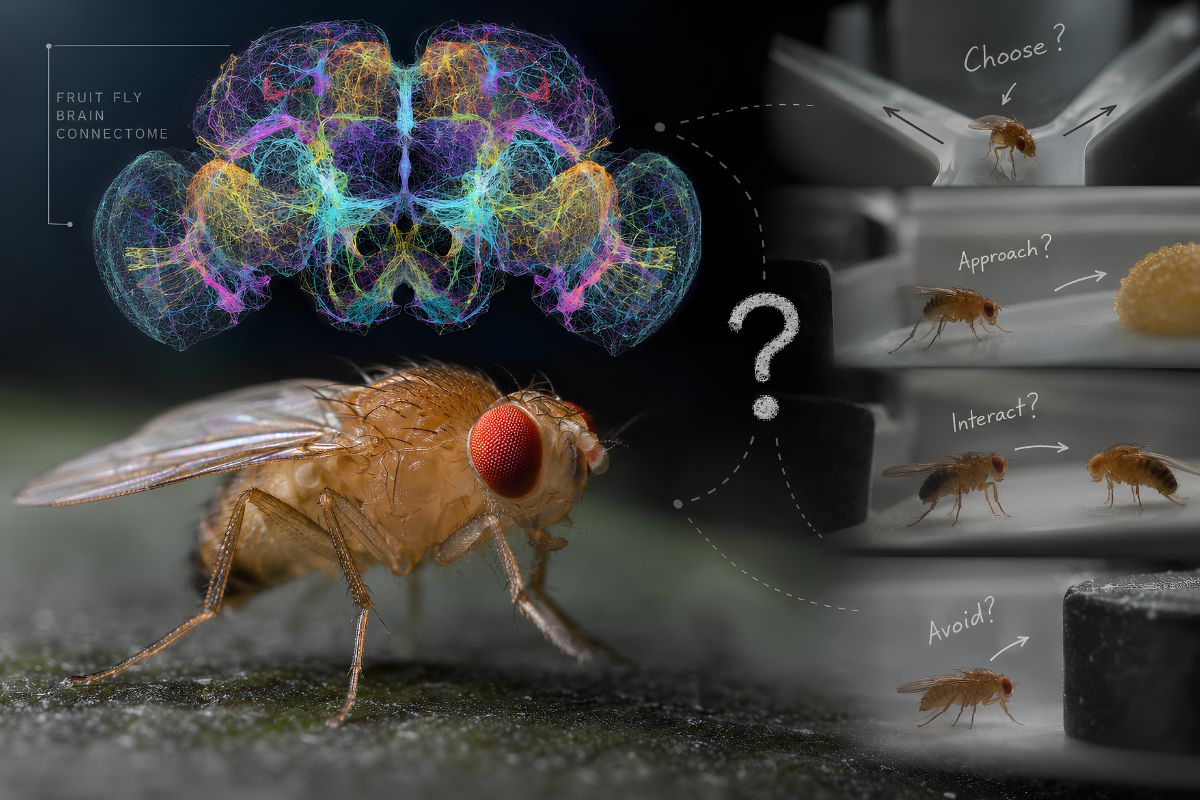
The new fruit fly connectome provides a physical wiring diagram of 50 million synaptic connections, but it does not reveal how the brain works or how to cure human diseases. Because this structural map captures only static synapses and ignores dynamic chemical signals, scientists cannot predict behavior from the diagram alone.
Why Doesn’t the Fruit Fly Connectome Show How the Brain Thinks?
The fruit fly connectome – a comprehensive structural map of neural connections in a brain – functions purely as a hardware schematic of physical synapses. It cannot show how the brain thinks because it completely excludes neuromodulators, the chemical signals that dictate actual behavioral states like aggression or sleep.
The FlyWire consortium dataset tracks physical wiring but misses the “wireless” signaling network that processes information differently from the physical network, according to research on neuropeptide networks published by the National Center for Biotechnology Information. The brain operates in a bath of these chemicals, making the physical map incomplete on its own.
What Happened After Scientists Mapped the Worm Brain?
Four decades after mapping the worm brain, scientists still cannot predict its real-time behavior based on that wiring diagram alone. The historical record demonstrates the exact limitations of modern structural maps.
In 1986, scientists published the complete wiring diagram of the nematode worm Caenorhabditis elegans (C. elegans), which has just 302 neurons compared to the adult female fruit fly’s 139,255.
At the time, researchers suggested this complete physical map would allow them to fully model the organism’s behavior. Scientists currently possess the entire structural blueprint of the worm, yet the physical structure does not automatically explain the biological function.
Will the Fruit Fly Brain Map Help Cure Alzheimer’s Disease?
The fruit fly connectome will not rapidly accelerate treatments for human neurodegenerative conditions like Alzheimer’s disease because these illnesses are driven by chemical and metabolic breakdowns, not static synaptic errors.
Human brains operate on a vastly different scale, possessing roughly 86 billion neurons, according to established neurobiology standards.
Instead of simple wiring faults, neurodegenerative diseases involve the dysregulated immunometabolism of glial cells – the brain’s chemical and structural support system – and the accumulation of proteins over time. A static wiring diagram of a healthy fly does not capture the dynamic chemical decay that defines human neurological diseases.
What Did the FlyWire Consortium Actually Achieve?
The FlyWire consortium successfully mapped 139,255 neurons and over 50 million synapses by processing 7,000 thin slices of a female adult fly’s brain into petabytes of imaging data.
The consortium leaders argue that structural maps remain necessary prerequisites for future discoveries. They maintain that reverse-engineering the brain’s chemical software is impossible without first possessing the complete hardware schematic. The structural map provides the foundational grid that future functional studies will build upon.
What is the Next Step in Brain Mapping?
The next step in brain mapping requires moving beyond static images to track live chemical signals as they happen. A dead, sliced brain frozen in a single millisecond cannot show how neural networks shift over time.
The field is moving toward mapping “wireless connectomes.” In 2023, researchers successfully mapped a whole-animal neuropeptide signaling network in C. elegans, according to the Medical Research Council Laboratory of Molecular Biology. This revealed a decentralized chemical communication system completely distinct from the physical wiring.
Until dynamic maps of live brain activity match the resolution of physical wiring diagrams, structural maps provide only the location of connections, not the messages traveling through them.
Frequently Asked Questions
What is a connectome? A connectome is a comprehensive structural map of the neural connections within an organism’s nervous system. The new fruit fly connectome maps 50 million synapses but exclusively tracks physical wiring, excluding chemical signaling.
Why doesn’t the fruit fly brain map predict behavior? The map only shows the physical wiring of the brain and ignores neuromodulators. These chemical signals act as the brain’s “software” and are strictly required to understand real-time behavioral states like hunger, aggression, or sleep.
How does the fruit fly map compare to the worm brain map? In 1986, scientists completely mapped the 302-neuron brain of the C. elegans worm. Four decades later, researchers still cannot predict the worm’s behavior from that structural map alone, indicating similar limitations for the 139,255-neuron fly map.
Editorial Independence & Corrections
Clarity Times is published by Beeps Venture Technologies LLP under strict editorial independence charters. We uphold rigorous sourcing and verification protocols. Noticed a factual omission or error? Review our Correction Protocols or contact our editorial desk at mail@claritytimes.org.

Praseetha K
Investigative journalist and research analyst contributing independent field reports and structural analysis for Clarity Times.