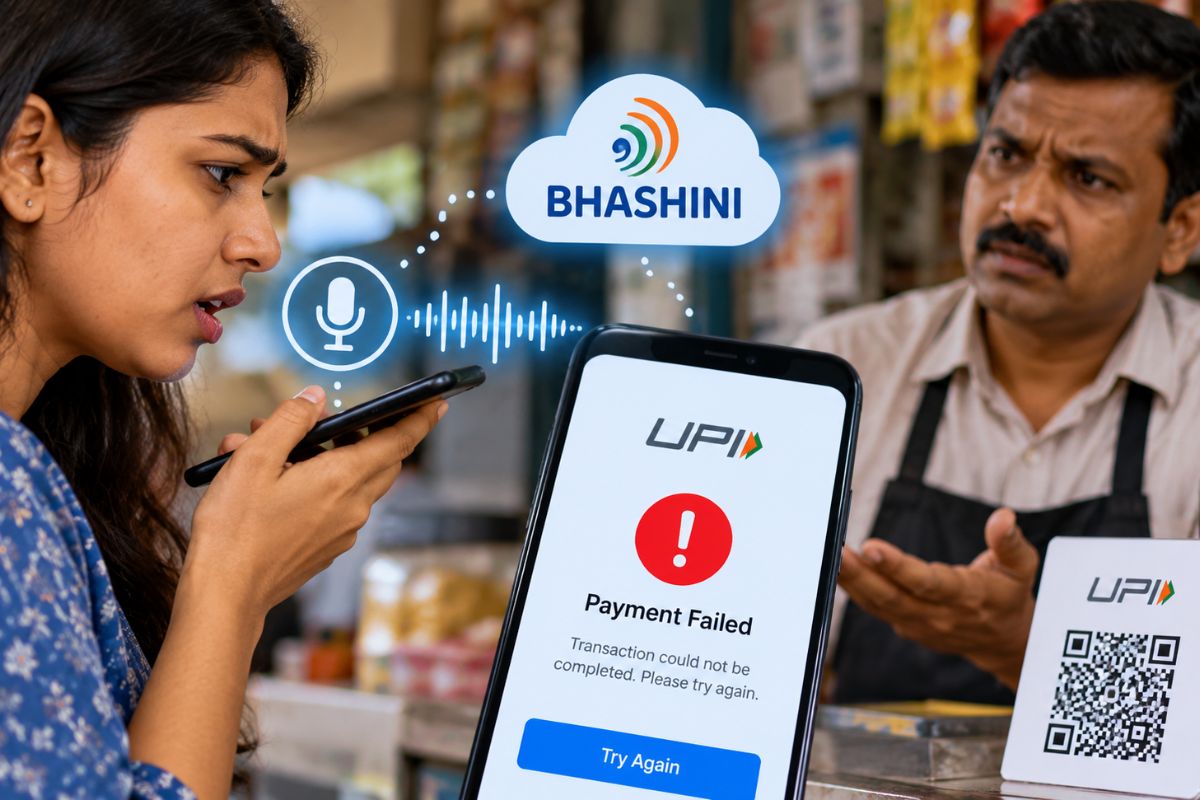
At Clarity Times, we examine what mainstream narratives omit. This dispatch investigates institutional incentives, policy fine print, and multi-dimensional community impacts.
If a voice UPI app mishears your spoken amount or sends money to the wrong person, you absorb the financial loss. Current banking regulations classify AI transcription mistakes as user error. Because you enter a UPI PIN to finalize the transfer, banks consider any voice UPI payment error legally authorized by you.
Who is Liable for a Voice UPI Payment Error?
The financial risk of a voice-initiated AI mistranslation falls entirely on the rural user, as current banking laws do not recognize software transcription mistakes as unauthorized transactions.
Under the Customer Protection framework issued by the Reserve Bank of India (RBI), the country’s central banking regulatory body, a transaction qualifies for a refund only if it involves fraud, direct negligence by the bank, or a third-party security breach. Fintech compliance experts note that an artificial intelligence model misinterpreting a spoken number fits none of these categories.
Automatic Speech Recognition (ASR), the technology that converts spoken audio into text, errors do not meet the legal definition of an unauthorized transaction or bank negligence. Because the regulatory framework predates conversational AI, banks treat a mistranslated voice input exactly like a typographical error made on a digital keyboard. The legal burden rests on the user to catch the machine’s mistake.
Why Does Bhashini Mishear Regional Dialects?
Government-backed translation models face severe acoustic challenges in rural India, where numbers and payee names in regional dialects frequently sound phonetically identical to the software.
Voice payment initiatives rely heavily on Bhashini, India’s state-sponsored language translation AI model. Government technology initiatives acknowledge that current translation tools often lack nuance and struggle to capture regional dialects, potentially causing misinterpretations. Rural Business Correspondents field-testing voice-UPI pilots report that slight variations in local pronunciation easily confuse the system.
According to research compiled by AI Grants, AI speech recognition for Indian regional languages historically grapples with Word Error Rates between 30% and 40%. A user stating a payment for ₹500 may easily generate an on-screen prompt for ₹5000.
How Do UPI Apps Legally Shield Themselves from AI Mistakes?
Conversational payment apps force users to confirm AI-generated text and enter a PIN, a process that legally absolves the application developer of any liability for Bhashini transcription errors.
App developers and the National Payments Corporation of India (NPCI), the umbrella organization operating India’s retail payment systems, point out that voice AI operates merely as an input method. The AI does not move the funds; it only populates the payment fields.
This final authorization step creates a legal shield for fintech platforms. A review of the Hello UPI transaction flow, a conversational payment product, shows that after the AI processes the voice command, the system requires the user to explicitly confirm the details and enter their UPI PIN confirmation to complete the payment.
Fintech compliance officers explain that this final entry acts as an absolute legal waiver of transcription liability. By forcing a final review screen, the application legally transforms any preceding AI hallucination into a user-authorized action, protecting the software provider even when users struggle to verify the on-screen text.
Why Has the NPCI Ignored Conversational AI Liabilities?
The NPCI has mandated conversational payments across the UPI ecosystem but has issued zero operating guidelines regarding dispute resolution protocols for mistranscribed voice inputs.
The central payment authority operates in a regulatory void regarding algorithmic mistakes. A review of the NPCI’s official circulars for the Unified Payments Interface reveals a total absence of clauses addressing Automatic Speech Recognition errors or conversational AI liabilities.
As banks and fintechs roll out voice features to rural populations, they deploy state-backed AI models without accompanying state-backed consumer protections. Until the RBI or NPCI categorizes algorithmic transcription errors within their fraud and grievance frameworks, the financial cost of a mistranslated syllable belongs solely to the citizen.
Frequently Asked Questions
If Bhashini translates my voice UPI payment incorrectly, can I get a refund? No. Under current RBI refund guidelines, banks only issue refunds for fraud or direct bank negligence. Because you must enter a UPI PIN to complete a voice transaction, the bank considers the payment legally authorized by you, making you fully liable for the AI’s transcription error.
Why doesn’t the UPI app developer pay for AI translation mistakes? Conversational UPI apps use the final review screen and PIN entry as a legal shield. By requiring the user to explicitly confirm the AI-populated fields, fintech companies legally transform the AI’s transcription mistake into a user-approved action, waiving their own liability.
Has the NPCI released rules for voice payment errors? The National Payments Corporation of India (NPCI) has not issued any specific rules or dispute resolution protocols for Automatic Speech Recognition errors. Their current operating guidelines treat conversational payments exactly like keyboard inputs, offering no specific protection against conversational AI hallucinations.
Editorial Independence & Corrections
Clarity Times is published by Beeps Venture Technologies LLP under strict editorial independence charters. We uphold rigorous sourcing and verification protocols. Noticed a factual omission or error? Review our Correction Protocols or contact our editorial desk at mail@claritytimes.org.

Praseetha K
Investigative journalist and research analyst contributing independent field reports and structural analysis for Clarity Times.