At Clarity Times, we examine what mainstream narratives omit. This dispatch investigates institutional incentives, policy fine print, and multi-dimensional community impacts.
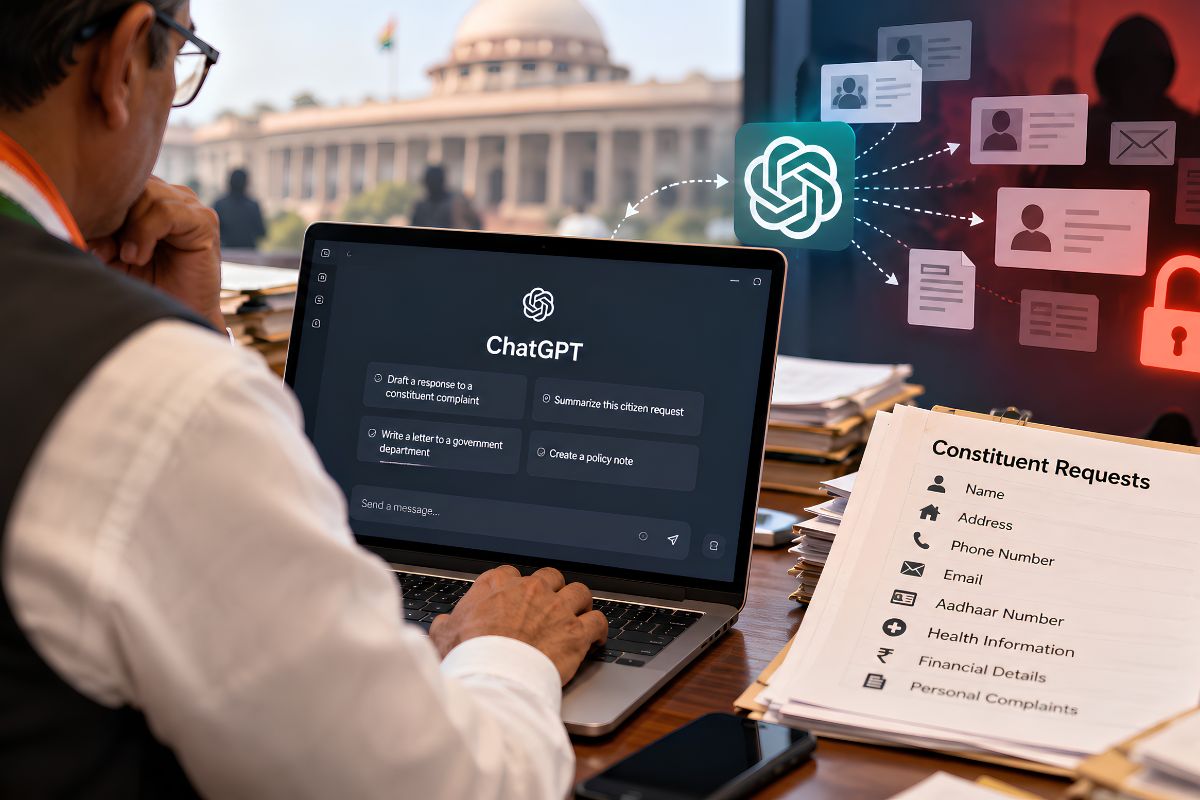
Are politicians using ChatGPT to answer casework emails about evictions and benefits? Yes. Congressional and parliamentary caseworkers facing massive email backlogs are copying unredacted constituent letters directly into consumer-grade AI models like ChatGPT to generate empathetic replies. This practice instantly exposes sensitive personal data and routinely sends vulnerable citizens hallucinated legal deadlines.
In a rush to clear backlogs, legislative offices are funneling unredacted citizen emails into consumer AI tools, directly exposing sensitive personal data and sending vulnerable constituents hallucinated legal advice.
Why are caseworkers using AI for constituent responses?
District offices are drowning in mail, prompting staffers to bypass sluggish official enterprise tools by pasting unredacted citizen emails directly into artificial intelligence products. They feed citizen personally identifiable information (PII), data that can identify a specific individual, such as a Social Security number, into these commercial platforms.
To clear extreme email backlogs, junior legislative staffers are routinely copying unredacted citizen eviction notices and asylum appeals into consumer-tier AI models to generate automated replies.
How does automated casework violate legislative data privacy?
This workflow directly violates legislative IT governance rules because consumer-tier AI accounts default to retaining user inputs to train future iterations of the software. Staffers are feeding Social Security numbers, case tracking IDs, and medical records into the free or basic tiers of major language models.
According to internal IT guidance from the US House Chief Administrative Officer and the UK Parliamentary Digital Service, these platforms are unapproved cloud tools. District offices lack the budget for enterprise-grade AI instances that guarantee data privacy, leading staffers to default to free web browsers.
What happens when AI gives bad legal advice on official letterhead?
AI models predict text rather than verifying administrative law, leading offices to disseminate hallucinated statutory deadlines and non-existent relief programs to constituents.
A constituent facing eviction cannot distinguish a fabricated date printed on official congressional letterhead from a genuine statutory deadline. When automated casework replaces factual verification, citizens miss narrow windows for administrative relief.
Why do legislative managers incentivize automated casework?
District offices evaluate caseworkers primarily on response-time metrics and closed-ticket counts, creating a direct career incentive to prioritize automated throughput over factual accuracy. According to district directors, automation is a necessary triage method to handle tens of thousands of annual messages under tight funding constraints.
Simultaneously, constituent relationship management (CRM) software vendors—companies that build the internal email ticketing systems for elected officials—are commercially pitching auto-response modules that intentionally optimize for ticket-closure metrics over factual accuracy.
These vendors defend their products by citing human-in-the-loop protocols and security sandboxing. Those safeguards rarely apply when staffers independently use free web browsers to meet their quotas.
How does auto-resolving mail blind lawmakers to systemic crises?
Automating casework severs a fundamental democratic mechanism by preventing elected officials from detecting emerging crises. Historically, incoming constituent correspondence served as an early warning system for administrative and regulatory failure.
A cluster of letters about delayed checks often indicated a systemic breakdown at a federal agency. If software instantly closes a complaint regarding a predatory landlord with an automated letter of empathy, the district representative never sees the pattern.
Do ethics rules cover AI in politics?
Public discussion of AI in politics has largely focused on campaign speechwriting and automated fundraising emails. A few legislative offices have recently tested strict disclosure labels on outbound communications to indicate AI assistance.
The bulk of constituent communication occurs in private channels. It remains unclear whether existing rules from the House Ethics Committee and the Parliamentary Standards Commissioner cover generative AI outputs sent under an official franking privilege.
Frequently Asked Questions
Are politicians using ChatGPT for casework? Yes. Caseworkers in the US and UK use consumer-grade AI models to draft replies to constituents regarding evictions, benefits, and visas. This practice bypasses official enterprise tools to clear massive email backlogs.
Is it safe to put constituent data into AI models? No. Feeding constituent emails into consumer-tier AI models violates legislative IT rules. These public platforms default to retaining input data, exposing sensitive personal information to third-party model retraining.
Can AI give bad legal advice in official government letters? Yes. AI models generate text based on probability rather than verifying administrative law. This has resulted in official congressional corres
Editorial Independence & Corrections
Clarity Times is published by Beeps Venture Technologies LLP under strict editorial independence charters. We uphold rigorous sourcing and verification protocols. Noticed a factual omission or error? Review our Correction Protocols or contact our editorial desk at mail@claritytimes.org.

Praseetha K
Investigative journalist and research analyst contributing independent field reports and structural analysis for Clarity Times.