At Clarity Times, we examine what mainstream narratives omit. This dispatch investigates institutional incentives, policy fine print, and multi-dimensional community impacts.
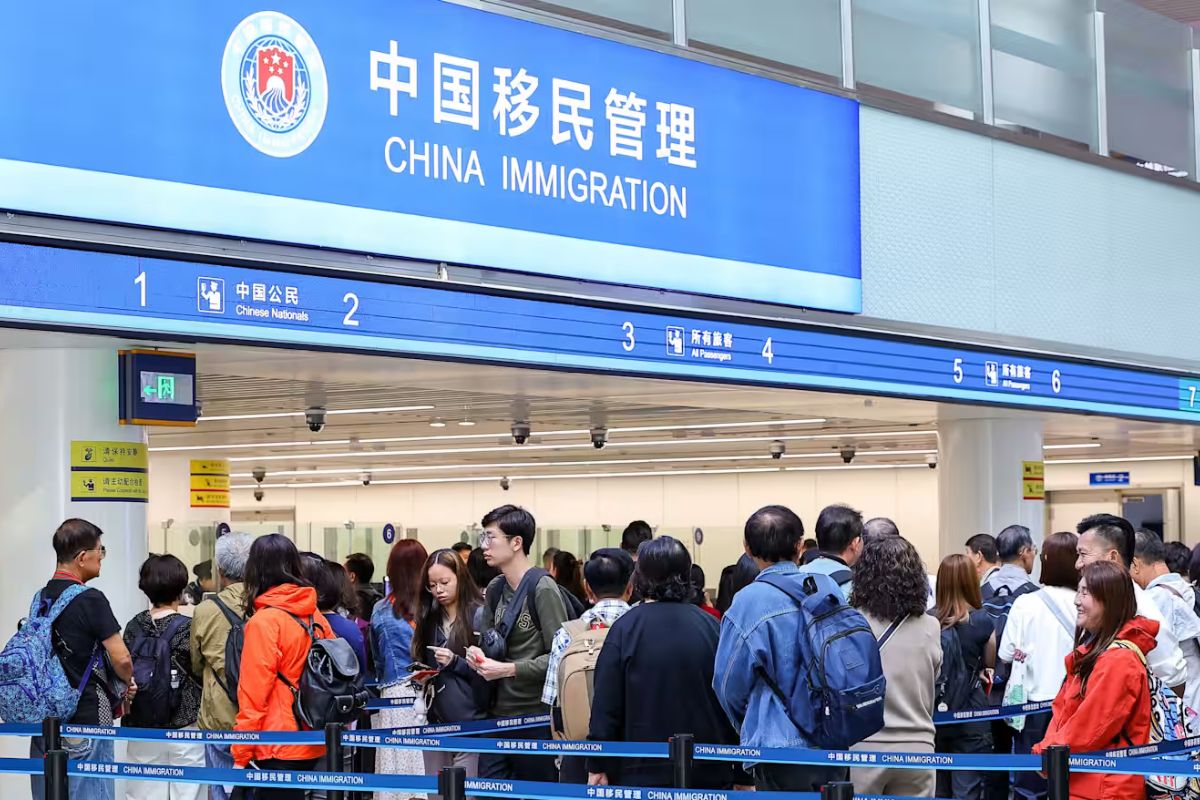
Families of Chinese artificial intelligence founders are evading China’s AI exit bans by exploiting a three-to-six-week delay between national security directives and local airport database updates. Executives are purchasing fast-track Caribbean and Pacific passports to relocate dependents before their names trigger border alarms.
Why are secondary passport brokers seeing a surge from tech families?
Secondary passport brokers are experiencing a demand surge because Chinese tech executives are racing to buy alternative citizenship for their families before state travel restrictions fully activate. The expanded travel limits on tech-sector dependents do not operate as an instantaneous trap.
According to aggregate client inquiry data from Henley & Partners and Arton Capital, tech-sector demand for immediate dependent relocation has spiked since late August. Offshore brokers report their clients are explicitly timing these passport purchases against the anticipated synchronization rate of state databases.
How do tech families bypass National Immigration Administration exit bans?
Executives bypass National Immigration Administration (NIA) exit bans by moving their families during the three-to-six-week delay it takes for the agency to synchronize central security lists with provincial airport e-gates. The NIA is the Chinese government agency responsible for border control, customs databases, and exit-entry administration.
The evasion strategy relies entirely on this mechanical friction. When the state designates a family member as a restricted individual, the block does not go live immediately at every checkpoint.
According to Beijing-based corporate immigration lawyers, this administrative gap gives families a brief window to leave before the automatic flag activates at physical border terminals. A representative for the NIA did not respond to requests for comment regarding database rollout timelines or e-gate synchronization delays.
Which Citizenship by Investment programs are executives buying?
Tech executives are entirely abandoning multi-year US and UK investor visas in favor of 30-to-90-day Citizenship by Investment (CBI) programs in Vanuatu and the Caribbean. CBI is a legal framework that grants individuals a second passport in exchange for a direct financial contribution to the host country.
This strict time constraint is changing what elite tech families buy. Historically, wealthy Chinese founders favored traditional immigration routes like the US EB-5 visa or the UK Tier 1 visa. Broker data shows executives are abandoning those prestige paths because they take years to process.
| Immigration Route | Average Processing Time | Required Investment | Current Demand Trend |
|---|---|---|---|
| US EB-5 / UK Tier 1 | 3 to 5 Years | $800,000+ | Declining |
| St. Kitts and Nevis (CBI) | 45 to 60 Days | $250,000+ | Surging |
| Vanuatu (CBI) | 45 to 60 Days | $130,000+ | Surging |
Instead, clients demand immediate legal residence outside mainland jurisdiction. According to current processing data, the fast-track Caribbean passports of St. Kitts and Nevis deliver citizenship in 45 to 60 days for a $250,000 investment. Vanuatu offers a similar timeline, processing complete passport files in under 60 days.
What triggered the travel curbs on AI founders?
Beijing expanded exit bans to the spouses and children of private AI executives in mid-September after blocking a foreign acquisition of a domestic artificial intelligence firm.
The policy shift followed Meta’s blocked attempt to acquire Manus, a Singapore-based AI startup with Chinese roots. Following the blocked acquisition in April 2026, authorities barred the Manus founders from leaving the country. By September, official NIA mandates expanded these restrictions, requiring direct relatives of key AI and semiconductor executives to obtain state approval before traveling abroad.
How are brokers evading China’s new emigration filing rules?
Intermediaries are moving their tech-family passport transactions entirely offshore to evade China’s September 21 Exit-Entry Filing Rules for Emigration Agencies.
Beijing is actively reacting to this escape route. The newly enforced September 21 regulations establish a national filing system requiring all emigration agencies to systematically declare their clients’ overseas relationships and foreign organizational ties.
Legal analysis of the new rules confirms they mandate total visibility into who is purchasing secondary passports. In response, offshore brokers state they are shifting operations out of mainland China to avoid domestic reporting requirements and potential prosecution.
While immigration consultancies officially deny actively assisting clients in evading the new travel bans, their offshore restructuring allows them to continue selling fast-track passports outside the view of Chinese regulators.
Frequently Asked Questions
Can Chinese citizens legally hold dual citizenship?
No, Chinese nationality law does not recognize dual citizenship. When a Chinese citizen acquires a foreign passport, they technically forfeit their Chinese citizenship, though enforcement historically relies on the government discovering the second passport during border crossings.
How long does it take for a Chinese exit ban to take effect?
According to corporate immigration lawyers, there is a three-to-six-week delay between a central state security designation and the active triggering of an automatic flag at provincial airport e-gates.
What is the fastest Citizenship by Investment program?
Vanuatu and St. Kitts and Nevis offer some of the fastest Citizenship by Investment timelines globally. According to industry processing data, both nations can process a complete application and issue a passport in 45 to 60 days for eligible investors.
Editorial Independence & Corrections
Clarity Times is published by Beeps Venture Technologies LLP under strict editorial independence charters. We uphold rigorous sourcing and verification protocols. Noticed a factual omission or error? Review our Correction Protocols or contact our editorial desk at mail@claritytimes.org.

Praseetha K
Investigative journalist and research analyst contributing independent field reports and structural analysis for Clarity Times.