At Clarity Times, we examine what mainstream narratives omit. This dispatch investigates institutional incentives, policy fine print, and multi-dimensional community impacts.
India’s food safety regulator does not have the laboratory capacity or the manpower to test every packaged food on shelves for proposed FSSAI warning labels. Enforcing this rule requires calculating exact sugar, salt, and fat levels for millions of products, a volume that mathematically overwhelms the current testing infrastructure.
The total number of active packaged food SKUs in India vastly exceeds the combined daily testing throughput of all state and notified private laboratories.
Does India Have the Food Testing Laboratory Capacity for Millions of SKUs?
India’s fast-moving consumer goods market creates a physical barrier to blanket enforcement, as the total number of packaged products vastly outpaces current lab throughput. The country’s packaged food sector is projected to reach $137 billion in 2026, comprising hundreds of thousands of active Stock Keeping Units (SKUs) – distinct, trackable inventory items – across bakery, dairy, and beverage categories.
Testing those items requires specialized facilities and dedicated lab hours. According to government data, the Food Safety and Standards Authority of India (FSSAI) analyzed a total of 5.18 lakh food samples over the last three years across its network of 252 notified testing laboratories and 24 referral labs. That averages roughly 1.72 lakh samples annually.
If the market holds 500,000 unique packaged items, clearing that volume at the current combined rate is mathematically unfeasible for a single comprehensive sweep. This rate is already stretched covering loose goods like milk and spices.
How Will FSSAI Warning Labels Affect Existing State Lab Backlogs?
Adding mandatory nutritional audits to the current queue changes the required laboratory throughput entirely, burdening a system already straining to process standard safety checks. The FSSAI recently told the Supreme Court it is willing to consider mandatory warning labels on foods high in specific nutrients.
Of the roughly 1.7 lakh samples tested each year, nearly one in five fail to meet safety standards. State labs operate under severe capacity constraints. A recent state report noted an Andhra Pradesh state lab sat idle awaiting 75 essential personnel, while previous audits flagged ongoing nationwide staff shortages and testing delays.
Why Do Mandatory Nutritional Audits Take Longer Than Routine Safety Tests?
Warning labels demand exact macronutrient profiling down to the decimal, a process that takes much longer than routine safety tests offering a simple pass or fail result. Standard microbiological tests for pathogens take a few days.
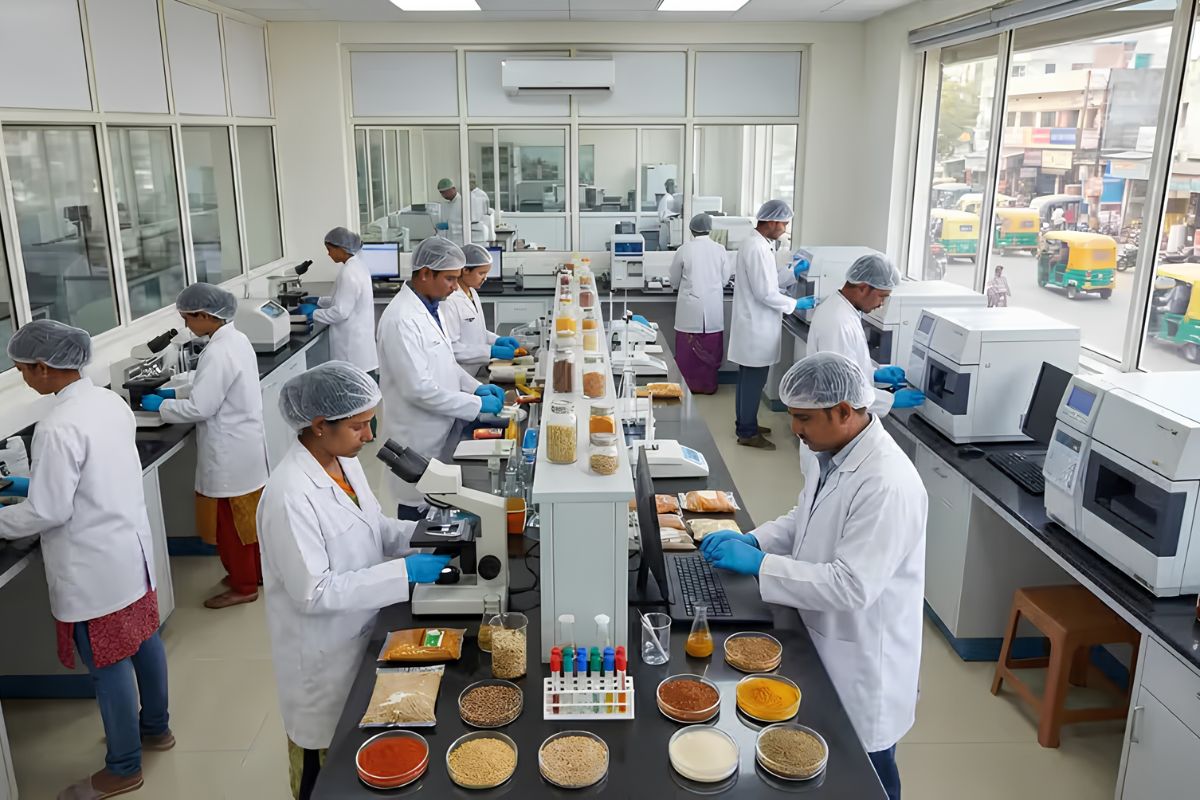
However, full nutritional profiling – quantifying exact dietary fiber, sodium, and trans fats via equipment like Gas Chromatography – takes 10 to 12 business days and costs upwards of Rs 5,000 per sample, according to NABL-accredited facilities like Auriga Research.
Assessing whether a snack crosses the legal threshold for a high sugar or high sodium label requires distinct protocols that monopolize lab equipment for longer periods.
Does FSSAI Have Enough Food Safety Officers for Field Audits?
The bottleneck starts before a product reaches a lab bench, as physical audits require field personnel to pull packets directly from retail shelves. FSSAI CEO Rajit Punhani recently directed states to urgently expedite the recruitment of Food Safety Officers to fill a shortage affecting field-level regulatory capacity.
Without enough officers in the field, samples cannot be collected at the volume required for a comprehensive national audit.
How Will Companies Comply Without Universal State Lab Testing?
Because the state cannot test everything, the regulatory burden shifts to the manufacturers through self-declaration. Instead of universal state testing, the Food Safety and Standards Act relies heavily on corporate self-declaration, where companies submit third-party NABL-accredited test reports to validate their labels.
The regulator views this capacity gap differently. FSSAI utilizes a Risk-Based Inspection System, conducting targeted audits – only about 56,259 in the last three years, according to government data – to enforce compliance through deterrence rather than blanket testing. The agency applies penalties up to Rs 5 lakh for misbranding.
Under a deterrence model, the state relies on the threat of an audit rather than universal auditing. The actual accuracy of the warning labels will depend largely on corporate compliance, not direct state verification.
Frequently Asked Questions
Why is testing for FSSAI warning labels difficult? Enforcing FSSAI warning labels requires exacting macronutrient profiles for thousands of products. Testing for exact sugar, salt, and fat levels takes up to 12 days and costs Rs 5,000 per sample, which overwhelms current laboratory capacity.
How many food samples does India test annually? According to government data, India analyzes roughly 1.72 lakh food samples each year. This capacity is currently stretched across a network of 252 notified testing laboratories and 24 referral labs.
Who will verify the nutritional data on packaged food? Due to a shortage of state Food Safety Officers and lab space, the system relies heavily on corporate self-declaration. Companies must submit third-party lab reports to validate their labels, while FSSAI uses random audits for deterrence.
FSSAI Warning Labels: India’s Food Testing Bottleneck
India’s food safety regulator does not have the laboratory capacity or the manpower to test every packaged food on shelves for proposed FSSAI warning labels. Enforcing this rule requires calculating exact sugar, salt, and fat levels for millions of products, a volume that mathematically overwhelms the current testing infrastructure.
The total number of active packaged food SKUs in India vastly exceeds the combined daily testing throughput of all state and notified private laboratories.
Does India Have the Food Testing Laboratory Capacity for Millions of SKUs?
India’s fast-moving consumer goods market creates a physical barrier to blanket enforcement, as the total number of packaged products vastly outpaces current lab throughput. The country’s packaged food sector is projected to reach $137 billion in 2026, comprising hundreds of thousands of active Stock Keeping Units (SKUs) – distinct, trackable inventory items – across bakery, dairy, and beverage categories.
Testing those items requires specialized facilities and dedicated lab hours. According to government data, the Food Safety and Standards Authority of India (FSSAI) analyzed a total of 5.18 lakh food samples over the last three years across its network of 252 notified testing laboratories and 24 referral labs. That averages roughly 1.72 lakh samples annually.
If the market holds 500,000 unique packaged items, clearing that volume at the current combined rate is mathematically unfeasible for a single comprehensive sweep. This rate is already stretched covering loose goods like milk and spices.
How Will FSSAI Warning Labels Affect Existing State Lab Backlogs?
Adding mandatory nutritional audits to the current queue changes the required laboratory throughput entirely, burdening a system already straining to process standard safety checks. The FSSAI recently told the Supreme Court it is willing to consider mandatory warning labels on foods high in specific nutrients.
Of the roughly 1.7 lakh samples tested each year, nearly one in five fail to meet safety standards. State labs operate under severe capacity constraints. A recent state report noted an Andhra Pradesh state lab sat idle awaiting 75 essential personnel, while previous audits flagged ongoing nationwide staff shortages and testing delays.
Why Do Mandatory Nutritional Audits Take Longer Than Routine Safety Tests?
Warning labels demand exact macronutrient profiling down to the decimal, a process that takes much longer than routine safety tests offering a simple pass or fail result. Standard microbiological tests for pathogens take a few days.
However, full nutritional profiling – quantifying exact dietary fiber, sodium, and trans fats via equipment like Gas Chromatography – takes 10 to 12 business days and costs upwards of Rs 5,000 per sample, according to NABL-accredited facilities like Auriga Research.
Assessing whether a snack crosses the legal threshold for a high sugar or high sodium label requires distinct protocols that monopolize lab equipment for longer periods.
Does FSSAI Have Enough Food Safety Officers for Field Audits?
The bottleneck starts before a product reaches a lab bench, as physical audits require field personnel to pull packets directly from retail shelves. FSSAI CEO Rajit Punhani recently directed states to urgently expedite the recruitment of Food Safety Officers to fill a shortage affecting field-level regulatory capacity.
Without enough officers in the field, samples cannot be collected at the volume required for a comprehensive national audit.
How Will Companies Comply Without Universal State Lab Testing?
Because the state cannot test everything, the regulatory burden shifts to the manufacturers through self-declaration. Instead of universal state testing, the Food Safety and Standards Act relies heavily on corporate self-declaration, where companies submit third-party NABL-accredited test reports to validate their labels.
The regulator views this capacity gap differently. FSSAI utilizes a Risk-Based Inspection System, conducting targeted audits – only about 56,259 in the last three years, according to government data – to enforce compliance through deterrence rather than blanket testing. The agency applies penalties up to Rs 5 lakh for misbranding.
Under a deterrence model, the state relies on the threat of an audit rather than universal auditing. The actual accuracy of the warning labels will depend largely on corporate compliance, not direct state verification.
Frequently Asked Questions
Why is testing for FSSAI warning labels difficult? Enforcing FSSAI warning labels requires exacting macronutrient profiles for thousands of products. Testing for exact sugar, salt, and fat levels takes up to 12 days and costs Rs 5,000 per sample, which overwhelms current laboratory capacity.
How many food samples does India test annually? According to government data, India analyzes roughly 1.72 lakh food samples each year. This capacity is currently stretched across a network of 252 notified testing laboratories and 24 referral labs.
Who will verify the nutritional data on packaged food? Due to a shortage of state Food Safety Officers and lab space, the system relies heavily on corporate self-declaration. Companies must submit third-party lab reports to validate their labels, while FSSAI uses random audits for deterrence.
Editorial Independence & Corrections
Clarity Times is published by Beeps Venture Technologies LLP under strict editorial independence charters. We uphold rigorous sourcing and verification protocols. Noticed a factual omission or error? Review our Correction Protocols or contact our editorial desk at mail@claritytimes.org.

Praseetha K
Investigative journalist and research analyst contributing independent field reports and structural analysis for Clarity Times.