At Clarity Times, we examine what mainstream narratives omit. This dispatch investigates institutional incentives, policy fine print, and multi-dimensional community impacts.
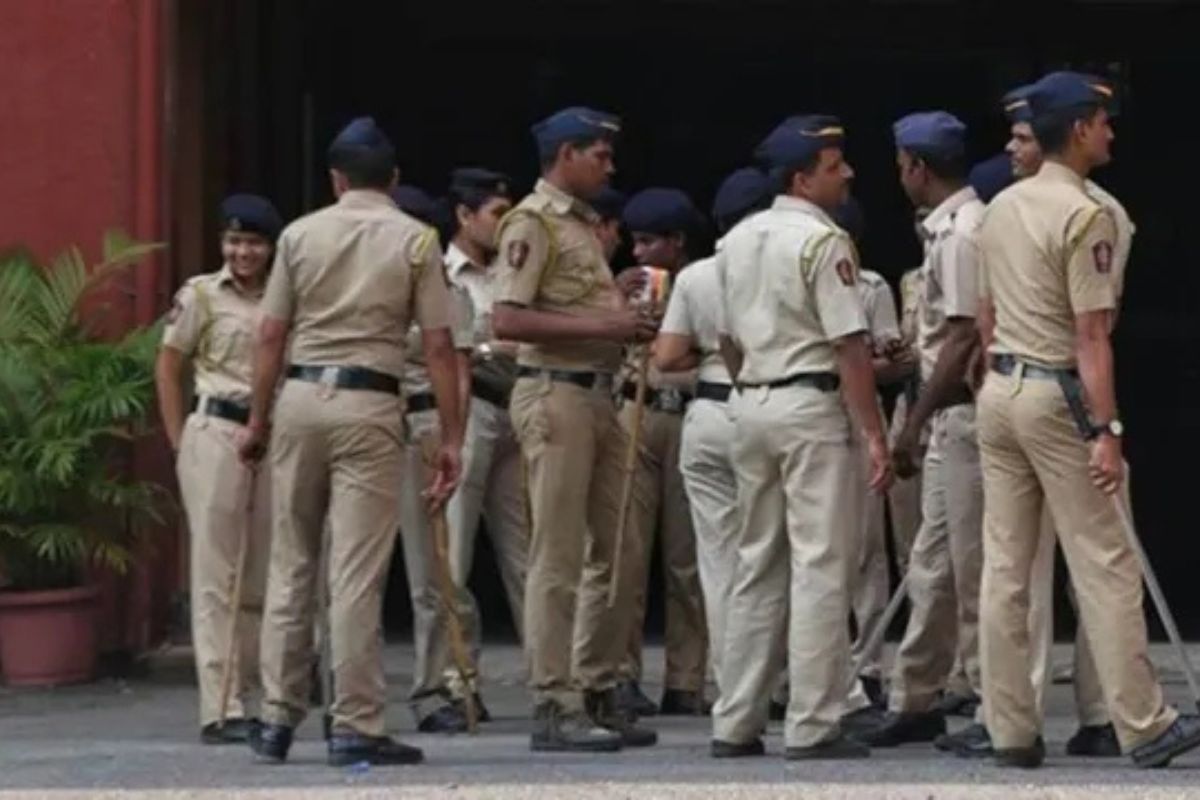
The Mumbai Police MCOCA crackdown on local extortion gangs offers the same public relations victories as 1990s police encounters, but with zero legal risk. As judicial scrutiny ended extrajudicial killings, this stringent law became the preferred institutional mechanism to outsource indefinite, pre-trial punishment directly to the courts safely.
Comprehensive analysis and verified data remain essential for understanding complex market dynamics.
Clarity Times Research
MCOCA-the Maharashtra Control of Organised Crime Act-s a 1999 state law originally designed to dismantle large-scale underworld syndicates by making bail nearly impossible.
How does the Mumbai Police MCOCA strategy compare to 1990s encounters?
Officers now secure guaranteed pre-trial detention for suspects without firing a single shot by exploiting MCOCA’s strict bail limitations.
In the late 1990s, Mumbai Police announced successful crackdowns on organized crime by displaying weapons recovered from fatal shootings. Today, press conferences feature stacked case files.
In a recent briefing regarding the arrest of an extortion and robbery gang, Additional Commissioner of Police Abhinav Deshmukh explicitly outlined this strategy. Standard arrests failed as a deterrent because suspects quickly secured bail. The police applied MCOCA specifically “to detain them behind bars for a longer time.”
The underlying institutional goal remains identical: demonstrating a hardline stance against crime. The mechanism has simply shifted. Under Section 21 of MCOCA, courts cannot grant bail unless there are reasonable grounds to believe the accused is not guilty. This flips standard criminal procedure.
Why did extrajudicial killings drop as MCOCA cases rose?
Police shootings plummeted, and MCOCA charges climbed directly following a 2014 Supreme Court ruling that imposed strict investigations on every police encounter.
The transition from physical force to bureaucratic detention maps directly onto changes in legal oversight. Over the past 25 years, the annual count of police encounters in Mumbai shares a direct, inverse relationship with the invocation of MCOCA.
The inflection point arrived with the Supreme Court’s 2014 ruling in PUCL v. State of Maharashtra. The court laid down 16 mandatory guidelines for every police shooting, requiring independent investigations, immediate reports to human rights commissions, and magisterial inquiries.
Before these rules, the Mumbai Police Detection Unit killed over 400 suspected gang members. Once the Supreme Court clamped down on extrajudicial killings, shootings plummeted. The number of FIRs registering MCOCA charges climbed to fill the vacuum. The state stopped neutralizing gang members on the streets and began neutralizing them through paperwork.
What are the legal incentives for officers to file MCOCA charges?
Filing an MCOCA charge grants officers absolute legal immunity and immediate departmental praise, whereas a physical encounter invites mandatory Central Bureau of Investigation (CBI) probes and potential prison time.
For a modern police officer, the decision to invoke MCOCA is a matter of personal legal risk management. A police shooting today triggers mandatory magisterial inquiries, potential CBI probes, and the threat of suspension.
Filing a MCOCA charge carries no such risk. Officers face no departmental backlash if the case eventually collapses in court years later.
The institutional reward structure incentivizes the harshest possible charges. A MCOCA arrest satisfies public demand for action. The legal burden of maintaining that arrest then transfers immediately to trial judges.
How do local extortion gangs meet the MCOCA legal standard?
Police aggregate the past theft and assault charges of local repeat offenders to legally elevate them to an organized crime syndicate.
Recent invocations of MCOCA against extortion gangs illustrate this modern playbook. Mainstream coverage focuses on the gangs’ prior criminal history and the specific threats made against local victims.
To apply the law, police evaluate local groups of repeat offenders and classify them as an “organized crime syndicate” to meet MCOCA’s statutory requirements. In a recent case involving five repeat offenders targeting cash couriers, the men had dozens of previous theft charges. The police aggregated this history to secure the charge.
Police administrators argue this is a necessary evolution. Investigating officers maintain that since criminals work in a coordinated manner, their acts legally fall under the purview of organized crime. They argue these syndication laws are the only tools effective enough to protect citizens from repeat offenders.
Are MCOCA cases successfully convicted in court?
MCOCA cases are rarely concluded quickly, functioning primarily as a pre-trial detention tool where suspects spend five to ten years in prison regardless of the final verdict.
The ultimate test of MCOCA’s utility to the police lies in the courtroom. If the law were purely a tool for securing convictions, its success rate would mirror its high invocation rate. The data shows the opposite.
According to the state government, overall conviction rates across all laws rose from 9 percent in 2013 to 53 percent in 2025. MCOCA trials, however, are notoriously slow. By the time a Special MCOCA Court reaches a verdict, suspects have often spent five to ten years in prison.
Victim advocacy groups explicitly praise this delay. Following a recent MCOCA invocation, the president of a local jeweler’s association stated that the police took appropriate action because the suspects will not get bail for four to five years.
Because trials take years to conclude, suspects serve extended prison terms regardless of the final verdict. The police secure the public relations victory on the day of the arrest. The courts inherit the task of holding the suspects indefinitely.
Frequently Asked Questions
What is the MCOCA law in Maharashtra? The Maharashtra Control of Organised Crime Act (MCOCA) is a 1999 state law created to dismantle organized crime syndicates. It contains strict bail provisions under Section 21, meaning courts cannot grant bail unless they have reasonable grounds to believe the accused is not guilty.
Why are Mumbai Police using MCOCA against local extortion gangs? The police use MCOCA primarily to secure guaranteed pre-trial detention for repeat offenders who would otherwise quickly get bail under standard criminal laws. It offers a legally safe way for the department to show a hardline stance against crime without risking the judicial scrutiny associated with police shootings.
Does a MCOCA charge mean the suspect will be convicted? Not necessarily. MCOCA functions largely as a detention mechanism because trials in the Special MCOCA Court can take five to ten years to reach a verdict. Suspects remain imprisoned during this time, meaning the legal process itself becomes the punishment regardless of the final ruling.
Editorial Independence & Corrections
Clarity Times is published by Beeps Venture Technologies LLP under strict editorial independence charters. We uphold rigorous sourcing and verification protocols. Noticed a factual omission or error? Review our Correction Protocols or contact our editorial desk at mail@claritytimes.org.

Praseetha K
Investigative journalist and research analyst contributing independent field reports and structural analysis for Clarity Times.