At Clarity Times, we examine what mainstream narratives omit. This dispatch investigates institutional incentives, policy fine print, and multi-dimensional community impacts.
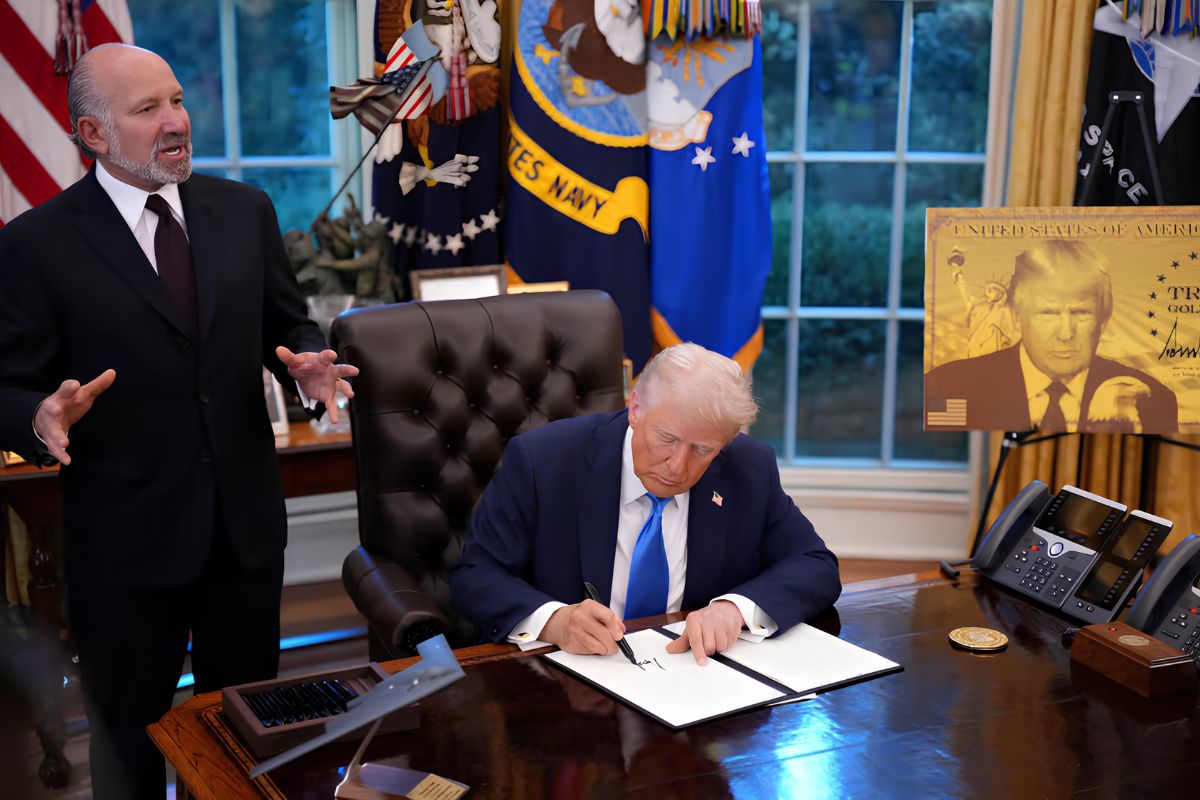
Federal courts will likely halt enforcement of the latest White House restrictions rather than let them permanently bar foreign professionals. While Indian applicants face months of processing delays, the Trump H-1B executive order faces a legal challenge over procedural shortcuts that failed judicial review in 2020, making a binding federal court injunction the probable outcome.
Rather than establishing an enduring wall against specialized foreign labor, historical precedent demonstrates that executive immigration directives lacking formal rulemaking function as temporary administrative bottlenecks that collapse under judicial scrutiny.
How Does the Trump H-1B Order Bypass Federal Rulemaking?
The September 18 executive order relies on the same administrative maneuver the White House used during the 2017 “Buy American and Hire American” initiative: altering visa adjudication standards through executive directive rather than statutory agency rulemaking.
The Administrative Procedure Act – the federal statute governing how executive agencies establish administrative regulations – requires agencies to publish proposed rules in the Federal Register and review public comments before enforcing binding policies. The new order bypasses that statutory timeline by instructing the U.S. Department of Labor (DOL) and the U.S. Department of Homeland Security (DHS) to immediately alter their petition evaluations.
The administration defends the action by asserting that the Immigration and Nationality Act (INA) grants the executive branch broad emergency discretion to prevent foreign labor from displacing domestic workers during economic contractions.
Recent judicial history contradicts that argument. In June 2026, a federal district court vacated the administration’s $100,000 H-1B petition fee after ruling that the policy’s implementation violated the Administrative Procedure Act by circumventing mandatory notice-and-comment procedures.
What Does the Executive Order Direct Federal Agencies to Do?
The executive order instructs federal personnel to coordinate corporate payroll records across agencies to identify domestic job cuts.
Adjudicators evaluating a Labor Condition Application – the mandatory Department of Labor filing where an employer certifies wages and working conditions for prospective visa holders – must now examine whether a company has laid off, or intends to lay off, domestic workers in roles comparable to those sought by visa beneficiaries.
The directive also establishes a mandatory 30-day interagency review window. This procedural pause permits federal reviewers to freeze visa petition processing while cross-referencing state unemployment registries and corporate workforce data.
How Did Federal Courts Strike Down Past Restrictions in ITServe?
The White House’s enforcement plan collides directly with a binding legal precedent established six years ago in Washington.
In March 2020, U.S. District Judge Rosemary M. Collyer issued a decisive ruling in ITServe Alliance v. Cissna. The litigation challenged a series of restrictive policy memos that U.S. Citizenship and Immigration Services (USCIS) issued between 2017 and 2018 to narrow employer-employee definitions and shorten visa validity periods.
Judge Collyer ruled that the agency’s internal standards were unlawful because USCIS created binding legal duties without executing the formal rulemaking required by the Administrative Procedure Act. The court determined that immigration officials exceeded their statutory authority under the Immigration and Nationality Act.
That ruling forced USCIS to sign a formal settlement agreement in mid-2020, vacating the policy memos and binding the agency to statutory text. Because the 2026 executive order seeks to mandate similar adjudicative restrictions without congressional authorization or formal regulatory review, it faces the same judicial vulnerability.
Will the New Order Cause Permanent Visa Denials or Temporary Delays?
Adjudication data from the first administration reveals that executive policy memos create procedural friction and higher initial rejections, not an irreversible policy shift.
According to data compiled by the National Foundation for American Policy, the denial rate for initial H-1B employment petitions rose from 6% in fiscal year 2015 to 24% in fiscal year 2018, reaching 30% in select quarters of fiscal year 2020.
A Request for Evidence – a formal agency notice demanding supplemental corporate documentation before an adjudication decision – doubled across high-tech categories during those three years, stretching processing timelines by several months.
The restrictions did not hold. Following the ITServe decision and subsequent court settlements, USCIS rescinded the guidance. According to National Foundation for American Policy reports, the initial H-1B petition denial rate fell to 4% in fiscal year 2021 – a lower refusal rate than existed before the 2017 directive took effect.
Why Does Penalizing “Planned Layoffs” Expose the Order to Lawsuits?
The sharpest statutory vulnerability in the executive order centers on penalizing employers for unannounced or prospective workforce reductions.
Under Section 212(n) of the Immigration and Nationality Act, non-displacement mandates are legally narrow. The statute governs actual job losses occurring within a designated window – 90 days before and 90 days after filing a petition – and applies those displacement standards primarily to companies designated as “H-1B-dependent,” defined as firms where visa holders make up 15% or more of the full-time domestic workforce.
The statute defines a layoff exclusively as an employer causing a worker to lose employment. It contains no statutory grant of authority permitting the Department of Labor or the Department of Homeland Security to investigate internal corporate forecasting, board discussions, or potential corporate restructuring.
Because federal adjudicators possess no legislative mandate to evaluate unannounced corporate strategy, any petition denial based on a projected workforce reduction provides employers immediate grounds to seek an emergency injunction. Once employer coalitions file suit in federal district court, government attorneys will have to defend the order before judges who struck down the identical administrative playbook in 2020.
Frequently Asked Questions
Will President Trump’s new executive order permanently stop Indian tech workers from getting H-1B visas?
No. Historical precedents and administrative law indicate the order will create significant processing delays and initial denial spikes rather than a permanent ban. Federal courts have consistently enjoined executive immigration directives that bypass formal notice-and-comment rulemaking.
What legal precedent prevents federal agencies from imposing these H-1B restrictions?
The primary precedent is the March 2020 federal court ruling in ITServe Alliance v. Cissna. In that case, Judge Rosemary M. Collyer held that U.S. Citizenship and Immigration Services cannot alter visa qualification standards through internal policy guidance without violating the Administrative Procedure Act.
Why is the executive order’s ban on “planned layoffs” legally vulnerable?
Section 212(n) of the Immigration and Nationality Act restricts federal non-displacement oversight exclusively to actual job terminations occurring 90 days before or after an application. The statute provides federal agencies no authority to penalize companies based on speculative, unannounced, or projected corporate restructurings.
How did H-1B denial rates shift during Trump’s first term?
According to National Foundation for American Policy data, initial H-1B denial rates climbed from 6% in fiscal year 2015 to a peak of 30% in fiscal year 2020 due to internal agency memos. Once federal court rulings forced the administration to vacate those memos, initial denial rates plunged to 4% in fiscal year 2021.
Editorial Independence & Corrections
Clarity Times is published by Beeps Venture Technologies LLP under strict editorial independence charters. We uphold rigorous sourcing and verification protocols. Noticed a factual omission or error? Review our Correction Protocols or contact our editorial desk at mail@claritytimes.org.

Praseetha K
Investigative journalist and research analyst contributing independent field reports and structural analysis for Clarity Times.