At Clarity Times, we examine what mainstream narratives omit. This dispatch investigates institutional incentives, policy fine print, and multi-dimensional community impacts.
Building steel slag roads reduces highway material costs by up to 40 percent. But the savings vanish if processed steel slag is transported further than 200 kilometers. The material is significantly denser than natural stone, triggering heavy-freight limits that make long-distance transport financially unviable.
Why do steel slag roads have a freight weight penalty?
Steel slag is roughly 20 to 30 percent heavier than the natural crushed stone standardly used in highway foundations, forcing trucks to carry less material per trip.
According to engineering material data from the Federal Highway Administration, steel slag has a specific gravity of 3.2 to 3.6, whereas natural stone aggregate sits between 2.6 and 2.7. This density discrepancy alters road freight economics. Indian commercial tipper trucks are regulated by strict axle-weight limits rather than just cargo volume limits set by the Ministry of Road Transport and Highways.
| Material Type | Specific Gravity | Relative Weight Factor |
|---|---|---|
| Natural Stone Aggregate | 2.6 – 2.7 | Baseline (1.0x) |
| Processed Steel Slag | 3.2 – 3.6 | 1.2x – 1.3x Heavier |
When contractors load a standard tipper truck with steel slag, the vehicle reaches its maximum legal gross vehicle weight while the cargo bed is only partially full. To transport the same physical volume of road-building material, a contractor using steel slag must dispatch more trucks than one using natural aggregate.
What is the geographic break-even radius for steel slag?
The logistical penalty of extra truck trips creates a break-even radius of roughly 200 kilometers, beyond which steel slag becomes more expensive than local natural stone.
The requirement for extra truck trips introduces a logistical penalty that eats directly into the initial material discount. Current transport rates for heavy multi-axle trucks in India average ₹35 to ₹55 per kilometer, according to logistics market data from ABC Transport.
Applying these freight rates to standard highway cost-estimation models reveals a geographic ceiling for this technology. Inside the 200-kilometer boundary, building a highway with steel slag is cheaper. Outside that boundary, the compounded per-kilometer freight costs make the slag more expensive than buying natural stone from a local quarry.
Where does the 40 percent cost savings claim originate?
The 40 percent cost reduction figure stems from a 1.85-kilometer pilot road built in Raigarh, which was constructed directly adjacent to a steel plant.
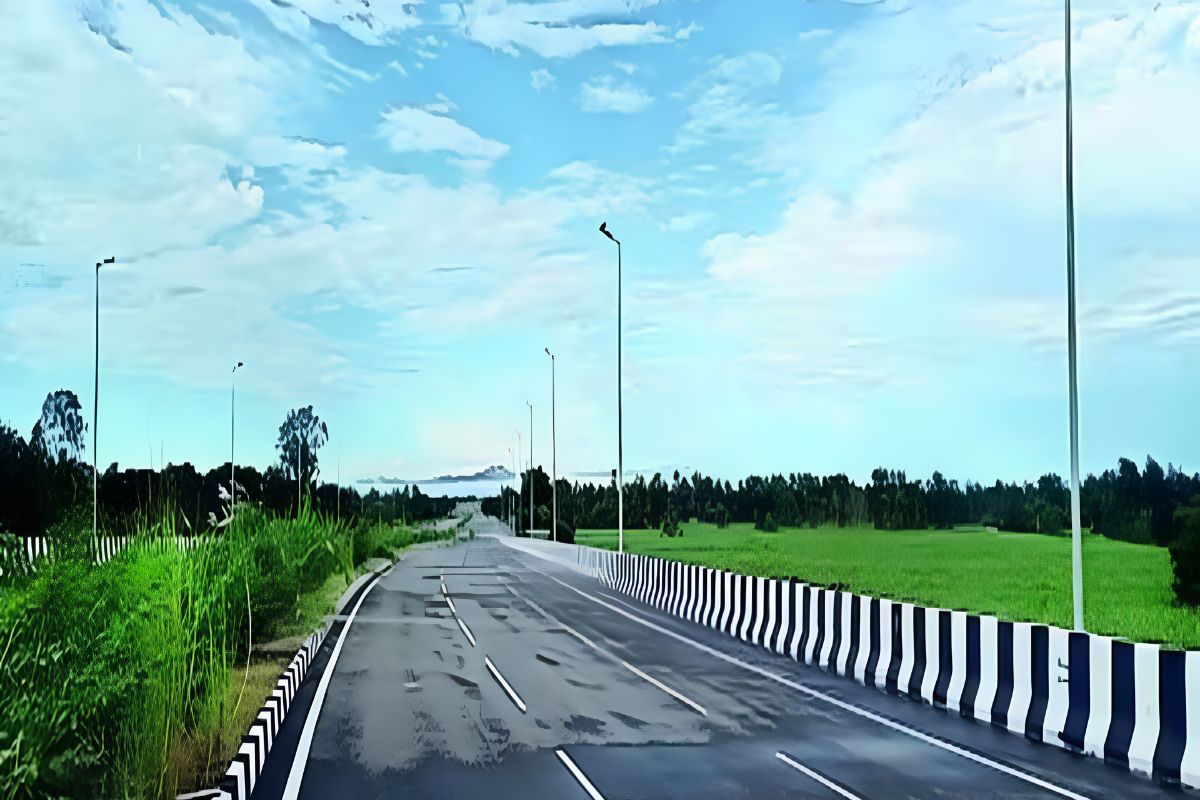
The economics of slag transport run counter to the dominant narrative surrounding Jindal Steel’s recent Guinness World Record. The company, in collaboration with the Central Road Research Institute (CSIR-CRRI) – India’s premier state-funded road research laboratory – built a road in Raigarh, Chhattisgarh, entirely from 200,000 tonnes of processed steel slag.
Jindal Steel stated the project enabled complete replacement of natural aggregates, delivering estimated construction cost savings of up to 40 percent. Because the test road was built directly adjacent to a Jindal steel facility, the project avoided the long-haul freight variable that dictates typical highway construction budgets.
Which regions in India can actually afford steel slag roads?
Only highway projects running through the eastern and western steel-producing corridors can utilize steel slag economically.
Overlaying the 200-kilometer break-even radius onto India’s infrastructure map shows a fragmented reality. According to Ministry of Steel data, India’s steel production is concentrated in specific eastern and western belts, primarily across Chhattisgarh, Odisha, Jharkhand, and Gujarat.
Highway projects running through these industrial corridors can utilize the material at the claimed discount. Projects outside these zones – which represent the vast majority of the National Highways Authority of India (NHAI) greenfield expressway pipeline – are economically priced out of using steel slag as a primary aggregate.
Is steel slag a national infrastructure replacement?
Steel slag is a regional infrastructure solution tethered to steel-producing zones, not a nationwide replacement for natural stone.
Highway construction viability is entirely dependent on material sourcing zones; civil engineers calculate baseline project costs based on the distance to the nearest available quarry, per NHAI procurement guidelines. Proponents of the material argue the economic calculation changes if road transport is bypassed.
Responding to the successful pilot, Union Minister of Science and Technology Jitendra Singh called for the technology to “move from one project to many projects and from one State to many states.” Until rail links can deliver bulk slag directly to rural highway construction sites at a discount, the material remains economically tethered to the steel plants that produce it.
Frequently Asked Questions
Why is steel slag heavier than natural stone? Steel slag retains dense metallic compounds left over from the industrial steelmaking process. This gives it a specific gravity of 3.2 to 3.6, making it 20 to 30 percent heavier than the natural crushed stone (which has a specific gravity of 2.6 to 2.7) standardly used in highway construction.
What is the maximum distance steel slag can be transported economically? The break-even limit for transporting steel slag by truck is roughly 200 kilometers from the source plant. Beyond this distance, the compounding freight rates for the extra truck trips required by the material’s weight outpace the initial 40 percent material discount.
How much do steel slag roads actually save in construction costs? When built immediately adjacent to a steel plant – eliminating long-distance freight costs – replacing natural aggregate with processed steel slag can reduce material costs by up to 40 percent. This was demonstrated by the 1.85-kilometer Raigarh pilot project built by Jindal Steel and CSIR-CRRI.
Editorial Independence & Corrections
Clarity Times is published by Beeps Venture Technologies LLP under strict editorial independence charters. We uphold rigorous sourcing and verification protocols. Noticed a factual omission or error? Review our Correction Protocols or contact our editorial desk at mail@claritytimes.org.

Praseetha K
Investigative journalist and research analyst contributing independent field reports and structural analysis for Clarity Times.