At Clarity Times, we examine what mainstream narratives omit. This dispatch investigates institutional incentives, policy fine print, and multi-dimensional community impacts.
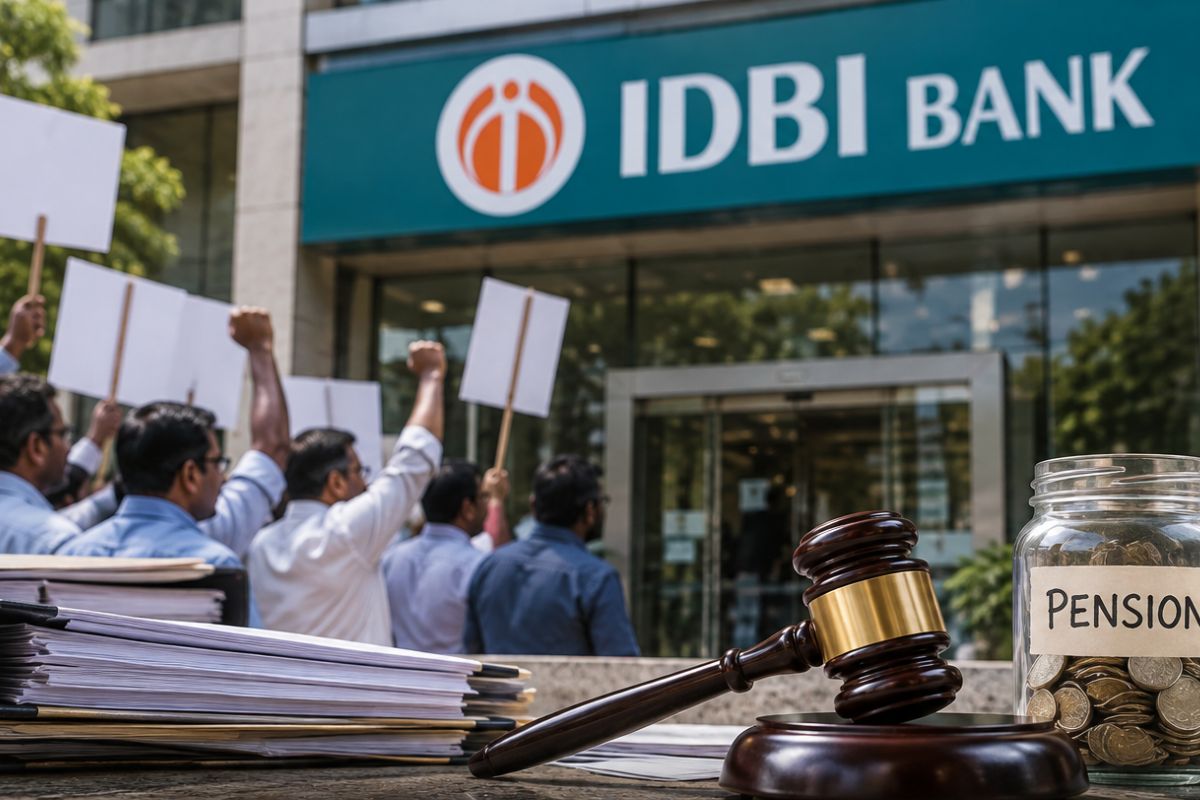
IDBI Bank privatization labor demands focus heavily on securing bipartite wage protections, statutory job guarantees, and full pension portability under any private buyer. Privatization threatens to strip these legacy safeguards away, exposing workers to new service rules and triggering impending high court legal challenges that will stall the government sale timeline.
What are the specific demands in the IDBI employee charter?
Employee associations have formally submitted a five-point charter of demands to the Department of Financial Services, establishing strict red lines for any prospective private buyer. Detailed in the United Forum of IDBI Officers and Employees strike notice coverage, the All India IDBI Officers’ Association (AIIDIOA) and the IDBI Bank Employees Association (IBEA) are demanding explicit protection of existing wage settlements. They also demand the continuation of bi-partite industry-wide wage negotiations, permanent job security guarantees for existing cadres, maintenance of existing medical benefits, and fully funded pension portability.
Why does the IDBI Bank Act clash with private ownership?
The central legal friction stems from the bank’s unique incorporation act, which preserves specific statutory service conditions that conflict with standard private equity mandates. Established under the Industrial Development Bank of India Act, 1964 and subsequently transitioned through the IDBI Bank (Repeal) Act of 2003, the institution operates outside standard commercial banking statutes. Incoming private owners, operating under Securities and Exchange Board of India (SEBI) takeover regulations and standard corporate efficiency mandates, face direct statutory hurdles when attempting to alter these legacy employment terms.
How do pension liabilities complicate the IDBI Bank stake sale?
Unfunded legacy retirement liabilities create a major financial dispute over who absorbs the pension corpus when control shifts to a private entity. Retirement benefits represent the most financially contentious battleground in the transaction. Actuarial valuation notes in IDBI Bank financial disclosures reveal a substantial pension corpus obligation tied to decades of legacy recruitment. Unions argue that transferring majority ownership to a private entity without a government-backed sovereign guarantee for the pension fund exposes retirees to default risks. Comprehensive background on the institutional structure can be reviewed via IDBI Bank on Wikipedia.
Can labor litigation block the government’s disinvestment timeline?
Employee associations are actively preparing high court writ petitions that can legally freeze transition milestones for months. Labor unions are organizing legal countermeasures to disrupt the transaction timeline projected by the government. Legal counsel advising the employee associations are drafting high court writ petitions challenging the dilution of statutory protections. Based on precedents from prior public sector banking restructuring disputes, a writ admission can halt transaction milestones, forcing the Department of Investment and Public Asset Management (DIPAM) to renegotiate terms or face prolonged judicial blockades.
Where does the IDBI Bank stake sale stand today?
The central government and the Life Insurance Corporation of India are jointly divesting a controlling stake while awaiting final regulatory clearances. The Government of India and the Life Insurance Corporation of India (LIC) are jointly divesting a 60.72% controlling stake in IDBI Bank, retaining minority holdings of 15% and 19% respectively. Canada-based Fairfax Financial Holdings has emerged as the leading prospective bidder with a revised financial bid near ₹81 per share. As highlighted in reporting on the Union Budget disinvestment targets, final approvals from the Reserve Bank of India and the Competition Commission of India remain critical benchmarks for the transaction.
Asked Questions
Q: What are IDBI Bank employee unions demanding regarding privatization?
A: Employee associations have submitted a five-point charter of demands to the Department of Financial Services, requiring bipartite wage protection, statutory job security guarantees, continued medical benefits, and fully funded pension portability.
Q: How does the IDBI Bank Act affect private buyers?
A: Established under the IDBI Bank Act of 1964, the bank operates under statutory service conditions that create legal friction with Securities and Exchange Board of India takeover regulations and private ownership mandates.
Q: Why are pension liabilities a major hurdle in the IDBI Bank sale?
A: Actuarial valuation notes show a large pension corpus tied to legacy recruitment, and unions warn that shifting majority control to a private entity without government-backed guarantees exposes retirees to default risks.
Q: Can employee legal challenges delay the IDBI Bank divestment?
A: Yes, union legal counsel are preparing High Court writ petitions that follow precedents from prior public banking restructurings, which can freeze transition milestones for months.
Editorial Independence & Corrections
Clarity Times is published by Beeps Venture Technologies LLP under strict editorial independence charters. We uphold rigorous sourcing and verification protocols. Noticed a factual omission or error? Review our Correction Protocols or contact our editorial desk at mail@claritytimes.org.

Praseetha K
Investigative journalist and research analyst contributing independent field reports and structural analysis for Clarity Times.