At Clarity Times, we examine what mainstream narratives omit. This dispatch investigates institutional incentives, policy fine print, and multi-dimensional community impacts.
Despite the cabinet’s recent focus on advanced predictive welfare models, Kerala cannot operationalize these AI governance strategies because its civil service lacks the legal authority, technical budget, and administrative mandate to execute them. Excluding IAS officers from the AI training leaves the state without a functional administrative pipeline to implement these top-down directives.
Why Were Kerala IAS Officers Excluded From the AI Retreat?
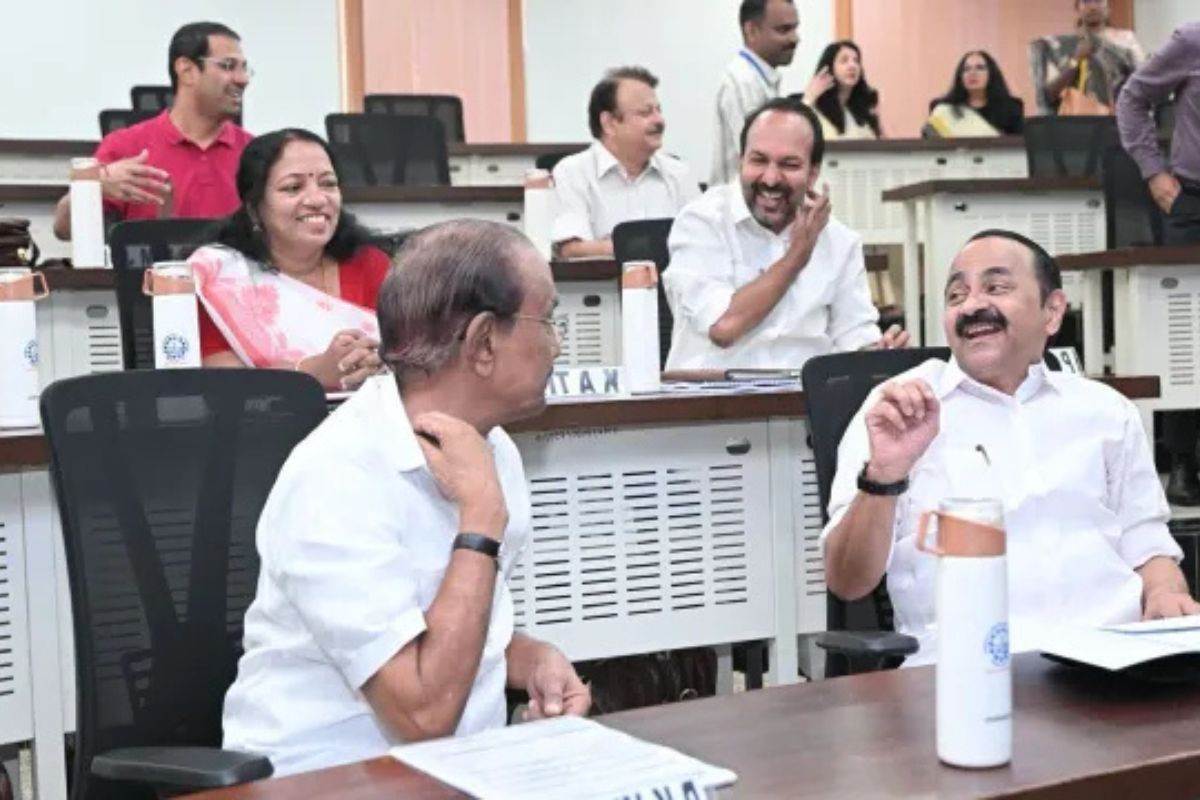
The two-day “Reimagining Keralam” retreat at IIM Kozhikode focused on using artificial intelligence for predictive welfare, but the guest list was strictly limited to the Chief Minister and 20 cabinet ministers.
Department secretaries and technical heads of the Kerala State IT Mission (KSITM) were completely excluded from both the workshop sessions and the pre-retreat curriculum design. KSITM is the nodal state agency responsible for implementing e-governance initiatives across the administration.
Official attendee records from the Indian Institute of Management Kozhikode (IIM Kozhikode) confirm zero non-elected administrative officials or technical directors participated.
Without these administrators present, the government lacks a transmission mechanism to turn lecture takeaways into state policy files. Serving bureaucrats confirm on background that they have received no directives following the event.
Can Secretariat Rules Support AI Governance Models?
Current state administrative procedure manuals legally prohibit automated algorithmic file processing, making AI-driven welfare and revenue assessments impossible without statutory overhauls.
The eOffice Portal framework governing the Secretariat mandates physical or tokenized digital sign-offs by an individual human officer at every stage of a file’s lifecycle. Tokenized digital sign-offs are secure cryptographic approvals tied to a specific officer’s identity.
An AI model cannot legally authorize a welfare payment or route a land revenue assessment under the current statutory framework.
To implement the concepts taught at the retreat, the state would need to overhaul these foundational administrative rules. No such amendments have been drafted. Internal KSITM data sovereignty protocols similarly restrict the automated processing of citizen data.
What is the Civil Service Tech Budget for Kerala?
Funding for digital and emerging-tech training for mid- and lower-tier civil servants accounts for less than 2% of state administrative training outlays.
The fiscal reality of Kerala’s civil service tech budget limits immediate AI adoption. Budget documents show a severe imbalance between the executive retreat and the resources allocated to upskill the actual implementing workforce.
According to the 2024-25 state budget, Kerala allocates the majority of its ₹1,84,327 crore net expenditure to committed liabilities like salaries and pensions, leaving minimal capital for advanced tech upskilling.
The primary state training institutes, the Institute of Management in Government (IMG) and the Kerala Institute of Local Administration (KILA), remain budgeted primarily for legacy office software instruction.
Why Did the Chief Minister’s Office Choose a Ministers-Only Format?
Organizers planned the ministers-only format as a necessary space for high-level political reflection, free from bureaucratic hierarchy and civil service protocol.
The IIM Kozhikode directorship framed the program not as a conventional technical course, but as a forum for executive alignment.
The rationale relies on sequence. For ministers to candidly assess governance priorities and debate fiscal trade-offs, they require an isolated environment. Under this model, strategic alignment at the political level must precede bureaucratic delegation.
What Happens When Political Tech Mandates Lack Administrative Co-Design?
Previous top-down IT pilots announced by the political executive have frequently lapsed into digital portals abandoned within 18 months because the Secretariat cadre did not share ownership.
Recent state history shows the risks of separating political technology announcements from administrative execution. When the civil service lacks ownership of a digital initiative, execution stalls.
Successive Comptroller and Auditor General (CAG) performance audits repeatedly flag severe delays and non-adherence in the state’s e-governance implementation action plans. Retired state administrative leadership attribute these failures to bureaucratic resistance toward uncoordinated, top-down technology mandates.
How Do Other Jurisdictions Train Leaders in Digital Governance?
Other jurisdictions manage executive tech transitions by combining political and administrative training, ensuring decision-makers and executing bodies share the same strategic framework.
The Tamil Nadu e-Governance Agency (TNeGA) runs joint-training workflows that place ministers and departmental secretaries in the same technical workshops. A similar blueprint exists in the United Kingdom Civil Service Digital, Data and Technology (DDaT) framework.
This joint-table approach ensures that when a minister approves a new digital framework, the department secretary already understands the procurement guidelines required to build it. Public administration scholars note that joint political-administrative training directly reduces the friction between a policy announcement and its technical rollout.
| Jurisdiction | Training Approach | Administrative Integration |
|---|---|---|
| Kerala | Ministers-only retreat | Low (bureaucrats excluded) |
| Tamil Nadu (TNeGA) | Joint political-administrative workshops | High (shared strategic framework) |
| UK Civil Service (DDaT) | Unified digital capability framework | High (procurement & execution alignment) |
Frequently Asked Questions
What was the focus of the Kerala cabinet retreat at IIM Kozhikode?
The “Reimagining Keralam” retreat at IIM Kozhikode trained the Chief Minister and 20 cabinet ministers on AI governance, predictive welfare, and automated grievance routing. Department secretaries and technical directors were excluded from the sessions.
Why can’t Kerala implement AI models in governance immediately?
Kerala’s eOffice Portal framework mandates physical or tokenized digital sign-offs by an individual human officer for every file. Current statutory rules prohibit AI models from legally authorizing welfare payments or land revenue assessments without human sign-off.
Does Kerala train its civil servants in artificial intelligence?
Funding for digital and emerging-tech training for mid- and lower-tier civil servants accounts for less than 2% of state administrative training outlays. The primary state training institutes remain budgeted primarily for legacy office software.
Editorial Independence & Corrections
Clarity Times is published by Beeps Venture Technologies LLP under strict editorial independence charters. We uphold rigorous sourcing and verification protocols. Noticed a factual omission or error? Review our Correction Protocols or contact our editorial desk at mail@claritytimes.org.

Praseetha K
Investigative journalist and research analyst contributing independent field reports and structural analysis for Clarity Times.