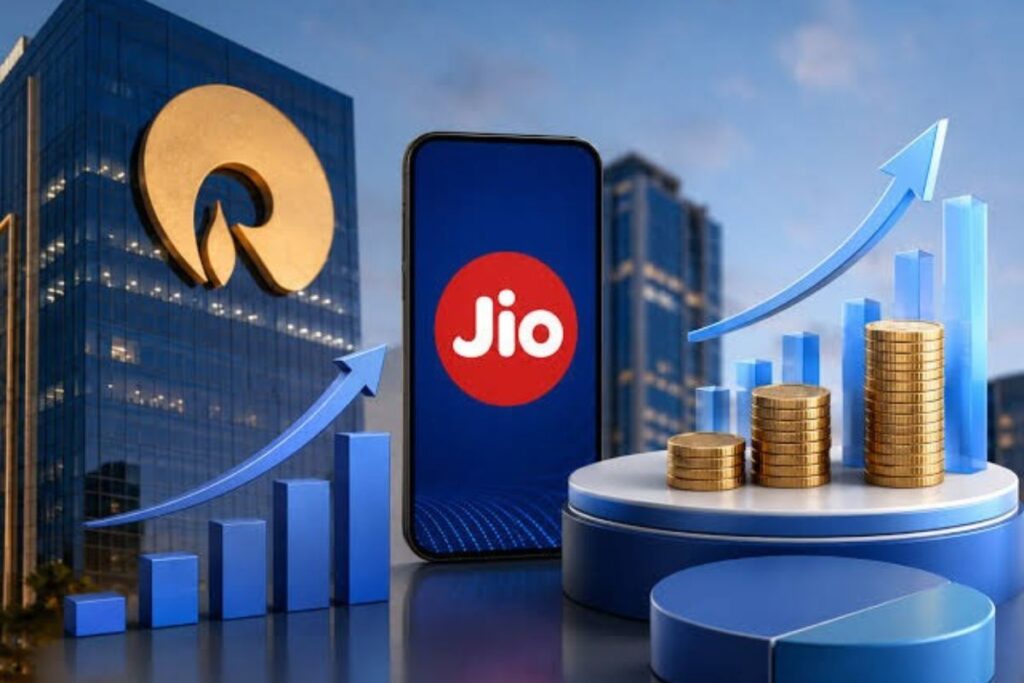
The Jio IPO debt payoff directly affects future mobile bills by saving the company roughly ₹1,900 crore in annual interest payments. By using the initial public offering proceeds to eliminate ₹27,500 crore in debt, Reliance Jio Infocomm can intentionally freeze mobile tariffs in 2027, forcing highly leveraged competitors into a price war they cannot afford.
How Does the Jio IPO Debt Payoff Create a ₹1,900 Crore War Chest?
Extinguishing ₹27,500 crore of capital eliminates approximately ₹1,900 crore in annual interest expenses, dropping directly to the company’s free cash flow. This cash no longer goes to banks, providing Reliance Jio Infocomm with an immediate operational advantage.
According to the company’s fiscal year 2025 financial statements, it carried finance costs of ₹4,837 crore. Corporate financial filings indicate Reliance Jio Infocomm operates with a blended post-tax cost of debt nearing 6.7%, the average interest rate a company pays on all its combined loans after tax deductions. Applying this rate to the ₹27,500 crore reduction confirms the massive interest savings.
Why Do Bharti Airtel and Vodafone Idea Need an ARPU Hike?
Both competitors carry massive debt loads tied to 5G capital expenditures and historical Adjusted Gross Revenue (AGR), usage fees owed to the Indian government, forcing them to raise prices just to service their obligations.
According to recent exchange filings, Bharti Airtel carries a net debt of ₹1,57,239 crore as of June 2026. Simultaneously, Vodafone Idea struggles under a total debt burden of nearly ₹2 lakh crore.
To survive, both companies rely on increasing their Average Revenue Per User (ARPU), the industry metric tracking how much an average customer pays per month. According to industry analysts, Bharti Airtel requires ARPU hikes of 16-17% for 5G monetization, while Vodafone Idea needs a 2.2x ARPU jump to meet its payout obligations. They require their subscribers to pay more next year just to maintain margins.
How Will Reliance Jio Fund the 2027 Telecom Price War?
The company will use its ₹1,900 crore in eliminated interest expense to absorb flat tariffs while continuing to expand its network, starving competitors of the revenue growth they need to survive.
Management has already signaled this leverage. According to statements at the India Mobile Congress, Chairman Akash Ambani noted that Reliance Jio will “always stand for affordability” even as competitors hike tariffs. If Reliance Jio refuses to raise prices in 2027, Bharti Airtel and Vodafone Idea cannot raise theirs without losing millions of price-sensitive subscribers.
Not all analysts believe this capital advantage guarantees total market dominance. According to investment analysts, Bharti Airtel’s premium user base and focus on high-quality customers make it a resilient compounder, proving that pricing power involves network reliability and not just the lowest tariff.
Why Mainstream Coverage Misses the Consumer Impact
Financial coverage of the initial public offering currently treats this debt reduction as a passive accounting milestone. News outlets broadly celebrate Reliance Jio listing as a nearly “net-debt-free” cash machine, focusing entirely on the stronger balance sheet.
While a net-debt-free status improves the company’s credit profile, the primary consequence happens in the consumer market. That ₹27,500 crore repayment dictates who can afford to keep data prices low through the end of the decade.
Frequently Asked Questions
How much interest will Reliance Jio save after its IPO?
By using its IPO proceeds to prepay ₹27,500 crore in debt, Reliance Jio Infocomm will save approximately ₹1,900 crore in annual interest expenses. This calculation is based on the company’s reported blended post-tax cost of debt of around 6.7%.
Why are Bharti Airtel and Vodafone Idea trapped into raising prices?
Both Bharti Airtel and Vodafone Idea carry massive debt loads from 5G capital expenditures and historical government AGR dues. They must increase their Average Revenue Per User (ARPU) by 16% to over 200% just to service these existing obligations.
Will mobile data prices in India increase in 2027?
Mobile tariffs may stay flat or decrease if Reliance Jio triggers a price war. Because Reliance Jio no longer has to pay ₹1,900 crore in interest, it can afford to absorb flat tariffs, preventing competitors from raising prices without losing their subscribers.

Praseetha K
Praseetha K is the Managing Editor of Clarity Times. She edits, verifies and publishes the newsroom's articles, and also writes analysis on policy, law, business and technology. Articles she writes are edited by the Editor-in-Chief before publication.