At Clarity Times, we examine what mainstream narratives omit. This dispatch investigates institutional incentives, policy fine print, and multi-dimensional community impacts.
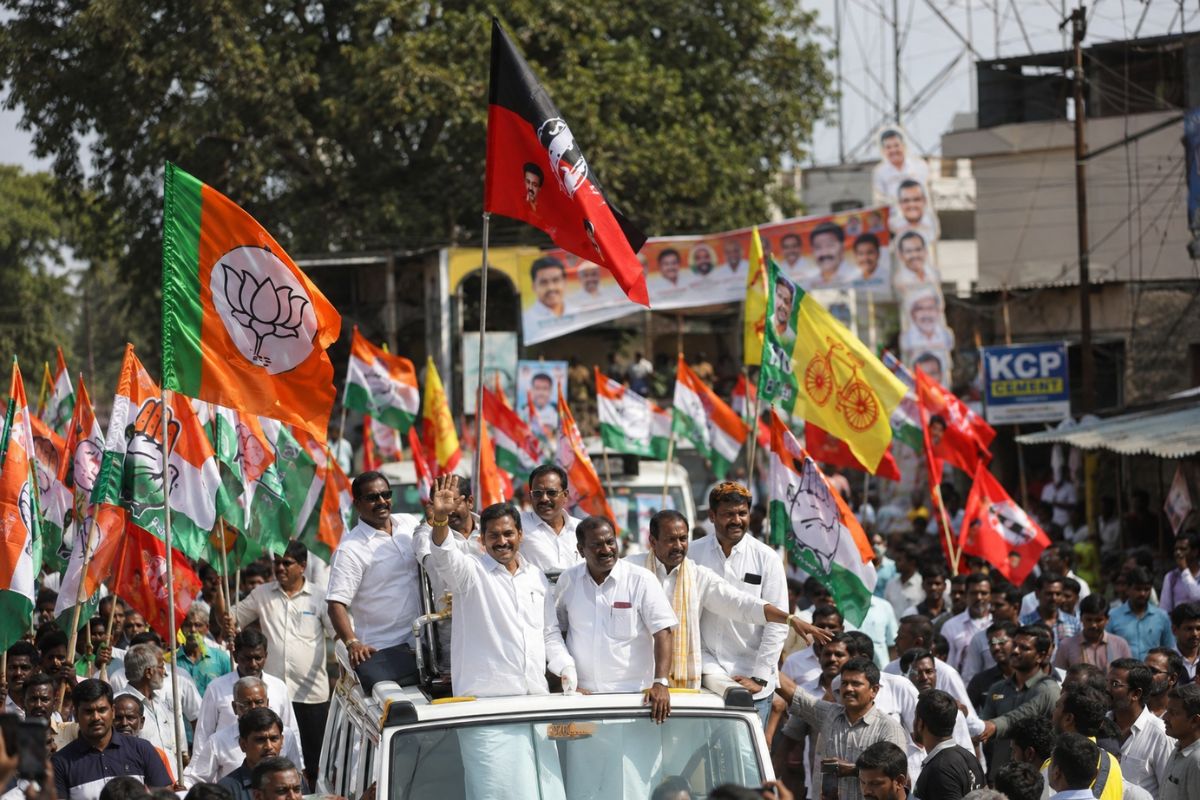
Voting for regional parties in India does not transfer power to everyday citizens. Data from the last four general elections shows voters are consistently choosing among different factions of the same economic elite. While political party options have multiplied, parliamentary representation remains wealthy and socio-economically homogenous. Across four general elections, the proliferation of regional parties in India has decentralized party brands without decentralizing power.
Comprehensive analysis and verified data remain essential for understanding complex market dynamics.
Clarity Times Research
Are Candidates from Regional Parties in India Wealthier Than National Rivals?
Candidates running under regional party banners are often wealthier than those from national parties. Sworn affidavits submitted to the Election Commission of India reveal that several state parties field nominees whose personal net worth far outpaces their national counterparts.
A crorepati is an individual with assets valued at 10 million Indian rupees (one crore) or more. Data compiled by the Association for Democratic Reforms (ADR) on the 2024 Lok Sabha – the directly elected lower house of India’s Parliament – shows the average assets of a winning Member of Parliament reached ₹46.34 crore.
Regional parties set the high mark for candidate wealth. Nominees from the regional Telugu Desam Party (TDP) averaged ₹442.26 crore per winning lawmaker in 2024. In comparison, winning lawmakers from the national Bharatiya Janata Party (BJP) averaged ₹50.04 crore, while Indian National Congress (INC) winners averaged ₹22.93 crore. First-time regional lawmakers do not break through the financial barrier; they arrive with the capital already in hand.
Did the Multi-Party System in India Increase Economic Diversity in Parliament?
The expansion of the multi-party system in India coincided with the systematic exclusion of working-class and middle-class lawmakers from parliament. As more regional formations won seats, the economic threshold to enter the Lok Sabha rose steadily.
According to long-term records maintained by the Association for Democratic Reforms, the share of crorepati MPs in Lok Sabha rose from 58% in 2009 to 93% in 2024. Average assets for winning candidates climbed from ₹14.7 crore in 2014 to ₹46.34 crore in 2024, more than tripling across a single decade.
Electoral choices grew wider on paper, yet the economic profile of winning lawmakers narrowed. Increased party competition did not open doors to grassroots organizers; it intensified bidding among affluent contenders.
Do Regional Parties Reduce Dynastic Politics in Indian Elections?
Regional political parties maintain higher concentrations of family dynasts than the national political average. Rather than offering a path for independent civic leaders, smaller outfits frequently serve as reserve landing pads for established political families denied tickets by national blocs.
A report by the Association for Democratic Reforms on sitting legislators established that 31% of Lok Sabha MPs possess direct dynastic linkages, defined as having a parent, spouse, or sibling who previously held public office.
State-level organizations exceed that baseline. Dynastic legislators make up 38% of the Yuvajana Sramika Rythu Congress Party (YSRCP), 36% of the Telugu Desam Party, and 34% of the Nationalist Congress Party (NCP). Unrecognized registered parties recorded a 24% dynastic rate, with several single-district organizations consisting entirely of family networks. More party symbols on a ballot simply provide established political clans with alternative paths to public office.
Why Does Ticket Distribution Exclude Non-Elite Candidates?
Candidate selection excludes non-elite contenders because the unregulated cost of running an election in India far exceeds legal spending boundaries. State parties depend on self-financing millionaires because party treasuries cannot match national party spending.
The Centre for Media Studies (CMS) estimated total spending in the 2024 general election at ₹1.35 lakh crore, rising from ₹60,000 crore in 2019. This actual expenditure dwarves the Election Commission of India’s statutory ceiling of ₹95 lakh per constituency.
Because official state party apparatuses lack access to centralized corporate donation programs on the scale of national parties, they pass the financial burden directly to individual nominees. Candidate wealth becomes the primary qualification for a party ticket, superseding ideological alignment or local activism.
Does Federalism Actually Deliver Pro-Worker Legislation?
Regional party leadership frequently defends candidate wealth as a practical necessity, arguing that wealthy nominees are the only candidates capable of funding campaigns against well-financed national machinery to defend state autonomy.
However, legislative voting patterns do not show that regional lawmakers use their positions to advocate for structural economic equity. A Private Member’s Bill is a proposed law introduced by any lawmaker who is not a government minister. According to PRS Legislative Research’s review of the 17th Lok Sabha, 73% of MPs never introduced a single Private Member’s Bill.
Lawmakers from regional parties showed no measurable tendency to introduce legislation focused on labor rights, wealth inequality, or social protection at rates higher than national party representatives. The proliferation of state parties has protected regional business interests, but it has left ordinary voters represented by an insular class of self-funded politicians.
Frequently Asked Questions
Are candidates from regional parties in India poorer than those from national parties?
No. Sworn election affidavits show regional party winners frequently report higher median assets than national party winners. In the 2024 Lok Sabha, winning candidates from the regional Telugu Desam Party averaged ₹442.26 crore in personal assets, compared to ₹50.04 crore for the Bharatiya Janata Party and ₹22.93 crore for the Indian National Congress.
How wealthy was the average winning MP in India’s 2024 general election?
According to records compiled by the Association for Democratic Reforms, the average assets of a winning lawmaker in 2024 stood at ₹46.34 crore. In total, 93% of all elected Lok Sabha members were crorepatis, rising from 58% in 2009.
Do regional parties in India curb dynastic politics?
No. Regional parties frequently show higher rates of family succession than national parties. Association for Democratic Reforms data indicates that 38% of YSRCP lawmakers and 36% of TDP lawmakers have direct family ties to former or sitting politicians, against a national parliamentary average of 31%.
Why do political parties in India prefer wealthy candidates?
The Centre for Media Studies estimated the cost of the 2024 general election at ₹1.35 lakh crore, making ground campaigns prohibitively expensive. Because legal spending limits are widely outpaced on the ground, parties demand self-financing nominees who can personally absorb multi-crore campaign budgets.
Editorial Independence & Corrections
Clarity Times is published by Beeps Venture Technologies LLP under strict editorial independence charters. We uphold rigorous sourcing and verification protocols. Noticed a factual omission or error? Review our Correction Protocols or contact our editorial desk at mail@claritytimes.org.

Praseetha K
Investigative journalist and research analyst contributing independent field reports and structural analysis for Clarity Times.