At Clarity Times, we examine what mainstream narratives omit. This dispatch investigates institutional incentives, policy fine print, and multi-dimensional community impacts.
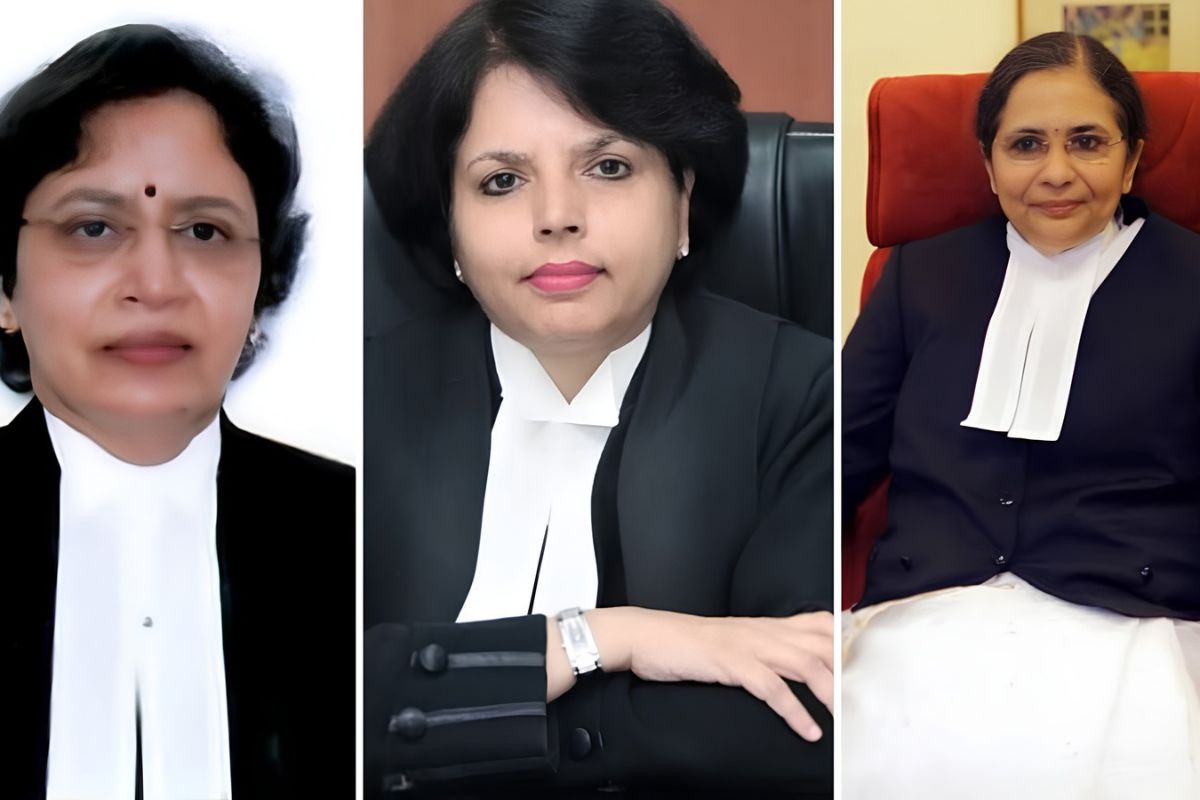
The recent swearing-in of Justice Sunita Agarwal brings the number of women on the Supreme Court of India to exactly three. While news coverage widely celebrated this as a step forward for diversity, the math tells a different story. Against the newly expanded 37-judge working strength of the apex court, three women constitute just 8.1% of the bench.
This single-digit ratio is not a temporary dip; it is a long-term structural plateau. It leaves India’s highest judicial body operating decades behind comparable democracies, where female representation routinely exceeds a third.
The Illusion of Progress: How Coverage Framed the Elevations
Recent news coverage surrounding the oaths taken by Justices Agarwal, Devendra Kumar Upadhyaya, and Aparesh Kumar Singh predominantly treated the event as a monumental diversity achievement for the Supreme Court. Major national dailies ran headlines celebrating the addition of women to the bench, focusing on the total count rising. However, they largely omitted the denominator: the expansion of the court’s total size to 37 judges, which dilutes the actual percentage.
Historical Context: 75 Years of Stagnation
The current 8.1% ratio sits only slightly above the court’s 75-year average. Since its inception in 1950, the Supreme Court has appointed hundreds of judges, yet only 12 have been women.
According to comprehensive registry data from the Supreme Court Observer, women constitute roughly 4% of all judges ever elevated to the highest court. The appointment of a third sitting female judge is certainly a personal achievement, but it does not significantly alter this historical median.
A Global Comparison of Apex Courts
This single-digit ceiling remains specific to India’s judicial structure. When looking globally, apex courts in comparable democracies operate with vastly different demographics.
| Apex Court | Female Representation | Source |
|---|---|---|
| Supreme Court of India | ~ 8.1% (3 of 37) | SC Registry (2026) |
| Constitutional Court of South Africa | Exceeds 33% | ConCourt Registry |
| Supreme Court of Canada | Near 50% (Parity) | SCC Registry |
The data clearly illustrates that the Indian judicial system operates on a profoundly different, and unequal, mathematical baseline.
The Root Cause: A Constrained Feeder System
The Supreme Court Collegium—the panel comprising the Chief Justice and senior-most judges responsible for judicial appointments—is structurally constrained by the available talent pool in the feeder courts.
When the Collegium looks to elevate judges from the senior ranks of state High Courts, it hits a mathematical wall. Data from the Department of Justice reveals that women comprise only about 14% to 15% of the sitting judges across India’s High Courts. This systemic issue mirrors other institutional blind spots, much like how structural oversights leave South Asian women excluded from tobacco cessation funding—the pipeline itself is flawed.
“Achieving parity at the apex level remains mathematically impossible without a demographic shift in the lower courts.”
Legal Demographics Analysis
Frequently Asked Questions
How many women are currently on the Supreme Court?
As of late 2026, there are three women sitting on the Supreme Court of India. With the court’s total working strength at 37, female representation stands at exactly 8.1%.
How many female judges have served on the Supreme Court historically?
Since 1950, the Supreme Court has appointed only 12 women. Historically, women make up roughly 4% of all judges elevated to the apex court.
Is there a reservation for women in the Indian judiciary?
No, there is no formal reservation for women in the higher judiciary. While the government frequently urges High Court Chief Justices to consider female candidates to improve social diversity, appointments are governed by the Memorandum of Procedure (MoP) based primarily on seniority and merit.
Editorial Independence & Corrections
Clarity Times is published by Beeps Venture Technologies LLP under strict editorial independence charters. We uphold rigorous sourcing and verification protocols. Noticed a factual omission or error? Review our Correction Protocols or contact our editorial desk at mail@claritytimes.org.

Praseetha K
Investigative journalist and research analyst contributing independent field reports and structural analysis for Clarity Times.