At Clarity Times, we examine what mainstream narratives omit. This dispatch investigates institutional incentives, policy fine print, and multi-dimensional community impacts.
Global cancer cases in 2050 will jump 77 percent to over 35 million, primarily because people in developing nations are finally living long enough to get sick. Rather than a sudden failure of public health, this numeric surge represents a delayed victory over early-life infectious diseases and infant mortality.
Why are global cancer cases surging by 2050?
The World Health Organization (WHO) projects global cancer cases will jump from 20 million in 2022 to over 35 million by 2050, an increase driven by aging populations rather than changing risk factors.
Most reporting attributes this rising global cancer burden to behavioral risk factors like obesity, alcohol, and westernized diets. That framing relies on the crude incidence rate. The crude incidence rate is a raw count of total cancer cases in a growing population, which does not account for age demographics.
The actual risk for any given individual is not spiking. When demographers look at the age-standardized incidence rate, a statistical metric that adjusts data to account for the fact that older populations naturally have more cancer, the curve flattens significantly.
The International Agency for Research on Cancer (IARC) explicitly notes that this rapidly growing global cancer burden reflects population aging and growth. The surge is a mathematical artifact of demographic shifts. As life expectancies rise across low- and middle-income countries, the sheer volume of people reaching their 60s and 70s guarantees a proportional explosion in cancer diagnoses.
Is lifestyle the main cause of the 2050 cancer projection?
While behavioral risks like diet and tobacco cause a subset of early-onset cancers, they account for a minority of the projected 2050 increase compared to the raw impact of demographic aging.
Public health advocates and major news outlets position the 2050 projection as a preventable crisis. IARC leadership regularly points to “more westernised lifestyles,” including red meat, alcohol, and sedentary habits as key drivers, particularly for rising colorectal numbers.
Public health officials argue that anti-smoking and diet campaigns remain vital so these preventable cases do not compound an already overwhelming baseline.
However, those behavioral factors account for a minority of the projected 2050 increase. According to IARC data, the highest proportional jumps in cancer incidence will hit low-income (142 percent) and medium-income (99 percent) countries. These are precisely the regions undergoing the most rapid demographic aging. Ascribing the entire 35-million-case projection to bad habits obscures the structural reality of an aging planet.
How does rising life expectancy affect cancer rates?
As developing nations successfully reduce early-life deaths from infectious diseases like malaria, more citizens survive into their 60s and 70s, where cellular mutations inevitably accumulate, driving up cancer rates.
This dynamic follows a well-documented epidemiological shift. When a country successfully reduces deaths from malaria, tuberculosis, and infant malnutrition, its citizens survive long enough to develop age-related diseases.
The correlation is direct and inverse. In Kenya, WHO data show under-five mortality and malaria incidence have steadily fallen. Simultaneously, cancer incidence in Kenya rose from roughly 37,000 to nearly 48,000 annual cases between 2012 and 2018, according to the American Society of Clinical Oncology (ASCO).
Cancer is replacing infectious disease as a primary cause of mortality in these nations.
“A steep rise in cancer cases is the statistical bill that comes due decades after a successful public health intervention saves a child’s life.”
Global Oncology Report
How does the lifestyle narrative harm global health funding?
Framing the 2050 cancer surge as a preventable lifestyle issue incentivizes governments to fund cheap awareness campaigns instead of the expensive medical infrastructure required to treat an aging population.
A health ministry facing a projected doubling of cancer cases has two options. It can build pathology labs, purchase diagnostic imaging machines, and train oncologists, or it can run public awareness campaigns urging citizens to eat better and quit smoking.
Telling policymakers that the 2050 surge is preventable gives them a political excuse to underfund hospitals. Funding primary prevention is inexpensive; building histology networks is not. According to a University of North Carolina global oncology report, basic diagnostic testing in many developing nations costs $50 to $80 out of pocket. This expense prevents more than 70 percent of patients from accessing proper diagnosis.
What must change to handle 35 million cancer cases by 2050?
Global health systems must rapidly shift funding toward physical oncology infrastructure and human resource capacity to manage a population that is finally growing old.
Global health systems cannot prevent the 77 percent surge unless they intend to reverse recent gains in life expectancy. The 35 million projected cases represent a population that survived childhood.
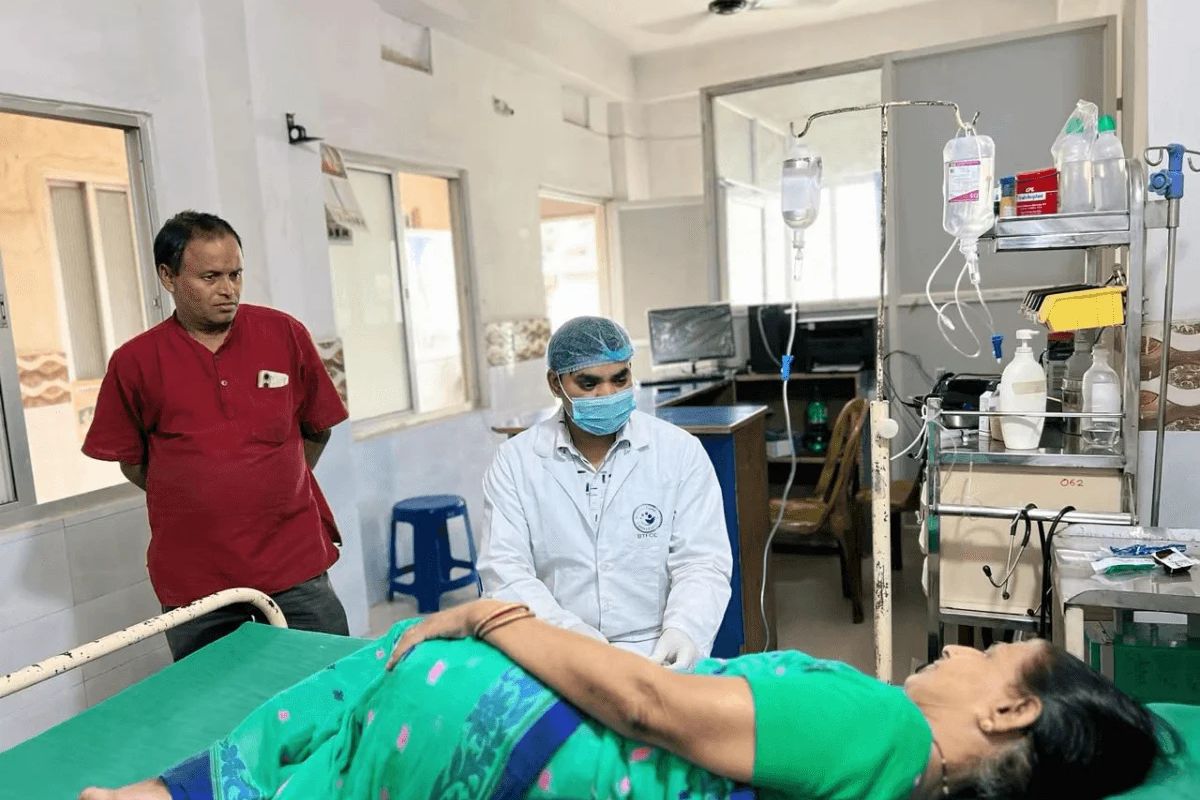
Treating this cohort will require an immediate shift in international health funding. Oncology experts working in the Global South stress that countries must build the physical infrastructure and human resource capacity for all aspects of multimodality treatment, including surgery, radiation, and systemic therapy.
The crisis arriving in 2050 is not a sudden epidemic of poor lifestyle choices. It is a severe deficit in the medical infrastructure required to care for populations that are finally growing old.
Frequently Asked Questions
What is driving the 77 percent increase in cancer cases by 2050?
The projected jump to 35 million global cancer cases by 2050 is primarily driven by demographic aging and population growth. As low- and middle-income countries successfully lower infant mortality and infectious disease deaths, more citizens are living into their 60s and 70s, the age range where cellular mutations naturally accumulate and cause cancer.
Are westernized diets the main cause of the 2050 cancer projection?
No. While the WHO notes that behavioral risks like alcohol, tobacco, and westernized diets do cause early-onset cancers, they account for a minority of the overall 77 percent surge. The vast majority of the statistical increase reflects older, growing populations rather than a sudden worsening of individual habits across the globe.
How are developing nations preparing for the 2050 cancer surge?
Many developing nations lack the expensive diagnostic and treatment infrastructure required to handle the incoming demographic shift. Currently, the narrative that cancer is a preventable lifestyle disease allows some health ministries to underfund pathology labs and oncology training in favor of cheaper behavioral awareness campaigns, leaving populations without access to biopsies or treatment.
Editorial Independence & Corrections
Clarity Times is published by Beeps Venture Technologies LLP under strict editorial independence charters. We uphold rigorous sourcing and verification protocols. Noticed a factual omission or error? Review our Correction Protocols or contact our editorial desk at mail@claritytimes.org.

Praseetha K
Investigative journalist and research analyst contributing independent field reports and structural analysis for Clarity Times.