At Clarity Times, we examine what mainstream narratives omit. This dispatch investigates institutional incentives, policy fine print, and multi-dimensional community impacts.
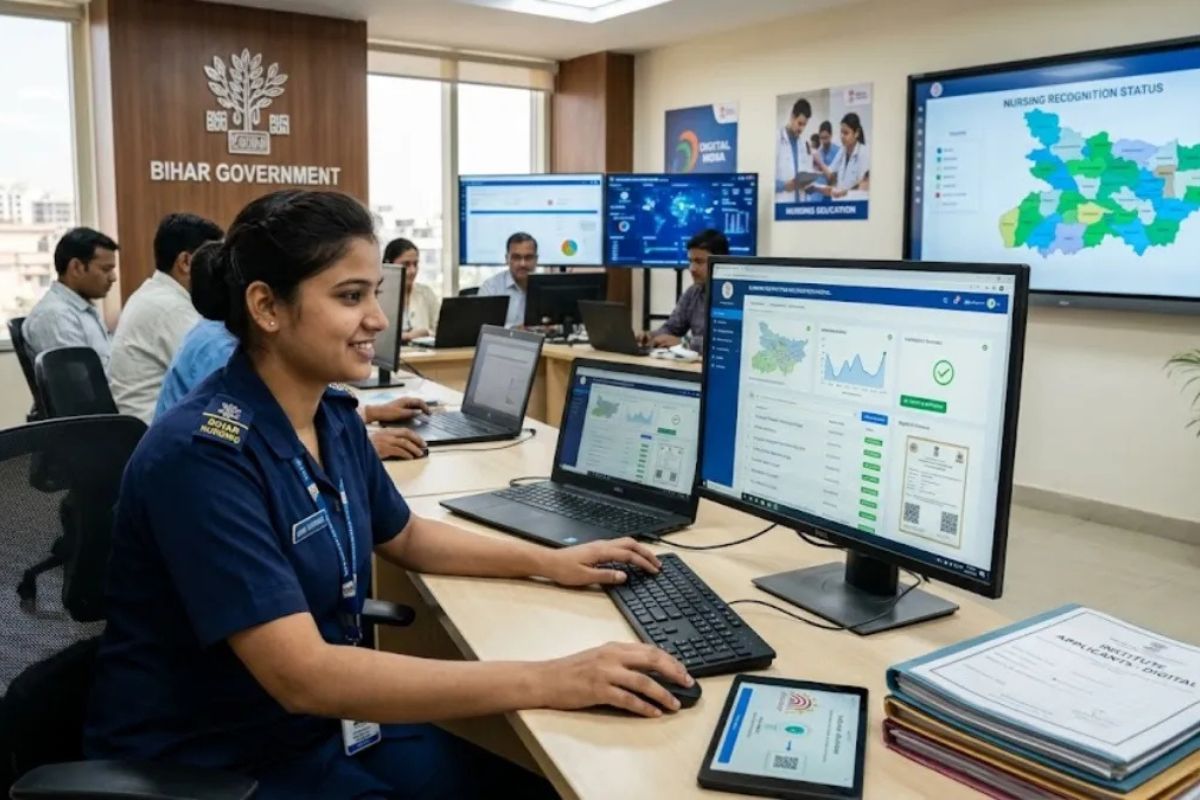
Auxiliary Nurse Midwives and clinical pharmacists are increasingly required to operate the mandatory Bihar Bhavya digital portal in rural health clinics, severely diverting them from direct patient care. Because the state government failed to recruit dedicated data entry operators for primary health centers, highly trained medical staff are forced to function as administrative software clerks.
What Happens at the Triage Desk During Digital Registration?
When unreliable rural network connectivity inevitably drops, the entire queue at the triage desk stalls, leaving critical medical staff tethered to computer terminals instead of actively treating patients.
Formally logging a patient into the digital system requires capturing demographic details, awaiting a mobile One-Time Password (OTP), and systematically verifying the Ayushman Bharat Health Account—a federally issued 14-digit health identification number. When the local network fluctuates or a patient’s mobile device fails to receive the verification text, the clinical intake process halts completely.
Staff members who should be actively dispensing medication or dressing wounds remain immobilized at the keyboard. Time-motion analyses and direct testimony from on-duty nurses across multiple districts confirm that this administrative technical friction directly and severely delays physical triage.
Why Are Nurses Operating the Bihar Bhavya Digital Portal?
Clinical nurses are operating the system because the state government mandated 100% digital outpatient registration while simultaneously failing to sanction necessary IT clerical positions for rural outposts.
On October 31, the Bihar Health Department issued a mandate requiring all government hospitals to exclusively register outpatient department visits through the online Bhavya platform. While District Hospitals and Sub-Divisional Hospitals were provided with designated data entry operators to manage the software burden, rural clinics were completely bypassed.
While urban centers utilize dedicated IT staff, official organograms published by the State Health Society Bihar, combined with local staffing rosters, reveal a stark disparity: over 80% of the state’s 844 rural Additional Primary Health Centers (APHCs) operate with zero sanctioned or deployed IT clerical posts.
“You cannot digitize a healthcare system by simply forcing clinicians to become typists. A digital mandate without digital infrastructure is merely a bureaucratic tax on patient care.”
— Health Policy Analyst
How Many Clinical Hours Are Lost to Digital OPD Registration?
Frontline clinical staff routinely forfeit between 2.5 and 4 hours of a standard 8-hour shift strictly to manage portal logins, troubleshoot OTP failures, and execute demographic data entry.
This administrative diversion severely truncates the time available for actual physical examinations by up to 50%. Based on clinic volume logs, this operational bottleneck compresses a standard four-minute patient consultation down to a rushed two minutes or less.
Why Did IT Contracts Exclude Rural Primary Health Centers?
State procurement contracts explicitly excluded peripheral primary health centers in a calculated effort to remain under strict per-facility budget caps.
The systemic absence of data entry operators in rural clinics traces directly back to the state’s procurement architecture. State staffing contracts awarded to external recruitment agencies intentionally omitted peripheral primary health centers from their operational scope to minimize costs.
Service-level agreements enforced a rigid per-facility budget threshold. This threshold essentially guaranteed that APHCs would receive zero digital personnel support, directly forcing the existing medical staff to absorb the entire data entry workload.
Why is Bihar Pushing for 100% Digital OPD Registration?
Administrators forcefully mandate digital registration to combat medicine pilferage and monitor doctor absenteeism, while the central government directly links health infrastructure funding to digital ID generation metrics.
State health leadership perceives paper-based registration as a critical systemic vulnerability. Administrators argue that manual ledgers enable widespread medicine pilferage, facilitate rampant doctor absenteeism, create duplicate medical records, and effectively isolate Bihar from national digital health tracking networks.
Significant financial incentives also drive the aggressive rollout speed. The central government explicitly links federal health infrastructure funding directly to a state’s capacity to consistently generate digital health IDs under the Ayushman Bharat Digital Mission.
How Are Rural Clinics Meeting the 100% Digital Mandate?
To satisfy state targets despite fundamentally unstable rural networks, medical officers frequently authorize off-hours shifts where nurses manually batch-enter paper registration slips into the portal.
Faced with uncompromising compliance targets and unreliable rural internet infrastructure, clinical staff have instituted informal, undocumented workarounds to manage the unrelenting patient load.
Medical Officers In-Charge at numerous facilities authorize evening batch-entry shifts. During these periods, nurses manually input backlogged paper registration slips into the Bhavya portal long after patients have left the clinic, artificially satisfying state metrics while functionally operating offline during actual patient hours.
Frequently Asked Questions
Do rural health clinics in Bihar have data entry operators?
No. According to State Health Society Bihar organograms, over 80% of the state’s 844 rural Additional Primary Health Centers have no sanctioned IT clerical posts. Existing clinical staff manage the data entry instead.
How does the Bhavya portal affect patient consultation times?
Clinic volume logs show the administrative workload of the Bhavya portal cuts a standard four-minute patient consultation down to two minutes or less in rural clinics. Clinical staff spend up to half their shift managing portal logins rather than treating patients.
Why didn’t external IT agencies deploy staff to Bihar’s rural clinics?
State procurement contracts awarded to external recruitment agencies included strict per-facility budget caps. These financial thresholds intentionally excluded peripheral primary health centers from receiving outsourced digital personnel support.
Editorial Independence & Corrections
Clarity Times is published by Beeps Venture Technologies LLP under strict editorial independence charters. We uphold rigorous sourcing and verification protocols. Noticed a factual omission or error? Review our Correction Protocols or contact our editorial desk at mail@claritytimes.org.

Praseetha K
Investigative journalist and research analyst contributing independent field reports and structural analysis for Clarity Times.