At Clarity Times, we examine what mainstream narratives omit. This dispatch investigates institutional incentives, policy fine print, and multi-dimensional community impacts.
Popo Global Funding: Why the CAVA Playbook Fails in India
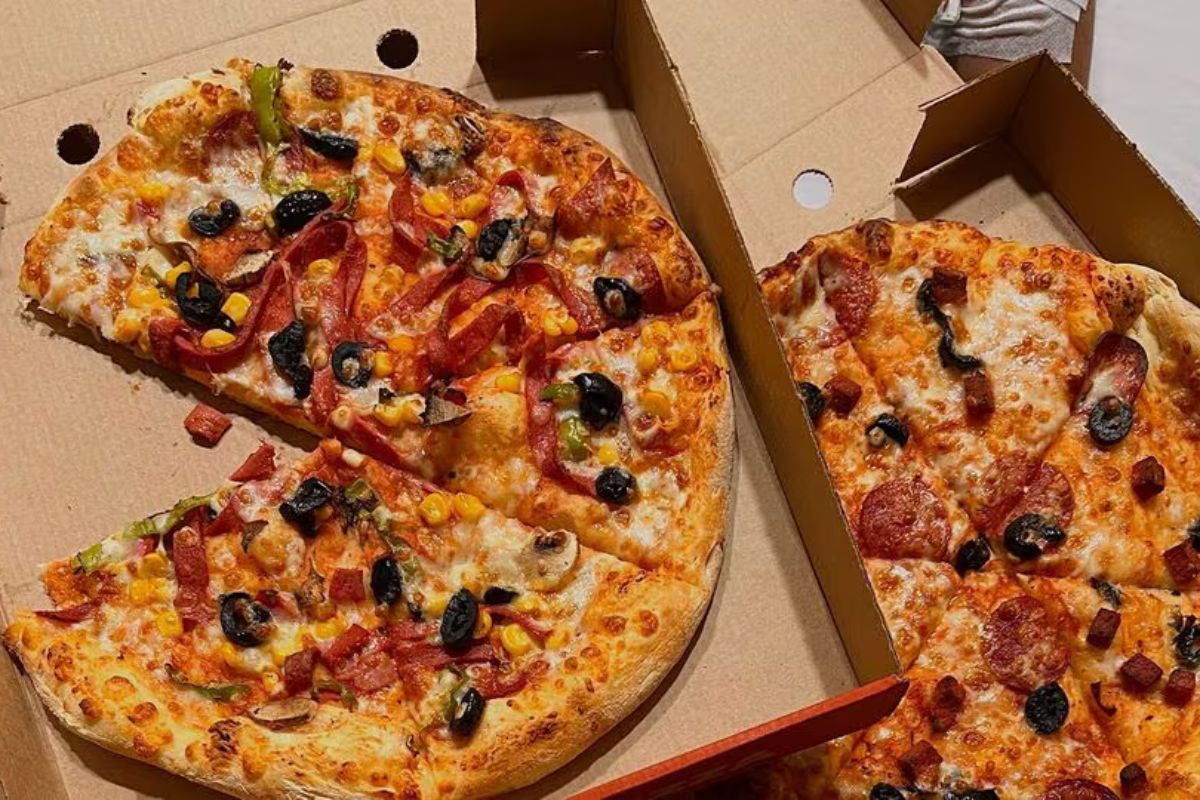
The recent injection of capital into Popo Global operates on a core assumption: that Artal Asia can aggressively scale The Pizza Bakery utilizing the same strategic playbook that propelled the US chain CAVA to a massive public offering. However, that American strategy is fundamentally predicated on single-concept assembly lines, inexpensive restaurant conversions, and proprietary delivery ecosystems. In stark contrast, Popo must navigate the Indian market with three distinct kitchen formats, exorbitant greenfield lease deposits, and a prohibitive 25% aggregator tax. The operational mathematics simply do not align.
Why Does the CAVA Assembly Line Break Across Popo Global’s Brands?
The vaunted CAVA assembly line model shatters in this context because Popo Global operates three distinct brands requiring entirely different, fundamentally incompatible kitchen infrastructure.
CAVA’s operational scalability was built on an identical, linear assembly line where employees process an average ticket in under 60 seconds. Every single location shares the exact same back-of-house equipment footprint, a fact explicitly detailed in CAVA Group’s SEC Form S-1 registration statement.
Popo Global, conversely, manages three discrete brands: The Pizza Bakery, Paris Panini, and Smash Guys. These concepts demand three non-interchangeable kitchen geometries. The Pizza Bakery necessitates heavy-duty stone deck pizza ovens. Paris Panini requires commercial-grade contact presses. Smash Guys depends entirely on high-heat flat-top griddles.
An operator cannot cross-utilize labor or consolidate prep stations across these three disparate formats. Commercial kitchen layout designers specializing in Indian multi-brand casual dining confirm that differing ventilation, electrical load, and prep station requirements outright prohibit shared cook-lines. Consequently, the multi-brand structure acts as a multiplier on equipment capital expenditure, rather than an efficiency driver.
| Operational Metric | CAVA (US Model) | Popo Global (Indian Market) |
|---|---|---|
| Kitchen Format | Single linear assembly line | Three incompatible layouts |
| Real Estate Strategy | Acquisition of distressed assets | High-cost greenfield builds |
| Delivery Ecosystem | First-party, fee-free loyalty app | 25-35% Zomato/Swiggy tax |
Popo founders Nikhil and Abhijit Gupta argue that this diversity constitutes a structural advantage. They maintain that operating three complementary brands allows the enterprise to extract higher aggregate revenue from a single commercial cluster by monopolizing different dayparts—lunch, afternoon snack, and dinner—without cannibalizing their own foot traffic.
Can Popo Global Replicate CAVA’s Real Estate Strategy in India?
Popo Global is fundamentally incapable of replicating CAVA’s real estate strategy because the Indian market lacks a reserve of distressed restaurant chains ripe for acquisition, thereby forcing the company to absorb full greenfield construction costs.
CAVA’s explosive post-2018 expansion across the United States was effectively subsidized by real estate arbitrage. According to Restaurant Business Online, the company acquired 261 distressed Zoës Kitchen locations for $300 million. Converting these existing restaurant boxes required a mere fraction of the estimated $1.2 million demanded for a ground-up greenfield build, as outlined in CAVA’s SEC filings.
In contrast, Popo Global faces a highly fragmented Indian commercial real estate landscape. There is no equivalent pool of distressed, structurally equipped casual dining chains available for mass acquisition in Tier-1 cities. The company is forced to deploy massive greenfield capital expenditure to construct high-street locations from scratch in expensive micro-markets like Bengaluru’s Indiranagar, Mumbai’s Bandra, or Delhi-NCR’s Cyber Hub.
These premium markets demand staggering capital lock-ups. A recent CBRE South Asia report on retail leasing underscores a 268% spike in fresh supply costs, rising from 1.1 million to 4.3 million square feet. Furthermore, high-street leases routinely require 10 to 12 months of rental deposits upfront. Commercial real estate brokers handling premium F&B acquisitions in Tier-1 hubs corroborate the absolute absence of cheap conversion real estate.
How Do Zomato and Swiggy Commissions Impact Popo Global’s Margins?
The imposition of a 25% blended commission rate from dominant Indian aggregators like Zomato and Swiggy effectively neutralizes the digital margin gains Artal Asia anticipates from its US fast-casual playbook.
Profit margins in the modern casual dining sector are intrinsically linked to off-premise sales. CAVA successfully shielded its store-level margins by directing over 36% of total revenue through its proprietary, fee-free first-party app and loyalty program, entirely circumventing third-party marketplace extortion fees, according to its 2025 FY Form 10-K.
Conversely, Indian gourmet casual dining is captured within a ruthless duopoly. Zomato and Swiggy extract a base commission rate fluctuating between 17% and 28%. When GST and payment gateway fees are factored in, this burden inflates to an effective 25% to 35% deduction, according to proprietary industry data from Menu Manager.
When an Indian casual-dining outlet operates on a typical 60% dine-in and 40% aggregator delivery split, this 25% platform tax severely depresses store-level earnings before interest, taxes, depreciation, and amortization (EBITDA)—the standard measure of operating profit—pushing it well below the 20% threshold required to generate CAVA-like returns.
What is the Strategy Behind the Rs 532 Crore Popo Global Funding?
The strategic rationale behind the Popo Global funding centers on Artal Asia deploying its evergreen family office capital to secure controlling stakes in emerging food and beverage concepts, a direct reflection of their highly successful, earlier bets on CAVA Group and Sweetgreen.
As reported by LiveMint, Artal Asia recently injected Rs 532 crore ($56 million) into Popo Global, securing a significant minority stake. This transaction values the previously bootstrapped operator between Rs 1,100 and Rs 1,350 crore. Popo successfully scaled its revenue to approximately Rs 175 crore in FY25 while maintaining profitability. This disciplined, bootstrapped execution stands in stark contrast to venture-funded cloud kitchen operators that aggressively incinerated cash to capture artificial market share.
Artal and its investment vehicle, Invus, execute a long-term, 17-year operational investment thesis within the food and beverage sector. They orchestrated the massive turnaround of Weight Watchers and served as the early, controlling backers of both CAVA Group and Sweetgreen. This evergreen family office structure provides them the vital flexibility to absorb punishing initial real estate capital expenditures without succumbing to the immediate, quarter-by-quarter margin pressures inherent in public markets.
Can Popo Global Replicate CAVA’s Grocery Success on Quick Commerce?
Distributing branded products via Indian quick-commerce platforms introduces prohibitive slotting fees and severe spoilage penalties that rapidly erode the robust grocery margins CAVA achieved within US Whole Foods stores.
One distinct component of the CAVA playbook theoretically translates to the Indian ecosystem: retail distribution. CAVA astutely utilized packaged Mediterranean dips sold in Whole Foods as a highly effective customer acquisition engine—a retail segment explicitly identified in their S-1 filing as a cornerstone brand builder.
To replicate this dynamic, Popo must inject its branded products into India’s ruthless quick-commerce platforms, including Blinkit, Zepto, and Instamart. However, the underlying economics diverge radically from American premium grocery. High-velocity dark stores mandate extortionate slotting fees, margin deductions soaring up to 35%, and draconian cold-chain compliance penalties for return-to-origin spoilage, a reality corroborated by trade terms circulated among Indian artisanal food founders.
What Must Popo Global Achieve to Justify its Rs 1,350 Crore Valuation?
To deliver institutional-grade returns on its towering Rs 1,350 crore valuation, Popo Global is mandated to expand to a minimum of 220 stores, each consistently generating up to Rs 7.5 crore in annual revenue.
The projected Rs 1,350 crore pre-money valuation requires immense, sustained future cash flows to yield standard institutional returns. To accurately map this required growth trajectory, analysts must calculate the precise unit count and Average Unit Volume (AUV)—a critical metric measuring a single store’s annual revenue—that Popo Global is obligated to hit by FY29.
Listed Indian peers, such as Jubilant FoodWorks and Devyani International, trade at established enterprise value-to-sales multiples. To deliver a standard 22% to 25% internal rate of return on the Rs 532 crore capital infusion over a five-year horizon, Popo must forcefully expand its footprint to between 180 and 220 total stores. Crucially, those stores must consistently generate an AUV of Rs 6.5 to Rs 7.5 crore.
Achieving these formidable metrics across three separate, highly capital-intensive formats forces the company into an aggressive geographic race that demands flawless execution across India’s most punishing and expensive retail markets.
Frequently Asked Questions
How much did Popo Global raise from Artal Asia?
Popo Global raised Rs 532 crore ($56 million) from Artal Asia in a deal valuing the company between Rs 1,100 and Rs 1,350 crore. This capital will fund the national expansion of its brands, which include The Pizza Bakery and Paris Panini.
Why does the CAVA restaurant playbook struggle in India?
CAVA scaled using a single linear assembly line and cheap real estate conversions of distressed restaurants. In India, Popo Global must build expensive greenfield locations from scratch and operate three distinct, non-interchangeable kitchen formats that multiply equipment costs.
How do Zomato and Swiggy impact Popo Global’s profitability?
Zomato and Swiggy charge an effective 25% to 35% commission rate on delivery orders. This platform tax depresses Popo Global’s store-level operating margins below the 20% threshold standard that CAVA achieved through its fee-free, first-party digital app.
Editorial Independence & Corrections
Clarity Times is published by Beeps Venture Technologies LLP under strict editorial independence charters. We uphold rigorous sourcing and verification protocols. Noticed a factual omission or error? Review our Correction Protocols or contact our editorial desk at mail@claritytimes.org.

Praseetha K
Investigative journalist and research analyst contributing independent field reports and structural analysis for Clarity Times.