At Clarity Times, we examine what mainstream narratives omit. This dispatch investigates institutional incentives, policy fine print, and multi-dimensional community impacts.
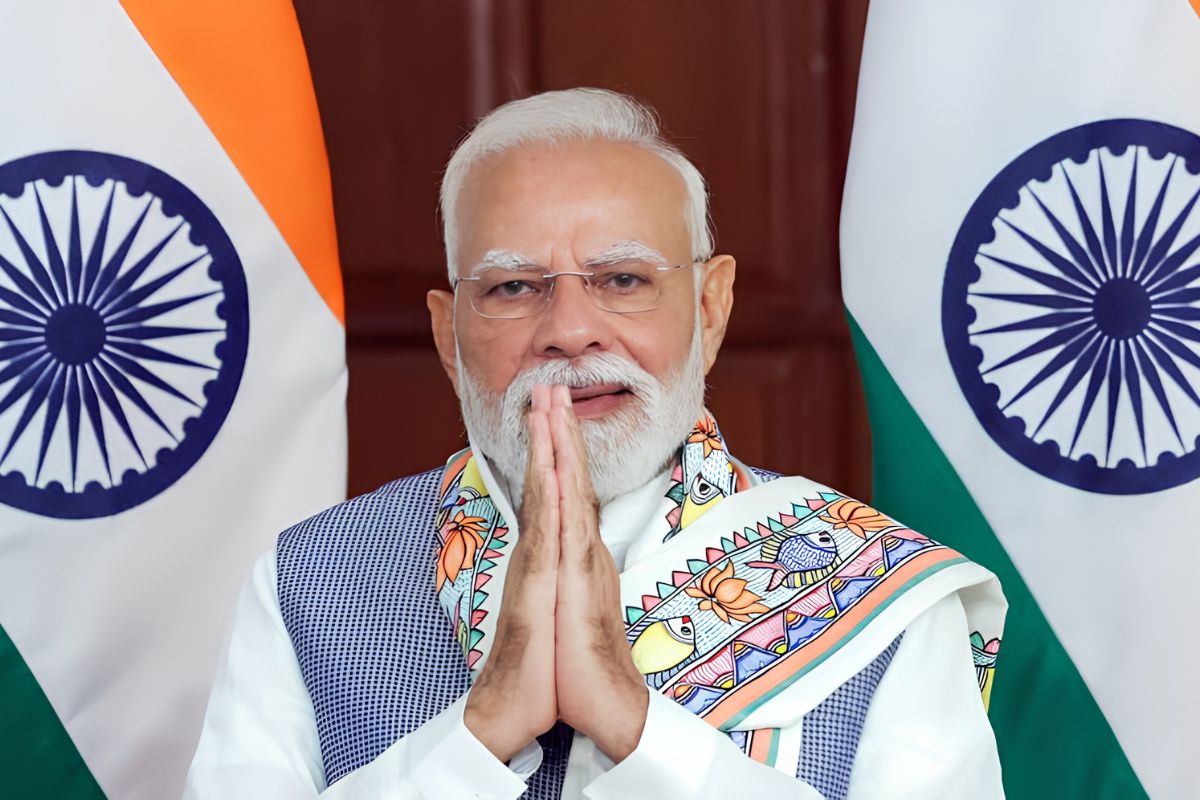
How have Indian leaders marked decades in power compared to Modi’s 25 years in politics? While past executives historically favored quiet legislative acknowledgments or institutional state continuity, the Bharatiya Janata Party is marking Narendra Modi’s milestone with a centralized, month-long grassroots electoral and welfare mobilization campaign.
The contrast defines a distinct transition in Indian public life: where long-serving executives once marked career longevity through permanent state institutions, modern party leadership converts executive anniversaries into active tools for voter mobilization.
How Did Past Indian Executives Separate Party and State at Tenure Milestones?
Past executives separated their state institutional identity from their party apparatus during career milestones. Rather than repurposing administrative welfare systems into party-branded events, state governments acknowledged multi-decade tenures through formal, internal legislative records.
When Sikkim Chief Minister Pawan Kumar Chamling completed 24 years and 165 days in office to become India’s longest-serving chief minister in 2018, the state recognized the record through official assembly felicitations and formal government gazettes. The ruling Sikkim Democratic Front avoided repurposing district welfare delivery into an anniversary-branded political campaign.
The Bharatiya Janata Party’s ‘Seva Sankalp Abhiyan’ fuses these tracks. The Seva Sankalp Abhiyan is a month-long nationwide Bharatiya Janata Party initiative structured to mark executive tenure through public service and welfare facilitation. The campaign binds the personal milestone of a sitting Prime Minister directly to a localized party mobilization framework across thousands of local voting booths.
How Did Jyoti Basu and Naveen Patnaik Mark Multi-Decade Tenures?
Neither Jyoti Basu in West Bengal nor Naveen Patnaik in Odisha marked their multi-decade tenures with expansive, nationwide party drives. Both regional leaders relied on institutional state continuity and subdued legislative notices instead of launching personalized public welfare initiatives.
According to official assembly records, Jyoti Basu served as Chief Minister of West Bengal for over 23 years, spanning 8,539 consecutive days. When Basu marked his 20th year in office in 1997, the Communist Party of India (Marxist) apparatus organized internal party seminars, but the state administration was never deployed to run leader-branded welfare enrollment camps.
Naveen Patnaik served as Chief Minister of Odisha for 24 years and 99 days according to state legislative data. Patnaik’s two-decade milestones were handled through administrative press briefings highlighting state economic metrics. By keeping commemorations within legislative chambers, these administrations projected bureaucratic stability while keeping routine party campaigning on a separate schedule.
Why Is Modi’s 25 Years in Politics Marked by Party Mobilization Rather Than State Rites?
The Bharatiya Janata Party’s commemorative strategy replaces passive state commemoration with active, forward-looking grassroots voter mobilization. By converting governance milestones into decentralized service drives, the party fuses executive record-keeping with direct electoral outreach.
Comparative political scholars analyzing Indian executive governance describe this change as an institutional party-state fusion and centralized, leader-centric milestones. The model transforms basic welfare distribution – historically a neutral civil service responsibility – into an operation driven by party cadres and tied directly to the Prime Minister’s personal image.
This structural shift transforms a historical marker into a functional electoral tool. Rather than pointing backward to administrative survival, party workers use the anniversary to establish new touchpoints with beneficiaries ahead of upcoming regional assembly elections.
Bharatiya Janata Party officials maintain that this service-oriented framework guarantees direct democratic accountability. Senior party leader Smriti Irani explicitly framed the initiative as an administrative delivery mechanism:
“Modi’s governance model focuses not merely on launching schemes but on ensuring that their benefits reach the last person in the queue,” Irani stated during a party organizational briefing.
Party functionaries argue that party-mediated delivery bridges bureaucratic hurdles, while critics point out that it erodes the boundary between public exchequer funding and partisan political credit.
What Is the 13-Point Plan of the Seva Sankalp Abhiyan?
The Seva Sankalp Abhiyan is an organized series of more than 13 thematic programs scheduled from September 17 to October 17, 2026. The calendar bridges Narendra Modi’s 76th birthday and the anniversary of his initial oath as Gujarat Chief Minister in 2001.
The schedule centers on ‘Seva Setu’ camps designed to register citizens for central government welfare entitlements, alongside blood donation drives and youth innovation competitions. According to official Bharatiya Janata Party briefs, the initiative also includes the ‘Anganwadi Samman’ program aimed at formally recognizing 14 lakh frontline child development and health workers across rural districts.
Party literature ties these 13 activities directly to ‘Viksit Bharat’ – the central government’s stated policy vision aimed at transforming India into a fully developed nation by 2047.
How Does Modern Tenure Commemoration Alter Indian Party Politics?
Modern executive milestones have evolved from passive, cadre-based celebrations into tools for continuous electoral alignment and booth-level voter mobilization. Political analysts identify this shift as a transition from institutionalized party longevity toward centralized, leader-centric welfarism.
Sociological research published in economic journals identifies this pattern as a techno-patrimonial form of welfarism. Techno-patrimonial welfarism refers to a governance model where state-funded welfare distributions are delivered through digital tracking and personally branded political patronage. Rather than celebrating tenure as an administrative record, the governing apparatus utilizes government aid delivery to produce voter loyalty.
For district-level organizers, silver jubilees no longer mean ceremonial speeches in state capitals. They function as operational field exercises: gathering contact lists, registering scheme applicants, and anchoring a national political narrative deep inside local polling blocks.
Frequently Asked Questions
How does Narendra Modi’s 25-year milestone commemoration differ from past chief ministers?
While past long-serving leaders like Jyoti Basu and Naveen Patnaik relied on subdued legislative speeches and institutional administrative continuity, Narendra Modi’s milestone is marked by an active, month-long grassroots campaign called Seva Sankalp Abhiyan. The initiative replaces passive historical acknowledgment with nationwide party-led service drives and welfare enrollment camps.
Did Jyoti Basu or Naveen Patnaik launch public service drives for their tenure milestones?
No. Historical records show that when Jyoti Basu completed two decades in West Bengal in 1997, commemorations were confined to internal Communist Party of India (Marxist) meetings and standard assembly remarks. Naveen Patnaik marked his 24-year tenure in Odisha through routine governance and bureaucratic continuity rather than mass voter mobilization campaigns.
What are the main components of the Seva Sankalp Abhiyan?
The campaign comprises 13 thematic programs running from September 17 to October 17, 2026, bridging Prime Minister Modi’s birthday and his initial 2001 oath as Gujarat Chief Minister. Key initiatives include ‘Seva Setu Abhiyan’ welfare enrollment camps, youth innovation contests, and the ‘Anganwadi Samman’ outreach program recognizing 14 lakh frontline workers.
Why are political analysts describing the campaign as ‘techno-patrimonial welfarism’?
Political analysts use the term because the initiative links state welfare scheme delivery directly to personal leadership branding and decentralized party apparatus. Instead of routing welfare purely through permanent civil service channels, party workers help facilitate government benefits to cultivate direct electoral loyalty.
Editorial Independence & Corrections
Clarity Times is published by Beeps Venture Technologies LLP under strict editorial independence charters. We uphold rigorous sourcing and verification protocols. Noticed a factual omission or error? Review our Correction Protocols or contact our editorial desk at mail@claritytimes.org.

Praseetha K
Investigative journalist and research analyst contributing independent field reports and structural analysis for Clarity Times.