Standard Uber Eats drivers cannot physically or legally handle the bulk of ezCater’s corporate orders. Fulfilling an Uber Eats catering delivery of $1,000 requires commercial-sized vehicles, specialized heating equipment, and high-limit liability insurance that average gig workers do not possess. Uber must either launch a specialized commercial tier or force restaurants to absorb the risk.
Can standard gig vehicles handle corporate catering logistics?
Standard gig delivery vehicles lack the cargo capacity and thermal equipment required for large commercial food orders. A consumer lunch order requires only a thermal bag on a passenger seat, but corporate catering logistics require dedicated transit infrastructure.
According to professional catering guidelines, a standard 50-person buffet order weighs between 50 and 62 pounds. This volume fills multiple deep aluminum trays that must remain level during transit to prevent spills.
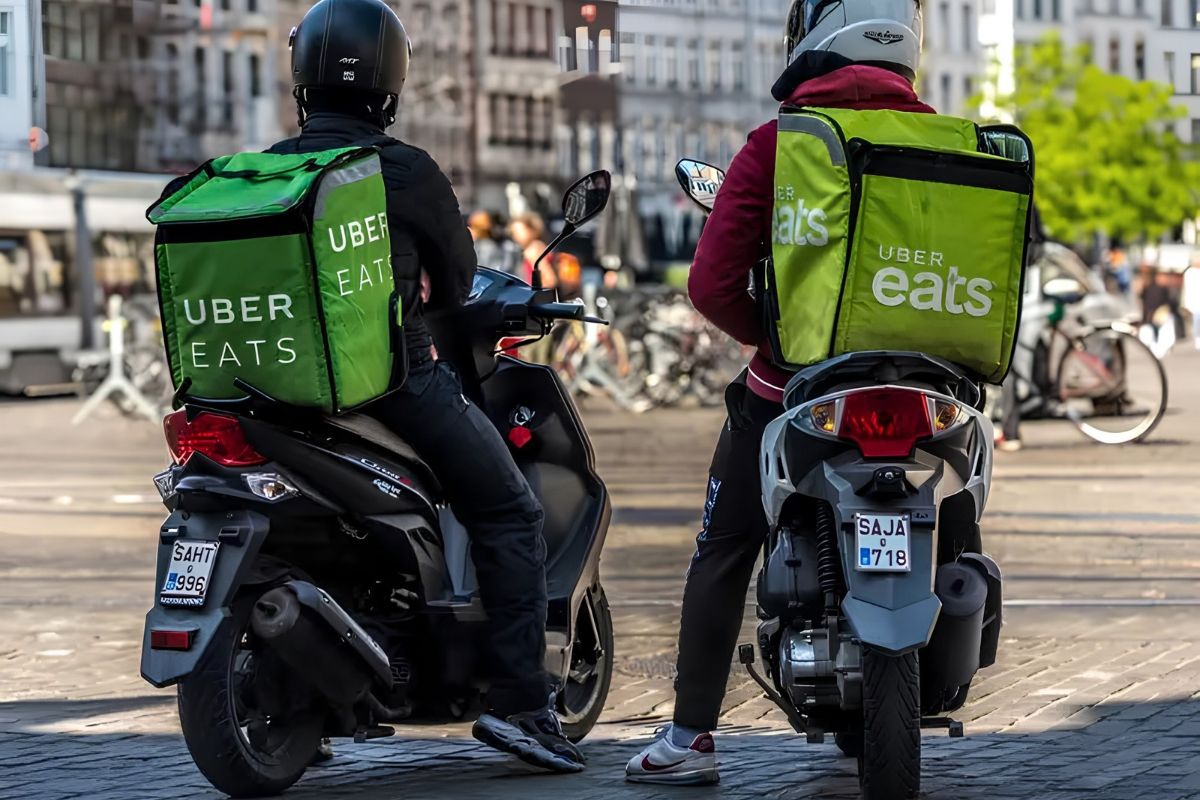
Uber Technologies, Inc. currently permits couriers to complete deliveries using bicycles, scooters, and two-door compact cars. The company’s basic onboarding mandates only a valid driver’s license and a background screening.
Baseline ezCater delivery driver requirements demand equipment that standard app drivers do not carry: folding hand trucks, insulated multi-pan carriers, and chafing rack systems. A courier in a compact sedan cannot fit this equipment alongside ten full-sized catering pans.
Who pays when an expensive catering delivery is ruined?
Under standard merchant contract terms, restaurants shoulder the financial loss when an unvetted courier damages high-value food in transit. When a courier drops a single consumer takeout bag, the platform absorbs or writes off a $25 refund. A ruined boardroom lunch destroys over $1,000 in product and creates disputed liabilities.
According to standard Uber Eats merchant contracts, the restaurant maintains ownership of the food until physical handoff to the diner. If an order arrives spoiled, spilled, or delayed beyond edibility, Uber routinely deducts the customer refund directly from the restaurant’s weekly payout.
That policy conflicts with the service guarantees expected by office managers. ezCater, Inc., an online marketplace connecting corporate buyers with local food providers, awards its “Reliability Rockstar” designation exclusively to caterers maintaining a 98.5% on-time delivery rate and zero unexcused cancellations. A single damaged tray can eliminate a vendor’s platform search ranking.
Standard personal auto insurance policies held by gig workers exclude commercial transport of commercial goods. According to brokerage data from Farmer Brown Insurance, dedicated commercial auto insurance for delivery fleets requires $1 million in liability coverage and averages $1,400 annually, a financial burden individual gig couriers do not assume.
Why did Uber acquire ezCater for $2.3 billion?
Uber acquired Boston-based ezCater to capture high-margin corporate meal spending and expand its business delivery footprint into offices. The all-cash transaction values the catering network at $2.3 billion.
Chief Executive Officer Dara Khosrowshahi identified workplace catering as a major expansion vehicle for the Uber Eats division, describing large-format meal orders as a massive revenue generator for merchant partners. Across the 12 months preceding the acquisition, ezCater recorded more than $2.5 billion in gross bookings.
Why do restaurants fear standard gig-worker catering deliveries?
Independent caterers face the loss of recurring corporate accounts worth thousands of dollars if an untrained driver fails to provide inside setup. Corporate catering revenue relies on high customer lifetime value, defined as the total projected revenue a single business account generates across its entire relationship with a merchant.
A corporate customer ordering weekly employee lunches yields substantial repeat revenue over a calendar year. If an unvetted app driver drops food boxes at a security desk and departs, the business customer cancels future bookings.
Professional workplace delivery requires white-glove setup, which involves checking in with building security, riding freight elevators, unboxing trays, lighting Sternos, and arranging buffet utensils. Standard food delivery couriers are neither compensated for nor trained in inside office hospitality.
How could Uber adapt its fleet for ezCater delivery?
Uber will likely establish a distinct commercial tier with strict vehicle and insurance requirements, modeled on its Uber Direct freight protocols. Uber Direct is the company’s white-label delivery application programming interface (API) that enables businesses to dispatch couriers for custom fulfillment jobs.
Documentation for Uber Direct item delivery shows the platform already segments dispatches by cargo size, restricting items over 50 pounds to mid-sized or full-sized vehicles with specific handling instructions.
Uber has previously managed specialized driver supply through vehicle certification programs such as UberXL and Uber Black. To fulfill ezCater orders without service disruptions, Uber could introduce an “Uber Catering” certification requiring couriers to verify sport utility vehicle capacity, prove commercial liability coverage, and carry hand carts.
Alternatively, Uber may leave fulfillment in the hands of caterers. Operating ezCater purely as an ordering interface allows restaurants to dispatch their own staff drivers, avoiding the service risks of on-demand app drivers entirely.
Frequently Asked Questions
Why can regular Uber Eats couriers not fulfill corporate catering orders?
Corporate orders for 50 or more people weigh between 50 and 62 pounds and consist of stacked, hot aluminum trays that do not fit into compact cars or on bicycles. In addition, corporate clients require couriers to bring food inside office towers and set up the display, tasks outside standard app drop-offs.
Who pays when a catering order is damaged during delivery?
Under current Uber Eats merchant contracts, the restaurant retains ownership of the food until delivery and absorbs the refund cost if food arrives spilled or ruined. ezCater merchants risk losing premium platform badges if delivery failures cause their on-time completion rates to fall below 98.5%.
What is the difference between standard food delivery and an ezCater drop-off?
Standard food delivery is a curb or doorstep drop-off of an individual meal package. Corporate catering delivery involves transporting heavy catering pans, clearing commercial building security, setting up buffet trays, and maintaining food temperatures for large office groups.
How might Uber structure a dedicated catering fleet?
Uber could expand its Uber Direct protocol to establish an opt-in catering tier. Similar to UberXL vehicle qualifications, this structure would require drivers to demonstrate full-size vehicle capacity, carry insulated food transport hardware, and hold commercial vehicle insurance.

Praseetha K
Praseetha K is a senior researcher and editorial director at Clarity Times. With a strong background in policy analysis and socio-economic trends, she provides readers with unbiased, authoritative insights into complex legal and financial developments across India and the globe.